
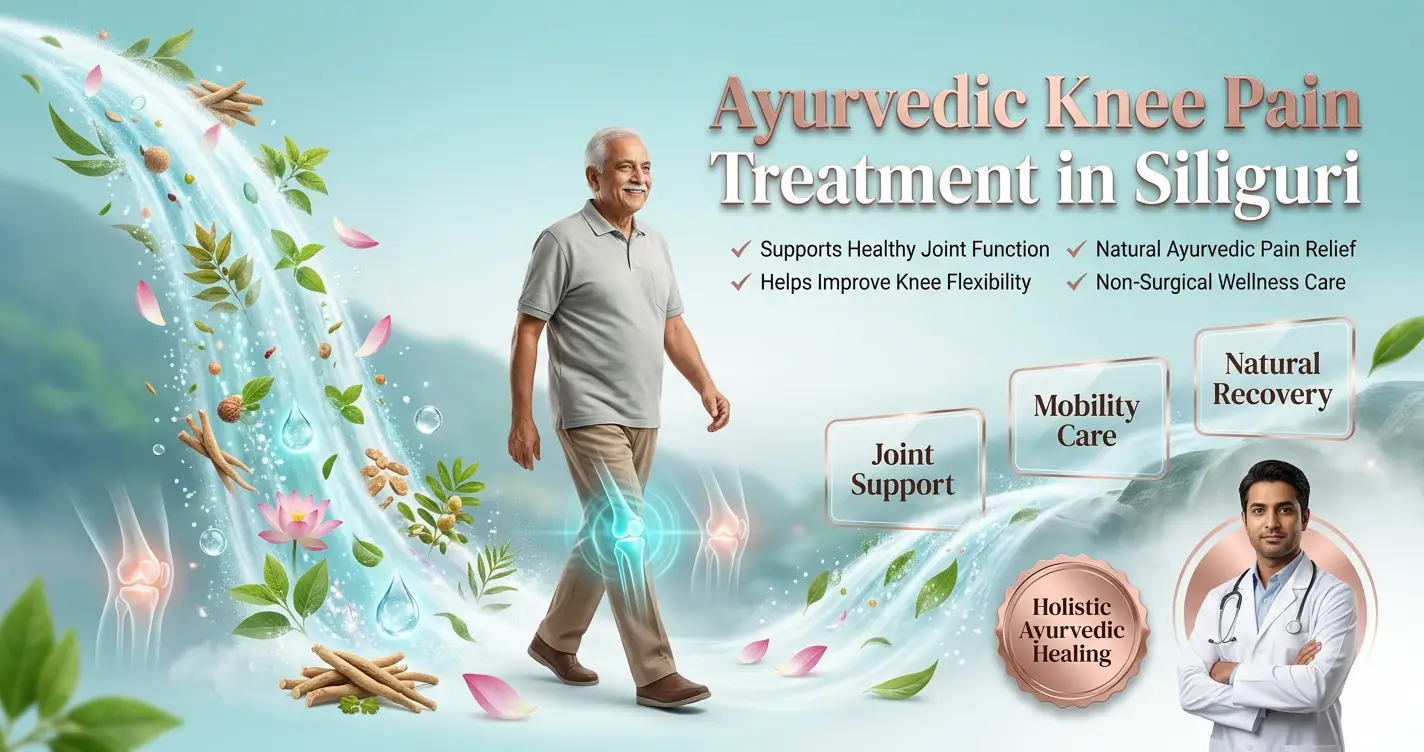
Knee Pain Ayurvedic Treatment in Siliguri
Welcome to the ultimate guide to saving your knees, especially if you are living in or visiting the gorgeous city of Siliguri!
We have all been there. You are waking up, getting ready to catch a beautiful view of the Kanchenjunga, or preparing for a shopping trip down Sevoke Road. You stand up, and pop; your knee makes a sound like a dry branch snapping in the Mahananda Wildlife Sanctuary. Suddenly, climbing a simple flight of stairs feels like trekking up to Sandakphu without a walking stick.
If your knees are constantly playing a painful rhythm every time you move, you are not alone. Let’s talk about how to fix those squeaky joints using ancient wisdom, right here in our favorite gateway city to the hills.
Why Do Our Knees Turn into Grumpy Old Men?
According to Ayurveda, your body runs on three main energies or Doshas: Vata (Air/Space), Pitta (Fire), and Kapha (Water/Earth). When you experience joint pain, it is usually because Vata has gone rogue.
Think of Vata as the wind. When it increases too much, it dries up the natural lubrication (Shleshaka Kapha) in your joints. Without that smooth cushion, your bones start grinding against each other like two old local buses fighting for space on Hill Cart Road. This leads to friction, swelling, and that nagging ache.
The Natural Route: Healing without the Scapel
When the joints start protesting, your first instinct might be to swallow painkillers like they are regular mints. But that only masks the issue. A sustainable solution is knee pain Ayurvedic treatment, which focuses on calming that wild Vata wind, cleaning out toxins (Ama), and bringing back the juice to your joints.
Ayurvedic therapies do not just look at your knee as an isolated hinge; they look at your whole lifestyle. By using specific warm herbal oil therapies like Janu Basti; where a little pool of medicated oil is built right over your knee cap; the joint gets deeply nourished, lubricated, and relaxed.
Your Kitchen Is Secretly An Herb Pharmacy
Before you rush anywhere, you might want to look inside your kitchen cabinets. You don’t always need a complicated setup to find relief. There are several knee pain home remedies that can give you immediate comfort:
- The Golden Milk Magic: Mix half a teaspoon of turmeric and a pinch of black pepper into warm milk. Turmeric is nature’s defense against inflammation, and pepper helps your body absorb it better.
- The Ginger Warm-Up: Drink ginger tea or apply a warm ginger paste to the aching joint. Ginger helps improve blood circulation and flushes out stiffness.
- Epsom Salt Soak: If your legs feel heavy after walking around Hong Kong Market, soak them in warm water mixed with Epsom salt to relax the surrounding muscles.
The Herbs That Do The Heavy Lifting
When home remedies need a professional upgrade, specific botanical formulas come into play. Choosing the right knee pain Ayurvedic medicine means introducing your body to legendary herbs like Ashwagandha (for strength), Guggulu (for removing deep-seated inflammation), and Shallaki (Boswellia), which acts as a completely natural shield for cartilage. These herbs don't just numb the area; they help rebuild the joint environment from within.
You Are What You Eat: The Joint-Friendly Plate
You cannot fix a Vata imbalance if your diet is full of dry, cold, and gas-producing foods. No matter how tempting a plate of spicy, dry street food looks, a structured knee pain diet plan is essential for long-term recovery.
- Foods to Welcome: Warm, freshly cooked meals, healthy fats like A2 cow ghee, sesame oil, soups, and sweet, juicy fruits.
- Foods to Avoid: Cold drinks, frozen foods, excess raw salads, and veggies like potatoes, cauliflower, and cabbage, which can increase gas and Vata in the body.
Finding Authentic Ayurvedic Care in Siliguri
If you are looking for deep, system-level healing, you shouldn’t just rely on guesswork. Consulting a qualified knee pain Ayurvedic doctor will give you a clear map of your body's specific constitution and what it needs to heal.
For residents of North Bengal looking for top-tier care, Karma Ayurveda stands out as a highly trusted name. Renowned for their clinical expertise, holistic diagnostic methods, and authentic internal and external therapies, they help patients address chronic joint issues right at the root, saving many from unnecessary surgical interventions.
Smart Healthcare for Government Employees & Veterans
If you are a central government employee, a pensioner, or a defense veteran living around Sukna, Salugara, or central Siliguri, managing medical expenses is a major priority. Finding an empanelled knee pain hospital makes high-quality treatment accessible without breaking the bank.
For defense veterans and their dependents, checking the approved list for knee pain ECHS panel in Siliguri ensures that you receive your specialized orthopedic or holistic care smoothly through your authorized medical channels.
Similarly, central government workers and pensioners can avail of cashless or reimbursable care options by exploring centers registered under the knee pain CGHS panel in Siliguri. Utilizing these panels means your pocket stays happy while your knees get the royal treatment they deserve.
The Final Step: Consistency is Key
At the end of the day, your joints carry you through life's finest journeys; whether that is a walk through the tea gardens or a drive up to Mirik. Embracing knee pain treatment in Ayurveda requires a little patience, a change in your daily habits, and a willingness to listen to your body. Give your knees the care, oil, and nutrition they crave, and they will keep you moving effortlessly for years to come!
Frequently Asked Questions
Q1: How long does it take for Ayurveda to cure knee pain?
A: While mild stiffness can improve within a couple of weeks through local oil applications and diet modifications, chronic conditions like osteoarthritis may take 2 to 3 months of consistent treatment to show deep, lasting structural relief.
Q2: Can Ayurveda regenerate knee cartilage?
A: Ayurveda helps arrest further degeneration of cartilage by balancing Vata dosha, improving blood supply, and enhancing joint lubrication (Shleshaka Kapha) through specialized therapies like Janu Basti and targeted herbal supplements.
Q3: Is Janu Basti painful?
A: Not at all! Janu Basti is a deeply relaxing, non-invasive external therapy where a reservoir of warm, medicated herbal oil is kept over the knee joint to relieve pain, reduce stiffness, and improve mobility.
Q4: Can I combine Ayurvedic treatment with physiotherapy?
A: Yes, absolutely. Combining Ayurvedic internal medicines and soothing external oil therapies with gentle, low-impact physiotherapy exercises is an excellent way to strengthen the surrounding muscles and speed up your recovery.
Contact Us
Location:
C-28, Ground Floor, Sector-12, Noida, Uttar Pradesh -201301