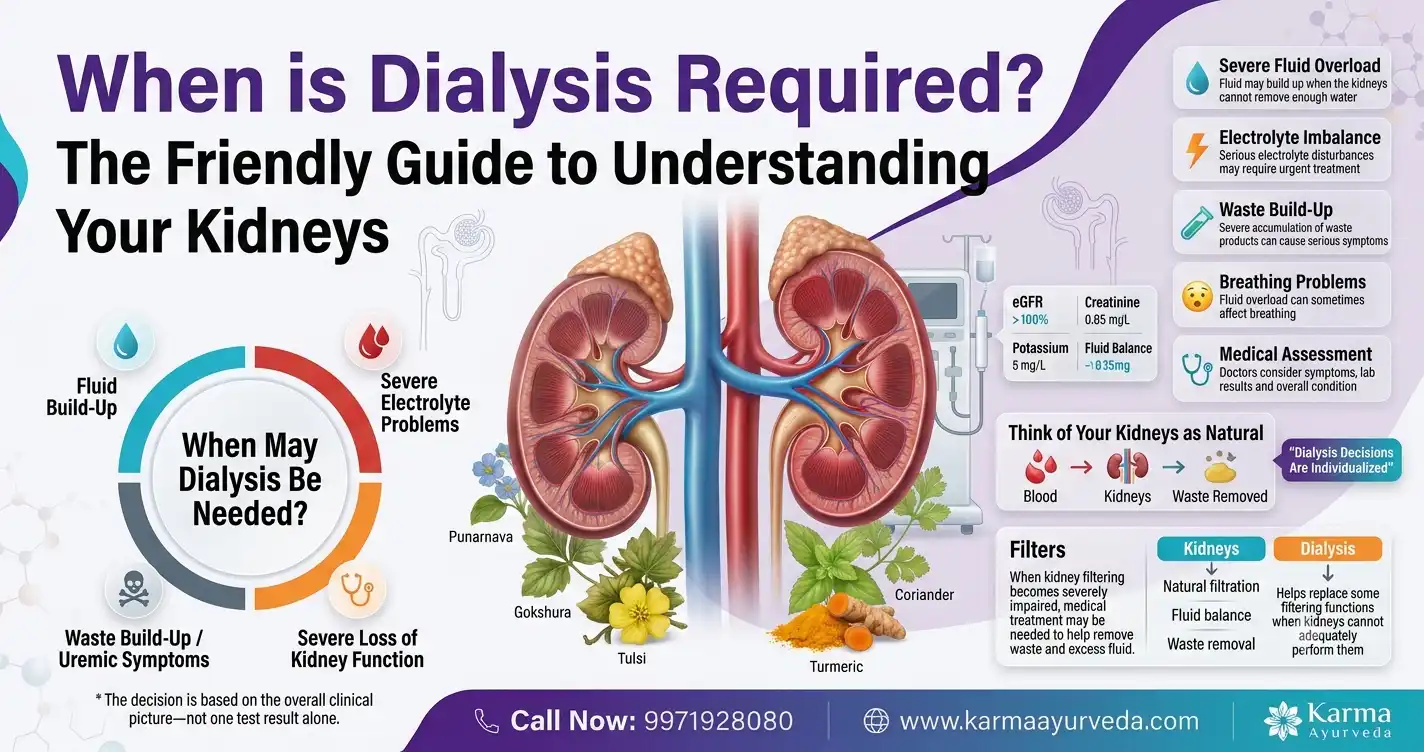
When is Dialysis Required? The Friendly Guide to Understanding Your Kidneys
When is dialysis required is a question that usually pops up when your kidneys drop below 15% of their normal function or when severe symptoms like fluid overload and extreme fatigue start hijacking your daily life. Think of it as the moment your internal filtering system officially decides to throw a quiet little strike, leaving garbage in the plumbing.
Now, before you panic and picture endless scary hospital machines, take a deep breath. Understanding dialysis requirements isn't about bracing for the worst; it’s about knowing how your body works so you can make smart, empowered choices. Let’s break down what your twin bean-shaped filters actually do, when they need extra help, and what options exist.
What Do Kidneys Actually Do All Day?
Your kidneys are the ultimate unsung heroes of your inner ecosystem. Every single day, these two fist-sized organs work round-the-clock shifts filtering roughly 120 to 150 quarts of blood just to flush out waste and balance your fluids.
When they get tired; whether from years of high blood pressure, diabetes, or chronic inflammation; their speed slows down. Doctors measure this filtration speed using a stat called the eGFR (estimated Glomerular Filtration Rate). A healthy eGFR is usually 90 or higher. When that number slides down into single digits or low teens, waste products (like urea and creatinine) start building up in your bloodstream, making you feel pretty terrible.
That accumulation of waste is called uremia, and it’s the body's loud, unambiguous way of asking for reinforcement.
When Is Dialysis Required? The Main Warning Signs
So, how do you actually know when is dialysis required versus when you can just adjust your lifestyle and monitor things? It rarely happens overnight. Instead, your body drops hints; some subtle, some not so subtle.
Here are the key clinical triggers doctors look for before recommending treatment:
- Fluid Overload: Your ankles look like water balloons, or you get short of breath just walking across the living room because liquid is backing up into your lungs.
- Persistent Nausea and Loss of Appetite: Food suddenly tastes metallic or plain awful because uremic toxins are accumulating in your system.
- Uncontrollable Potassium Levels: High potassium (hyperkalemia) can throw off your heart’s natural rhythm, which becomes dangerous quickly.
- Severe Fatigue and "Brain Fog": Feeling completely drained even after nine hours of sleep because your body is essentially functioning with built-up biological garbage.
- A Precipitous eGFR Drop: Usually, when eGFR dips between 5 and 10 mL/min, starting therapy becomes a serious topic of discussion.
Do Numbers Tell the Whole Story?
Interestingly, scientific research shows that starting treatment early purely based on test scores isn't always necessary. The landmark IDEAL Trial (Initiating Dialysis Early and Late), published in The New England Journal of Medicine, studied over 800 patients to see if starting early provided better outcomes.
The result? The researchers discovered that waiting until clear physical symptoms appeared; rather than rushing in as soon as numbers hit a specific threshold; delivered equivalent health outcomes without unnecessarily disrupting patients' lives prematurely.
The Reality Check: What Are the Side Effects of Dialysis?
While dialysis is a life-saving medical invention, nobody goes to a clinic for fun. It acts as an artificial filter, but it isn't an exact, delicate match for real human tissue. Because of that, understanding the side effects of dialysis helps set realistic expectations.
Common experiences reported by patients include:
- Muscle Cramps: Rapid changes in fluid balance during sessions can cause sudden leg cramps.
- Post-Dialysis Fatigue: Many people feel washed out for a few hours after a session (often called the "dialysis hangover").
- Low Blood Pressure (Hypotension): Fluid being pulled out quickly can make your pressure dip, leading to temporary lightheadedness.
- Dry or Itchy Skin: Mineral imbalances like built-up phosphorus can trigger persistent skin itching.
Here is a quick look at how real kidneys stack up against mechanical filtering:
- Working Hours: Your Natural Kidneys: 24/7 continuous gentle cleaning. Mechanical Dialysis: 3 to 4 hours, 3 times a week (Hemodialysis)
- Fluid Removal: Your Natural Kidneys: Smooth, continuous adjustment. Mechanical Dialysis: Rapid, scheduled fluid extraction
- Hormone Production: Your Natural Kidneys: Produces erythropoietin & active Vitamin D. Mechanical Dialysis: Does not produce hormones (requires medications)
- Vibe: Your Natural Kidneys: Invisible hard worker. Mechanical Dialysis: Involves tubes, needles, and clinic schedules
How to Avoid Dialysis and Protect Remaining Function
If your kidney function is declining but you haven't crossed into emergency territory, the single best goal is slowing down the loss of renal function. Learning how to avoid dialysis or at least postpone it for as long as possible centers on early, proactive kidney care.
Here are practical, evidence-backed steps to preserve your filters:
- Tame the Blood Pressure: Uncontrolled hypertension batters the delicate blood vessels inside your kidneys. Keeping it within target ranges shields them from mechanical stress.
- Manage Blood Sugar: For those managing diabetes, keeping glucose steady prevents structural damage to the kidney's filtration units (nephrons).
- Rethink Your Dietary Protein: Excess protein forces kidneys to work overtime. Working with a specialized dietitian helps balance your nutritional needs without overworking your organs.
- Ditch Kidney-Stressing Meds: Frequent use of over-the-counter NSAID painkillers (like ibuprofen or naproxen) can diminish blood flow to the kidneys. Always double-check medications with your physician.
- Explore Holistic Support Systems: Many individuals look toward natural, traditional wellness paths to complement standard care. Institutes like Karma Ayurveda for kidney diseases focus on holistic herbal formulations, dietary recalibration, and lifestyle modifications aimed at managing kidney health gently alongside routine monitoring.
Medical literature, such as studies evaluating holistic lifestyle interventions alongside conventional nephrology, highlights that combining strict dietary management with holistic care can significantly extend the window before invasive interventions become mandatory.
Exploring Alternative Paths: Ayurvedic Care
When managing chronic health conditions, exploring supportive healthcare avenues can offer additional peace of mind. Ayurvedic treatment for kidney disease approaches body health by focusing on balancing natural systemic energies (Doshas), utilizing traditional herbs like Punarnava, Varun, and Gokshura, and emphasizing clean, tailored plant-focused nutrition.
While severe organ failure often requires immediate conventional intervention, integrative frameworks help people focus on overall vitality, fluid management support, and metabolic balance during early-to-moderate stages of kidney decline.
Key Takeaways
- Symptom-Driven: The answer to when is dialysis required depends heavily on physical symptoms like fluid buildup, severe nausea, and high potassium; not just a single laboratory number.
- Research Backed: The IDEAL Trial showed that starting treatment based on clinical symptoms rather than rushing in early yields similar long-term health outcomes.
- Expect Side Effects: Treatment comes with trade-offs, including low blood pressure, sudden muscle cramps, and temporary fatigue.
- Prevention Wins: Learning how to avoid dialysis involves managing blood pressure, watching painkiller intake, and adopting kidney-conscious lifestyle habits.
- Complementary Support: Exploring options like Karma Ayurveda for kidney diseases offers alternative pathways centered on plant-based dietary shifts and holistic well-being.
CASE STUDY
YouTube Video: Watch the case study on YouTube:
Patient: Bimlesh Thakur
Condition: Reduced kidney function with elevated creatinine
Case Overview:
Bimlesh Thakur had been dealing with elevated creatinine levels and reduced GFR. Although he initially relied on conventional treatment, he remained concerned about his kidney health and ongoing symptoms. He eventually consulted Karma Ayurveda for a personalized approach to kidney care.
Key Symptoms:
- Persistent fatigue and weakness
- Low energy levels
- General body discomfort
- Difficulty maintaining an active lifestyle
- Concerns about declining kidney function
Medical Reports:
His Kidney Function Test showed a creatinine level of 2.80 mg/dL, indicating impaired kidney function and the need for appropriate medical evaluation and ongoing monitoring.
Treatment Journey:
Bimlesh began a personalized Ayurvedic treatment plan at Karma Ayurveda that included herbal formulations, dietary modifications, lifestyle guidance, and Yoga practices. He remained consistent with the recommended regimen and regularly followed the guidance provided by the care team.
Outcome:
According to the case study, within two months, Bimlesh’s creatinine decreased from 2.80 mg/dL to 1.90 mg/dL. He also reported improvements in fatigue, weakness, energy, and overall daily activity.
Key Takeaway:
Bimlesh Thakur’s experience highlights the importance of consistent monitoring, dietary and lifestyle changes, and individualized care when managing kidney health. While his case reports improvement during Ayurvedic treatment, creatinine can fluctuate for many reasons, and treatment should always be guided by qualified healthcare professionals.
Frequently Asked Questions
What eGFR level usually indicates a need for dialysis?
An eGFR below 15 mL/min signals kidney failure, but treatment is typically started when symptoms appear, often between 5 and 10 mL/min.
Can damaged kidneys recover enough to stop dialysis?
If kidney failure is caused by an acute injury, function can recover, but chronic long-term damage is usually permanent.
Is dialysis painful to undergo?
The process itself isn't painful, though inserting the needle access can sting briefly and fluid shifts may cause temporary cramps.
How many times a week is standard hemodialysis performed?
Standard in-center hemodialysis is usually performed three times a week for about four hours per session.
Medical Disclaimer
This article is for informational and educational purposes only and does not constitute formal medical advice, diagnosis, or treatment. Always seek the advice of a qualified nephrologist or healthcare professional regarding any medical condition, dietary changes, or treatment plans.
Continue using AI Cursor?Keep it onTurn OffContinue using AI Cursor?Keep it onTurn Off