Unlocking Wellness Naturally
100% Ayurvedic Treatment

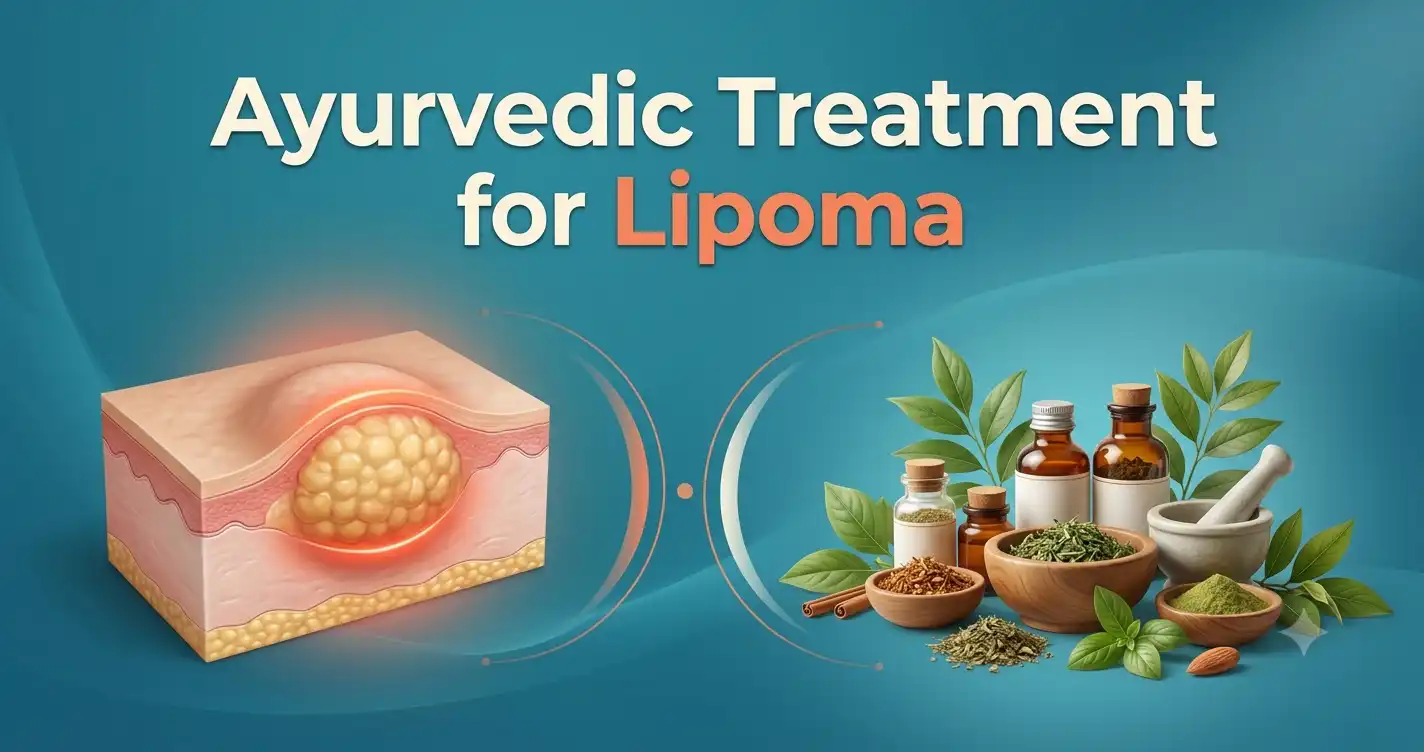
Yes, Ayurvedic treatment for lipoma can help shrink small fatty lumps and manage symptoms for some people; but it's not a guaranteed "poof, it's gone" fix, and surgery is still the only sure-shot way to remove one completely. Now that we've answered the burning question right up top (you're welcome), let's actually talk about what that means in real life, because "it can help" is doing a lot of heavy lifting in that sentence.
A lipoma is a benign (read: not cancerous, please breathe) growth made of fat cells that sits just under the skin. It feels doughy, moves around when you push it, and usually shows up on the shoulders, neck, back, or arms; like an uninvited houseguest who picked the comfiest room in the house.
In Ayurveda, these fatty growths fall under a condition called Medoja Granthi, which translates roughly to "a knot of fat." Ayurvedic texts blame an aggravated Kapha dosha combined with sluggish Vata, leading to excess Meda dhatu (fat tissue) piling up in one spot instead of being metabolized properly. Basically, your body's fat-processing system got lazy and dumped everything in one corner instead of tidying up.
Unlike modern medicine, which mostly shrugs and says "watch it or cut it out," Ayurvedic treatment for lipoma takes the scenic route. The idea isn't just to attack the lump; it's to fix the internal mess that supposedly created it in the first place. Whether or not you buy into doshas, the logic of "improve digestion and metabolism instead of just removing symptoms" isn't exactly wild.
Here's what a typical Ayurvedic approach usually includes:
For those looking into the best herbs for Lipoma, it's important to remember that herbs aren't one-size-fits-all. A qualified practitioner may recommend different formulations depending on your constitution, symptoms, and overall health.
Similarly, the best medicines for Lipoma should not be chosen from a generic online list. Ayurvedic formulations can have specific indications, precautions, and interactions, so professional guidance matters.
Sounds nice in theory, right? But does any of this hold up when you shine an actual scientific flashlight on it?
This is where we put on our serious hat for a second (don't worry, it comes right back off).
A case report published in the Journal of Research in Ayurvedic Sciences documented a patient with a pedunculated lipoma treated using Apamarga Ksharasutra (a medicated thread ligation technique) combined with Triphala Guggulu tablets and a local application of Yastimadhu Ghrita. The lipoma's pedicle completely de-sloughed by the tenth day of treatment, with the therapy showing promising results and no adverse effects in that individual case.
Similarly, a case report in the Journal of Indian System of Medicine looked at managing lipoma alongside an abnormal lipid profile using a treatment called Triphala Kala Basti, with the study specifically evaluating whether this approach could help with the lipoma itself, the lipid profile, and overall weight reduction.
A separate case study published in the World Journal of Pharmaceutical Research used Agnikarma therapy on a lipoma and reported a noticeable reduction in size, with the added benefit of easing itching around the growth.
Now, before you go cancel your surgeon's appointment; a note of honesty here. Most of this evidence comes from individual case reports, not large randomized trials. Even the researchers themselves point out that bigger, well-controlled studies are needed before anyone can confidently say "Ayurveda cures lipomas." Healthline's medical review of the topic is blunt about it too: there's currently no strong scientific backing proving these remedies reliably shrink or eliminate lipomas, and the fat cells inside a lipoma behave differently from regular body fat, so general weight-loss logic doesn't fully apply here.
So, the honest answer is: promising in small studies, not proven at scale. Basically, the medical research equivalent of "it worked for my cousin's neighbor."
Factor
Ayurvedic Approach
Modern Medicine
Speed
Slow and steady, like dial-up internet
Surgery is quick, results are immediate
Scarring
Minimal to none
Small surgical scar possible
Evidence base
Mostly case reports, promising but limited
Well-established, surgery works reliably
Recurrence
Claims to address root cause
Can recur if not fully excised
Commitment level
Requires diet, herbs, patience (lots of it)
One appointment and you're done
Drama factor
Low-key, holistic vibes
Slightly more "let's get this over with" energy
Ayurvedic remedies for lipoma tend to make the most sense for small, non-painful, cosmetically bothersome lumps where someone genuinely wants to avoid a scalpel. If your lipoma is large, growing fast, painful, or pressing on a nerve, that's a "please see a doctor now" situation, not a "let's try herbs for six months" situation.
Ayurveda isn't magic, but it's also not nonsense; it just works on a different timeline and with different expectations than modern surgery. If you're considering treatment, Karma Ayurveda Hospital can provide professional Ayurvedic guidance, while Dr. Puneet Dhawan can help assess whether this approach is appropriate for your individual situation.
Sometimes it shrinks them noticeably in case studies, but there's no solid guarantee it removes one completely.
Generally yes when done under a qualified practitioner, but always check with a doctor before starting, especially alongside other medications.
Usually weeks to a few months, since it works gradually rather than instantly like surgery.
Ayurveda strongly believes so, linking heavy, oily foods to fat buildup, though this connection isn't scientifically confirmed for lipomas specifically.
If the lipoma is large, painful, growing quickly, or pressing on nerves, see a doctor rather than waiting on herbal treatment.
This blog is for general informational purposes only and isn't a substitute for professional medical advice, diagnosis, or treatment. Lipomas should always be evaluated by a qualified doctor or Ayurvedic practitioner before starting any treatment. Please consult a healthcare professional for guidance specific to your condition.
Continue using AI Cursor?Keep it onTurn Off

AyuKarma Testo Build Capsules combine 12 Ayurvedic herbs and minerals to support strength, energy, stamina, physical performance, nourishment and overall daily vitality.

AyuKarma Hair Lush Capsules combine Ayurvedic herbs to support hair growth, reduce hair fall, strengthen roots, nourish the scalp and promote healthier-looking hair.

Karma Garcom Capsules contain Garcinia indica to support healthy metabolism, digestion, weight management, digestive comfort and daily wellness alongside a balanced lifestyle.

Doctor-recommended liver supplement that helps detoxify the liver, support healthy cholesterol, improve digestion & promote liver health. Developed by Dr. Puneet Dhawan with Karma Ayurveda philosophy.

AyuKarma Muscle Magic Capsules combine Ayurvedic herbs to support appetite, digestion, nourishment, healthy weight gain, muscle strength and daily vitality for adults.

AyuKarma Obes-Fit Capsules combine Ayurvedic herbs to support appetite control, digestion, metabolism, healthy weight management, energy and overall wellness alongside an active lifestyle.

AyuKarma Body Detox Capsules combine Ayurvedic herbs to support natural detoxification, digestion, colon cleansing, metabolism, gut wellness and overall rejuvenation for daily vitality.

Doctor-recommended ayurvedic medicine to control diabetes, manage blood sugar levels & reduce diabetes-related complications in diabetic patients. Developed by Dr. Puneet Dhawan with the Karma Ayurveda philosophy.

Doctor-recommended Ayurvedic gut supplement that helps relieve occasional constipation, promote smooth bowel movement, reduce gas & bloating and improve digestion. Developed by Dr. Puneet Dhawan with Karma Ayurveda philosophy.

Doctor-recommended Ayurvedic joint supplement that helps relieve joint pain & stiffness, improve flexibility and support smoother, more comfortable movement. Developed by Dr. Puneet Dhawan with Karma Ayurveda philosophy.

Ayurvedic Kidney Detox Kit for individuals with high creatinine, high BP, diabetes, high uric acid, alcohol consumption habits, frequent painkiller use or early signs of kidney stress.
Second Floor, 77, Block C, Tarun Enclave, Pitampura, New Delhi, Delhi, 110034

Certificate no- AH-2023-0186
JAN 05, 2026 - JAN 04, 2029

US FDA Reg. No.: 14568299376