
What Is High Urea Dangerous?
Yes, high urea can be dangerous if left unchecked for a long time, but on its own, it’s usually more of an early-warning signal than an immediate catastrophe. Think of it less like a house fire and more like the low-oil light blinking on your car's dashboard; it’s telling you to check under the hood before things get messy.
When you open up your routine blood test results and see a bolded red number next to blood urea nitrogen (BUN) or serum urea, it’s completely normal for your brain to jump straight to worst-case scenarios. But before you fall down a late-night internet rabbit hole, let’s take a deep breath and break down what that number actually means, why it gets elevated, and when you should actually pay attention to it.
What Exactly Is Urea, Anyway?
To understand whether elevated numbers are bad news, we first need to look at what urea actually does. Every time you eat a protein-rich meal; whether that’s a grilled chicken breast, a bowl of lentils, or a scoop of whey protein; your body breaks down those proteins into amino acids.
During this digestive process, your liver produces a waste product called ammonia. Because ammonia is quite toxic to human cells, your liver quickly converts it into a much safer compound called urea. From there, urea enters your bloodstream and travels straight to your kidneys. Your kidneys filter it out, mix it with water, and you flush it away every time you go to the bathroom.
When your kidneys are working smoothly and you're staying hydrated, this filtration system runs on autopilot. But if something disrupts the pipeline, high urea levels start accumulating in your bloodstream.
So, When Does High Urea Become Dangerous?
A mild spike in urea isn't a emergency. In fact, it happens all the time for completely harmless reasons, like forgetting your water bottle on a long hike or eating a massive steak dinner the night before your lab draw.
However, if urea stays severely elevated over an extended period, it leads to a medical condition known as uremia. Uremia happens when nitrogenous waste products build up to toxic levels in the blood, essentially dirtying your body's internal plumbing.
To put this into scientific perspective, the Chronic Renal Insufficiency Cohort (CRIC) Study, published in the Journal of the American Society of Nephrology, highlighted that persistently elevated blood urea nitrogen is a strong independent predictor of adverse cardiovascular outcomes and accelerating kidney function decline. The researchers observed that as nitrogenous wastes accumulate, they contribute to systemic inflammation and blood vessel stiffness.
So while a temporary bump isn't going to hurt you, long-term high urea acts like grit in a delicate engine; it slowly wears down your blood vessels, heart, and brain tissue over time.
What Causes Urea to Spike? (It's Not Always Your Kidneys!)
When people see high urea on a lab report, they immediately assume their kidneys are failing. But your kidneys are only part of the puzzle. Here are the most common causes of high urea:
- Dehydration: This is the ultimate culprit behind sneaky urea spikes. When you’re low on fluids, your body conserves water, which concentrates the urea in your blood stream.
- High-Protein Diets: If you’re living on a strict keto or carnivore diet, your liver is processing massive amounts of protein. More protein breakdown equals more urea output.
- Kidney Issues: If the filtering units in your kidneys (nephrons) are damaged from chronic conditions like high blood pressure or diabetes, they simply can't clear urea as fast as your liver produces it.
- Gastrointestinal Bleeding: This one surprises most people. If you have an ulcer or upper GI bleed, your body digests its own blood proteins, leading to a sudden surge in urea levels.
- Certain Medications: Heavy use of NSAID pain relievers, steroids, or diuretics can alter kidney blood flow and bump those numbers up.
- Strenuous Exercise: Pushing your muscles to the absolute limit can accelerate protein breakdown, briefly pushing urea higher.
Urea vs. Creatinine: The Dynamic Duo
When your doctor reviews your kidney panel, they almost never look at urea in isolation. They compare it against another waste product called creatinine. Looking at the BUN to creatinine ratio helps doctors pinpoint whether your high urea is coming from dehydration or actual kidney damage.
Here is a quick breakdown to help you see how these two blood markers compare:
High Urea (BUN)
- Primary Origin: Dietary protein breakdown in the liver
- Sensitivity to Water: Very sensitive (spikes easily when thirsty)
- Dietary Impact: High-protein meals cause immediate bumps
- Drama Level: Fickle (goes up and down quite fast)
- First Line Fix: Drink two big glasses of water!
High Creatinine
- Primary Origin: Normal muscle wear-and-tear
- Sensitivity to Water: Barely affected by daily water intake
- Dietary Impact: Generally stable regardless of diet
- Drama Level: Steady (a truer indicator of kidney filter capacity)
- First Line Fix: Requires a deeper medical evaluation
Symptoms of High Urea You Shouldn't Ignore
A tiny elevation won't make you feel any different. But if urea builds up significantly, your body will definitely let you know. The Modification of Diet in Renal Disease (MDRD) Study demonstrated that patients experiencing elevated uremic toxins report a distinct cluster of physical symptoms that directly correlate with waste accumulation.
Watch out for these classic symptoms of high urea:
- The "Metal Mouth" Effect: A persistent metallic taste in your mouth, sometimes accompanied by breath that smells faintly like ammonia.
- Unexplained Fatigue: Feeling utterly exhausted even after getting eight hours of sleep.
- Loss of Appetite & Nausea: Feeling off-put by foods you normally love, particularly high-protein foods like meat.
- Brain Fog: Struggling to focus, feeling unusually confused, or feeling lightheaded.
- Fluid Retention: Swelling in your ankles, feet, or legs due to improper fluid clearance.
How to Lower Urea Levels Naturally
If your lab work shows elevated numbers, don't panic. Unless your doctor diagnoses a serious kidney condition, bringing your levels back into balance is often straightforward. Here is how to lower urea levels:
- Hydrate Smarter, Not Just Harder: Drink clean water consistently throughout the day rather than chugging a gallon all at once. Proper hydration keeps fluid moving through your renal filters.
- Balance Your Protein Intake: You don't need to quit protein entirely, but swapping a few heavy meat meals for plant-based proteins can give your liver and kidneys a welcome breather.
- Review Your Medicine Cabinet: Talk to your doctor about whether everyday drugs like ibuprofen might be stressing your kidneys.
- Manage Blood Pressure & Sugar: Keeping your blood pressure and blood sugar in check protects the tiny blood vessels inside your kidneys from long-term scarring.
Case Study
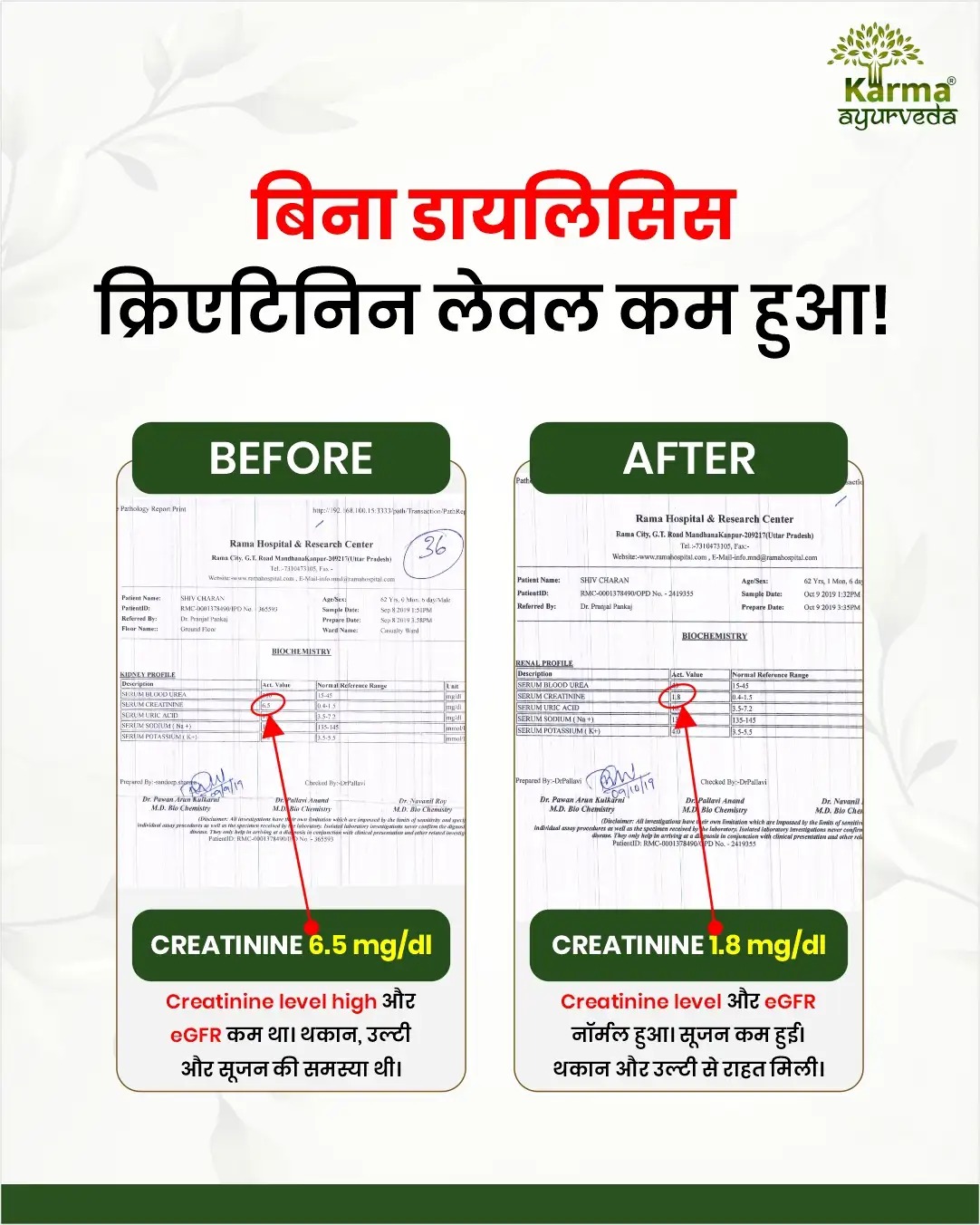
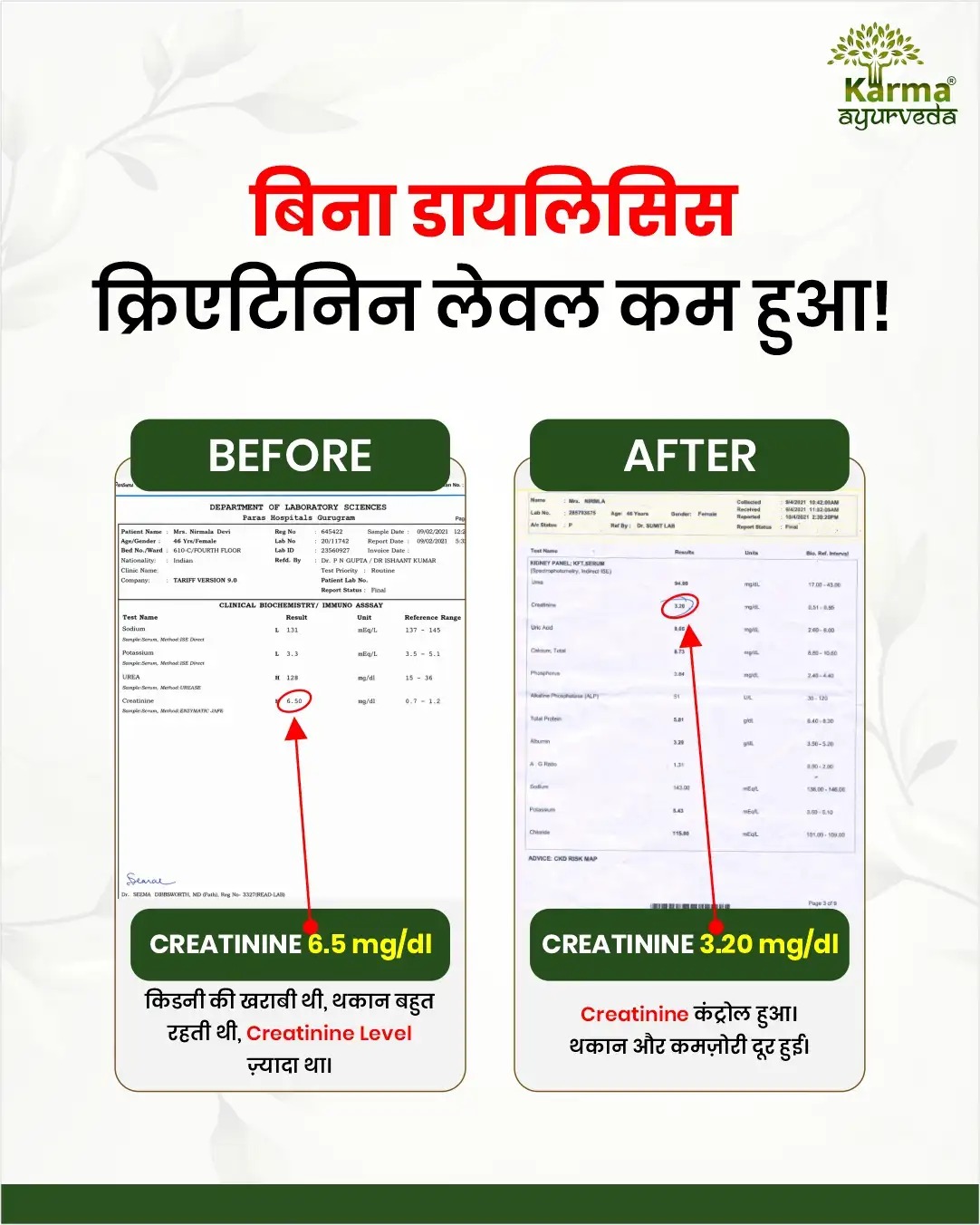
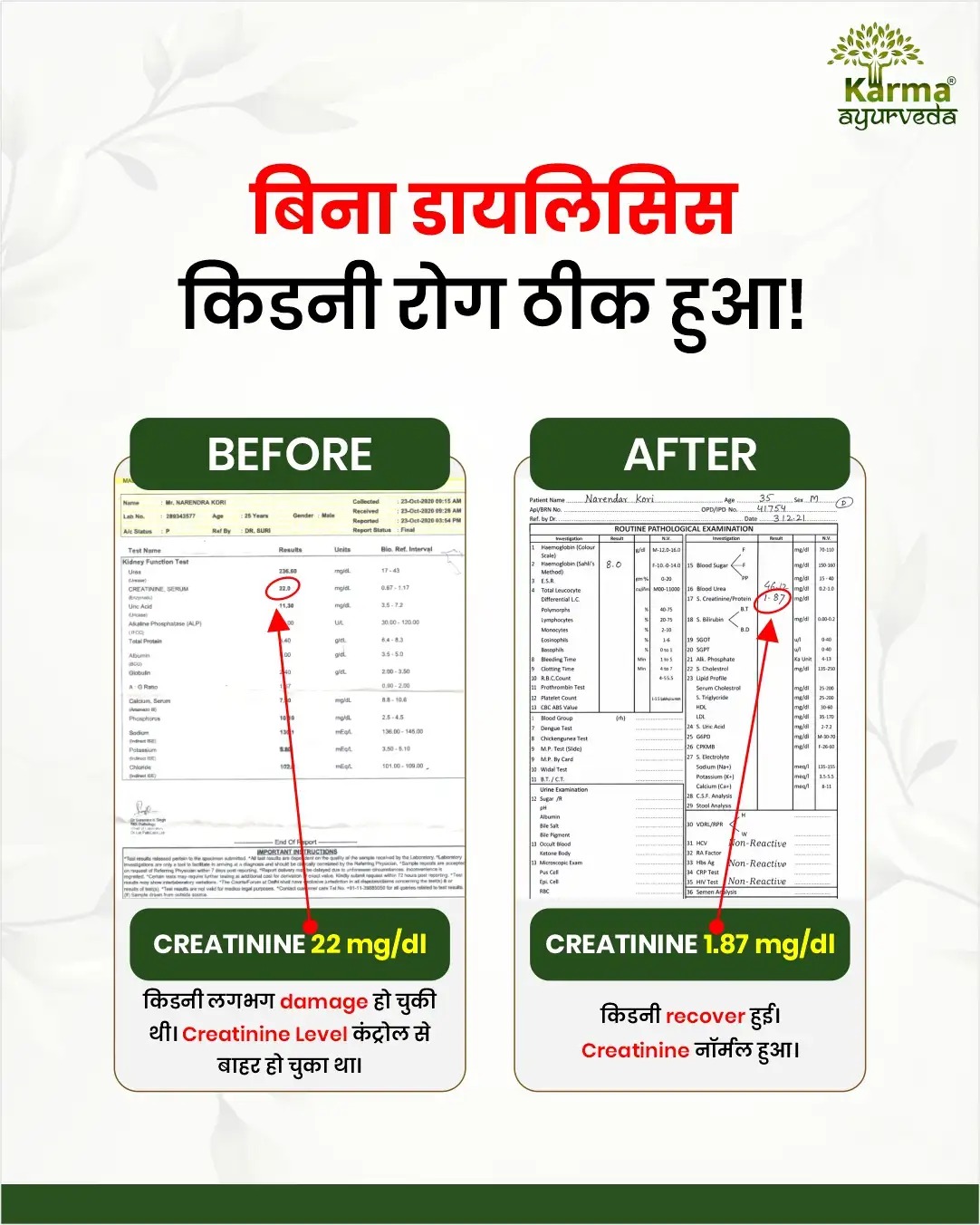
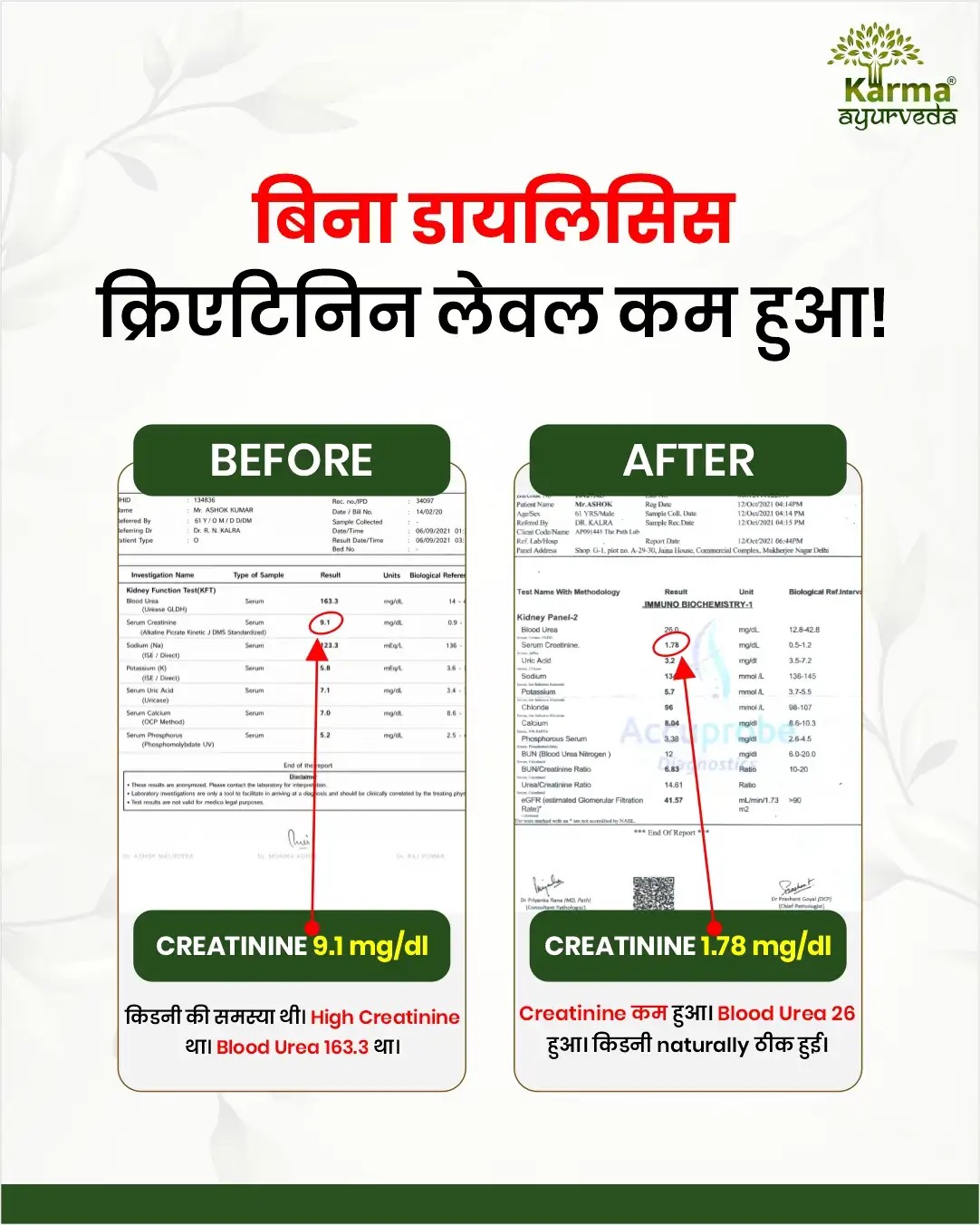
Gary had been living with Chronic Kidney Disease (CKD) and was frustrated by the lack of improvement despite following conventional medical advice. He experienced persistent fatigue, mild fluid retention, and increasing anxiety as his kidney function remained unchanged. Medical reports showed an estimated Glomerular Filtration Rate (eGFR/GFR) of 41 mL/min, indicating Stage 3b CKD. Looking for a holistic approach to support his kidney health, Gary chose to begin treatment with Karma Ayurveda.
Following a detailed assessment, he received a personalized Ayurvedic treatment plan that included herbal formulations, a kidney-friendly diet, lifestyle modifications, and regular health monitoring. The treatment focused on supporting kidney function naturally, reducing the burden on the kidneys, and improving overall health through a comprehensive, holistic approach rather than simply managing symptoms.
Over the next eight months, Gary followed the prescribed regimen consistently and experienced steady improvements in both his health and laboratory reports. His eGFR/GFR increased from 41 mL/min to 60 mL/min, indicating improved kidney filtration and overall renal function. He also reported higher energy levels, reduced fatigue, and better overall well-being. His journey demonstrates how personalized Ayurvedic care, combined with consistent treatment and appropriate medical supervision, may help support kidney health and improve quality of life. While individual outcomes vary, his experience highlights the potential benefits of a holistic approach to managing chronic kidney disease.
Key Takeaways
- High urea is an indicator of potential system stress, not an automatic diagnosis of organ failure.
- Dehydration and high-protein diets are the most common non-dangerous causes of elevated urea.
- Persistent, extremely high urea (uremia) can cause systemic damage and requires medical intervention.
- Doctors compare urea against creatinine to determine if the issue stems from fluid loss or kidney performance.
- Increasing daily water intake and balancing protein consumption are often the simplest ways to normalize numbers.
Frequently Asked Questions
Can drinking water quickly lower high urea levels?
Yes, if your high urea is caused by mild dehydration, increasing your fluid intake can rapidly help your kidneys flush out excess waste.
What is considered a dangerously high urea level?
Urea levels rising significantly above normal lab reference ranges; especially alongside elevated creatinine; indicate potential uremia requiring prompt medical care.
Does a high-protein diet permanently damage your kidneys?
High protein diets cause a temporary spike in urea production, but scientific evidence shows they do not cause permanent kidney damage in healthy individuals.
What foods should I avoid if my urea is high?
Limiting excess red meat, processed meats, and heavy protein powders can help temporarily reduce the workload on your nitrogen-filtering system.
Can stress cause high urea levels?
Chronic physical stress increases catabolic hormones like cortisol that break down muscle tissue, which can indirectly lead to higher urea output.
Disclaimer
This article is for informational and educational purposes only and should not be taken as professional medical advice. Always consult a qualified healthcare provider or nephrologist regarding any questions you may have about your lab results, kidney function, or underlying medical conditions. Never delay seeking medical advice because of something you read online.