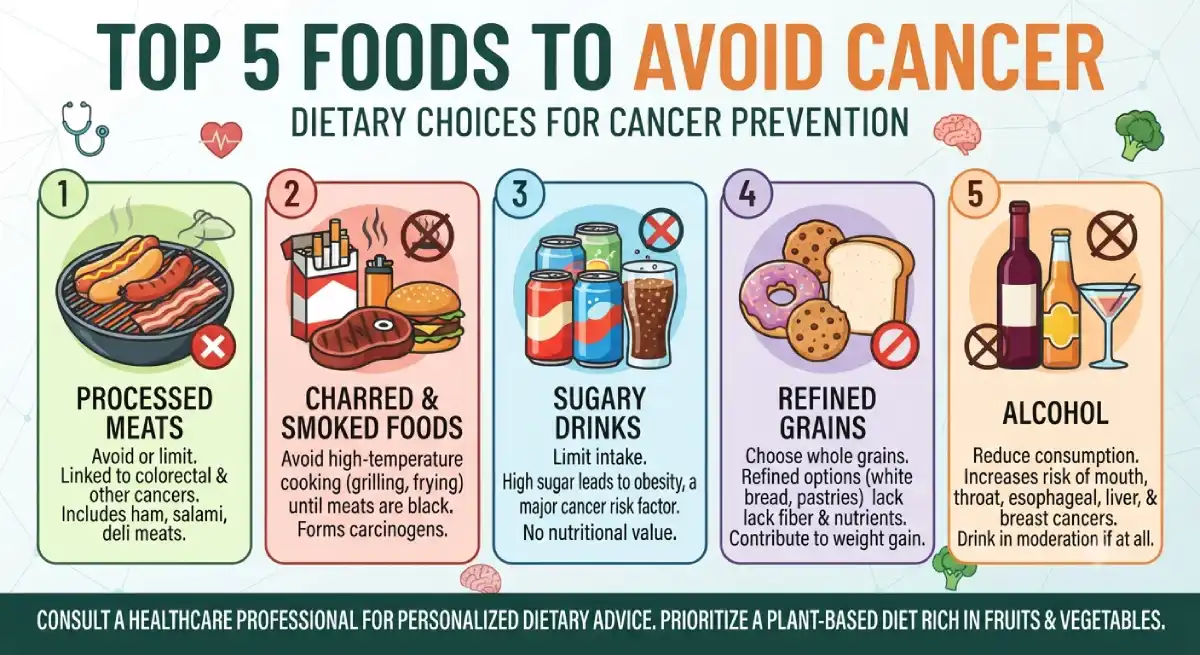
Top 5 Foods To Avoid Cancer
Five foods you need to consume to avoid cancer (or, honestly speaking, reduce your chances) include cruciferous vegetables like broccoli, beans and lentils, whole grains, tomatoes and nuts. No food can make you completely immune to cancer, but these are the ones that research keeps associating with the decreased chances of the disease.
Nobody likes to get a lecture while eating dinner, so I'll make it light. Consider this conversation as a nudge towards shopping cart or the first topic of your discussion with your doctor about the prevention or treatment of cancer.
The Five Plate Heroes
1. Broccoli, Cabbage and Cauliflower
And, yes, your mom was nagging about it; the cruciferous vegetables. In Pharmacological Research (2007), Higdon and co-workers searched for evidence concerning the effect of cruciferous vegetables on cancer development.
2. Beans and Lentils
It's cheap, filling and underrated food. Bobe and his colleagues wrote in Cancer Epidemiology, Biomarkers & Prevention (2008) that people who ate lots of dry beans have lower chances of colorectal adenomas recurrence. Colorectal adenomas are the small growths that can become cancer.
3. Whole Grains
Brown rice, oats, millets and whole wheat roti are very beneficial as they provide fiber to the body. The meta-analysis performed by Aune and his colleagues in the BMJ (2011) showed a correlation between higher fiber and whole grain intake and lower risk of colorectal cancer.
4. Tomatoes
Ketchup does not count, sadly enough. Giovannucci and his colleagues did find a slight decrease in prostate cancer risk in men who ate lots of tomatoes in their study published in the Journal of the National Cancer Institute (2002). The effect was minor, however, so enjoy tomato products without any magical expectations.
5. A Handful of Nuts
The new study by Bao et al. published in The New England Journal of Medicine (2013) says that regular consumption of nuts is associated with decreased death rate in general, including cancer.
Quick Look: Swap Edition
| Usual Choice | What Your Cells Whisper | Friendlier Swap |
|---|---|---|
| White bread | Where's the fibre? | Whole wheat or multigrain |
| Processed meat sandwich | No, thanks. | Chickpea or dal wrap |
| Packaged chips | Salt overload! | Roasted nuts or makhana |
And How about Ayurveda?
Ayurveda has always seen food as the important aspect of the overall wellbeing and therefore, the discussion of Ayurvedic treatment for cancer starts with digestion, routine and diet. Among all herbs, turmeric (curcumin) is one of the popular choices, which have already been subject of studies in labs and preliminary clinical trials.
When asking people about the best herbs for cancer treatment in Ayurveda, one can usually get the information about such herbs as turmeric, ashwagandha and tulsi. Nevertheless, human studies of these herbs are still limited, whereas the herbs can interfere with chemotherapy and other drugs used in cancer therapy. Discuss everything with your oncologist first.
Beyond the Plate
Food is just one component of this picture. These habits are also extremely important.
- Avoid any kind of tobacco product.
- Keep alcohol to a minimum
- Try to make some physical activity every day
- Maintain a healthy weight
- Have regular screenings
If you are looking for options, there is no single answer about the best Ayurvedic treatment for cancer, since the choice of treatment depends on the diagnosis, the stage and the type of treatment that you are going to have, so it is important to consult a specialist for it.
The Wrap-Up
Eat colorful and plant-based dishes, but do not worry about occasional jalebi. Nowadays, people try to get an Ayurvedic treatment option for cancer. There is a lot of information about Karma Ayurveda for cancer treatment on the internet. As for the best medicines for herbal cancer treatment, you should talk with a specialist who can analyze your condition.
Key Takeaways
- Broccoli, beans, whole grains, tomatoes, and nuts are connected to a decreased risk.
- Not a single food guarantees protection
- Lifestyle habits like not smoking also matter.
- Herbs need professional guidance, especially during treatment
- Diet supports medical care and never replaces it.
Frequently Asked Questions
Can food really prevent cancer?
Foods can reduce risk of disease development but they will not provide any guarantee.
Is broccoli really that good for you?
So many studies state that this food will be useful for you, so you can make peace with it.
Are tomatoes effective in preventing cancer?
There are some studies showing its connection especially with the development of prostate cancer.
Can turmeric treat cancer?
It’s being studied, but it isn’t a replacement for proper treatment.
Should I change my diet during cancer treatment?
Chat with your oncologist or dietitian first, since needs vary.
Disclaimer
This blog is for general information only and isn’t a substitute for professional medical advice, diagnosis or treatment. Cancer is complex and varies from person to person, so please consult a qualified oncologist or healthcare professional before changing your diet, starting herbs or altering any prescribed treatment.