
Why Is There Foam In Urine?
Short answer: it's usually just pee hitting the water too fast, like a mini Jacuzzi jet. But sometimes, foam in urine is your kidneys tapping you on the shoulder and going "hey, we might need to talk."
Now, before you spiral into a 2 a.m. WebMD wormhole; take a breath. Almost everyone has looked down at the toilet at some point and thought, "wait, is that... foam? Am I dying?" You are, statistically, probably not dying. But foamy urine is one of those symptoms that's genuinely worth understanding, because in a small number of cases, it's your body's way of waving a little red flag before things get more serious. So let's actually get into it; no jargon, no fear-mongering, just the real, slightly weird science of why your pee sometimes looks like the head on a badly poured beer.
Okay, But What's Actually Making It Foam?
Your kidneys are basically bouncers at the world's most exclusive club; your bloodstream. Their job is to let waste and extra water leave your body through urine while keeping the VIPs (like protein) inside, where they belong. Protein molecules are just too big and too important to be shown the door.
When everything's working fine, almost no protein sneaks past the kidney's filters (tiny structures called glomeruli, which sound like a Pixar villain but are actually just microscopic sieves). Normal urine has very little protein, very little surface tension weirdness, and basically no lasting foam.
But when protein does slip through; a condition doctors call proteinuria; it changes the surface tension of your urine, and suddenly it can bubble up like you dropped a bar of soap in the toilet. According to nephrologist Dr. Cybele Ghossein at Northwestern Medicine, the difference matters: regular bubbles are big, clear, and flush away easily, while true foam is white, dense, and tends to stick around even after you flush; often compared to the foam on a freshly poured beer.
So Is It Always A Kidney Problem?
Nope; and this is the part that should make you feel better. There are a bunch of totally harmless reasons for foam, including:
- A fast or forceful urine stream (physics, not pathology)
- Dehydration, which concentrates your urine
- Not having peed in a while (morning pee foams more, it's just science)
- Certain medications
- Mild, temporary protein spikes from a workout, fever, or stress
In fact, research published in the Clinical Journal of the American Society of Nephrology found that only around a third of people who report foamy urine actually have clinically significant proteinuria when tested. Other studies put that number closer to one in five. Translation: most foam is not a five-alarm fire. It's more like your smoke detector going off because you made toast.
When Foam Actually Deserves Your Attention
That said, "usually fine" isn't the same as "always fine," so here's when you should stop shrugging it off:
- The foam is persistent; showing up almost every time you pee, not just once
- You also notice swelling in your legs, ankles, hands, or around your eyes
- You're unusually tired or fatigued for no clear reason
- You have a family history of kidney disease, diabetes, or high blood pressure
- Your urine also looks unusually dark, bloody, or smells different than usual
If several of these line up, it's genuinely worth a conversation with a doctor rather than a Google spiral. Persistent proteinuria can be an early sign of chronic kidney disease, diabetes-related kidney damage, high blood pressure straining the kidneys, or in pregnancy, a condition called preeclampsia; all things that are much easier to manage when caught early, according to Cleveland Clinic.
The "Should I Worry?" Cheat Sheet
Situation: Foam appears once, disappears after a flush or two
Verdict: Chill out
Vibe: Beer-foam cameo, not a crisis
Situation: You just chugged 3 glasses of water and peed like a firehose
Verdict: Chill out
Vibe: Physics, not pathology
Situation: Foam every single time, for over a week
Verdict: Worth checking
Vibe: Your kidneys sent an email, please respond
Situation: Foam + swollen ankles + fatigue
Verdict: See a doctor soon
Vibe: This is not a "wait and see" situation
Situation: Foam + you Googled it at 1 a.m. and now can't sleep
Verdict: Also worth a doctor visit, mostly for your sanity
Vibe: Anxiety spirals help nobody
What A Doctor Will Actually Do About It
If you do bring it up, nobody's going to make you feel dramatic for asking. A standard workup is refreshingly simple:
- A urinalysis; a quick dipstick test that checks protein levels
- A urine protein-to-creatinine ratio test if the dipstick raises questions
- Blood pressure and blood sugar checks, since both are closely tied to kidney health
- Possibly bloodwork to check kidney function directly (creatinine, GFR)
None of this is invasive, scary, or expensive in the grand scheme of medical tests; and catching an issue early genuinely changes outcomes.
Where Ayurveda Fits Into The Picture
A lot of people, especially once they've been told their kidney numbers aren't perfect, start looking into gentler, more holistic support alongside their regular treatment. This is where Ayurvedic treatment for foamy urine often comes up in conversation. Traditional Ayurvedic practice has long used herbs like Punarnava and Gokshura, which are sometimes discussed for their diuretic and kidney-supportive properties in Ayurvedic texts.
Here's the honest, non-salesy take: these herbs are worth discussing with a qualified practitioner as a complementary approach; think supporting overall wellness alongside medical care; not as a replacement for actual nephrology treatment, especially if there's confirmed kidney damage. Robust, large-scale clinical evidence for reversing kidney disease with herbal treatment alone is limited, and kidney disease is not a "wait it out" kind of condition. If you're exploring this route, do it with a licensed doctor in the loop, not instead of one.
Key Takeaways
- Foamy urine is common and, most of the time, totally harmless
- The main medical cause to know about is proteinuria; protein leaking into urine because kidney filters are stressed or damaged
- Only about 1 in 3 (sometimes as low as 1 in 5) people with foamy urine actually have significant proteinuria
- Persistent foam, especially with swelling or fatigue, is your cue to see a doctor
- A simple urine test can usually answer the question in one visit
- Ayurvedic treatment for foamy urine can be a reasonable complementary option, but should never replace medical evaluation for kidney disease
CASE STUDY
YouTube Video: [ Watch the case study on YouTube](https://www.youtube.com/watch?v=pnQLWc3euUQ&utm_source=chatgpt.com)
Patient: TC Kathoria
Age: 82 years
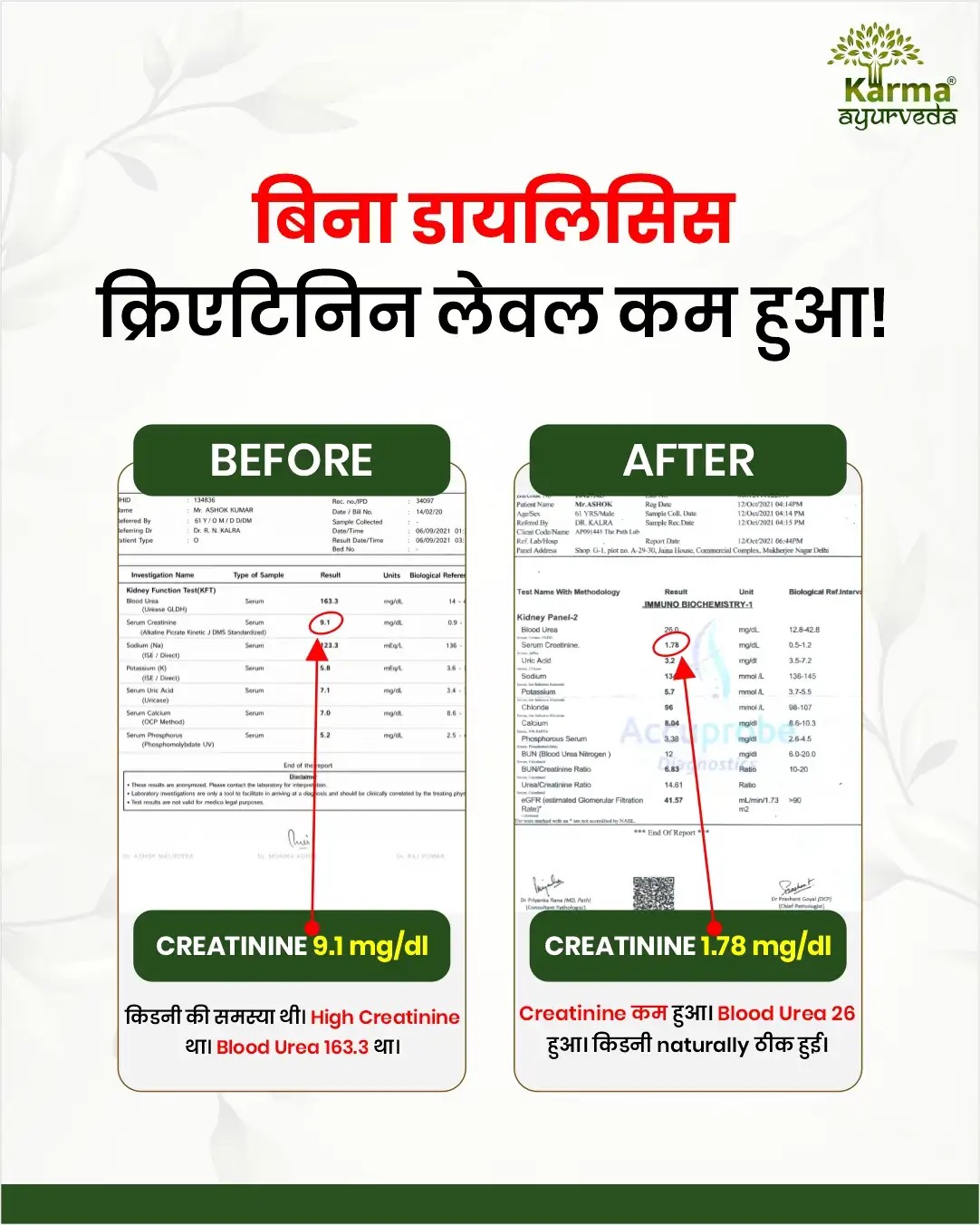
Condition: Reduced kidney function with elevated creatinine
Case Overview:
At 82, TC Kathoria was experiencing declining kidney function accompanied by significant weakness and reduced vitality. His family was concerned about his health and wanted an approach that could support his condition while taking his age and overall health into consideration. He eventually consulted Karma Ayurveda for personalized kidney care.
Key Symptoms:
- Severe generalized weakness
- Reduced energy and stamina
- Declining physical vitality
- Emotional stress related to his health condition
Medical Reports:
According to the case study, his initial reports showed a creatinine level of 2.84 mg/dL and a GFR of 26 mL/min, indicating significantly reduced kidney function.
Treatment Journey:
TC Kathoria began a customized Ayurvedic treatment plan designed around his age and health requirements. The reported approach included herbal formulations, dietary modifications, and supportive lifestyle guidance aimed at supporting kidney function and overall well-being.
He followed the recommended regimen consistently while his kidney-related parameters were monitored over time.
Outcome:
The case study reports that his creatinine decreased from 2.84 mg/dL to 2.05 mg/dL, while his GFR improved from 26 mL/min to 32 mL/min. He also experienced improvements in his energy, physical strength, and overall sense of well-being.
Key Takeaway:
TC Kathoria’s case highlights the value of individualized care, regular kidney-function monitoring, appropriate nutrition, and lifestyle management, particularly in older adults. His reported improvements occurred during Ayurvedic care, but GFR and creatinine can change for many reasons, so treatment decisions should always be made with a qualified healthcare professional.
FAQs
Is foam in urine always a sign of kidney disease?
No; most of the time it's just a strong stream or dehydration, not kidney trouble.
How do I tell the difference between normal bubbles and concerning foam?
Regular bubbles are big and flush away fast, while true foam is thick, white, and lingers even after flushing.
Can drinking more water fix foamy urine?
If dehydration is the cause, yes, staying hydrated often clears it up within a day or two.
Should I try Ayurvedic remedies before seeing a doctor?
It's better to get checked first and use Ayurvedic support alongside medical advice, not instead of it.
When should I actually see a doctor about foamy urine?
If it happens almost every time you pee, or comes with swelling or fatigue, book that appointment.
Disclaimer
This article is for general informational purposes only and isn't a substitute for professional medical advice, diagnosis, or treatment. Foamy urine can have many causes, some serious and some not. Please consult a qualified doctor or nephrologist for any concerns about your kidney health before starting any treatment, herbal or otherwise.