Unlocking Wellness Naturally
100% Ayurvedic Treatment

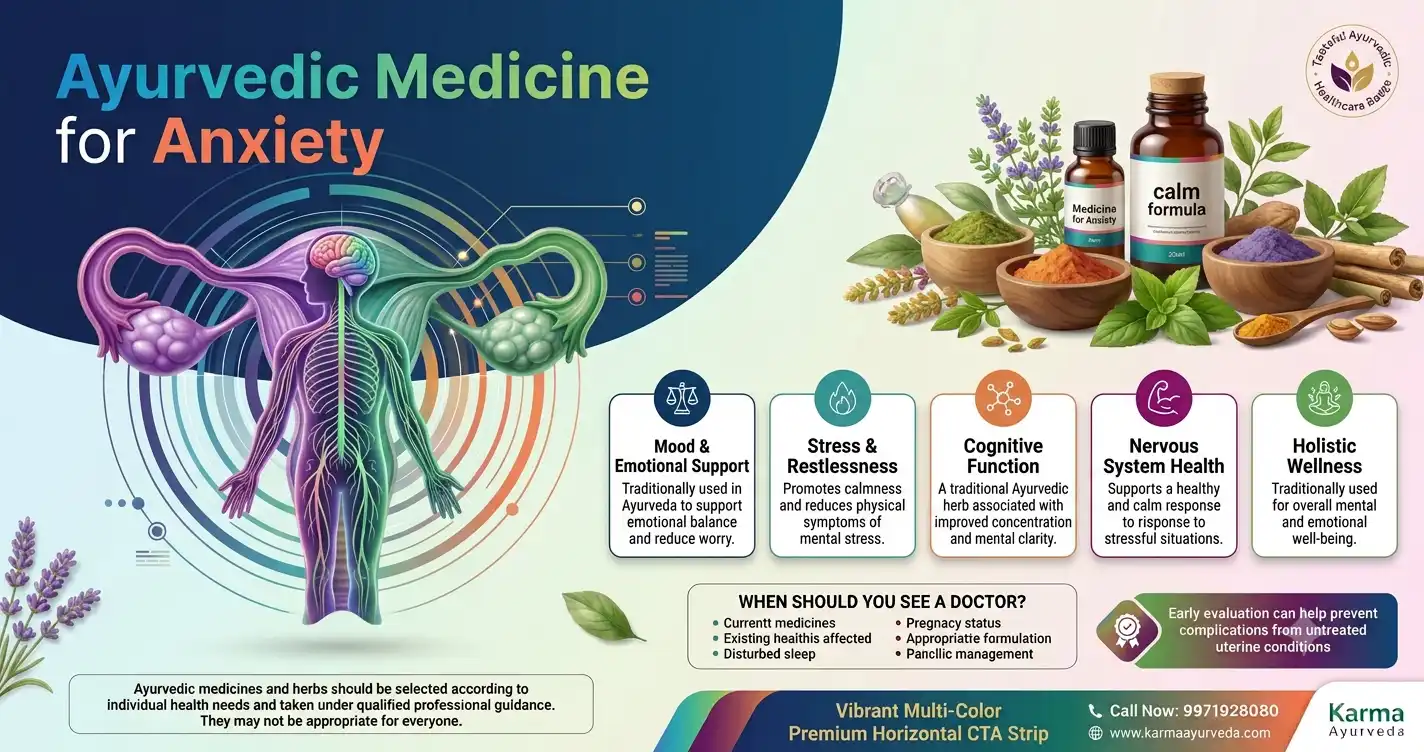
Yes, Ayurvedic medicine for anxiety may be used as part of a broader approach to managing stress, restlessness and worry, but it should be chosen with professional guidance rather than picked from a random shelf. Ayurveda also looks beyond a single symptom, combining herbs, breathing practices, sleep, food and daily routine.
And honestly, that makes sense. When your mind is running 47 tabs at once, simply saying “relax” is rarely helpful.
Feeling worried before an interview, an exam or an important meeting is completely normal. The concern comes when that feeling becomes frequent, intense or difficult to control.
According to the World Health Organization, anxiety disorders can involve excessive fear or worry along with symptoms such as restlessness, tension, difficulty concentrating, sleep problems, sweating, trembling and palpitations.
It can show up in different ways:
This is why finding the best medicines for anxiety is not simply about finding one magic tablet or herb. The right approach depends on what is causing the problem, how severe it is and how long it has been going on.
Ayurveda traditionally views mental well-being through the balance of the body, mind, senses, digestion and daily routine. Rather than focusing only on suppressing a particular feeling, an Anxiety Ayurvedic treatment approach may consider factors such as:
In Ayurvedic thinking, disturbances associated with Vata dosha are often discussed in relation to restlessness, racing thoughts, disturbed sleep and nervousness.
That does not mean every worried person has the same imbalance. Ayurveda is traditionally individualized, which is why blindly copying someone else’s herbal routine is not necessarily a brilliant idea.
When people search for Ayurvedic medicine for anxiety, they often come across herbs such as Ashwagandha, Brahmi and Jatamansi.
These herbs have a long history of use in Ayurveda, but “natural” does not automatically mean “suitable for everyone.”
Ashwagandha (Withania somnifera) is probably the most familiar name in this conversation. It has been studied for stress and anxiety-related symptoms.
A 2014 systematic review of human trials found that several studies reported improvements in anxiety or stress scores with Ashwagandha, although the researchers also highlighted limitations such as small studies, different methods and potential bias.
More recently, a 2026 systematic review and meta-analysis of 22 randomized controlled trials also reported promising effects on stress and anxiety, while noting that better-quality research is still needed to establish ideal doses and treatment duration.
So, promising? Yes. A guaranteed cure? No.
Brahmi is another traditionally used Ayurvedic herb associated with memory, concentration and mental calmness. It is sometimes included in formulations designed to support cognitive and emotional well-being.
Jatamansi has traditionally been used in Ayurveda for calming and supporting sleep and mental balance. It may be considered in certain Ayurvedic formulations, depending on the person's overall condition.
The important point is that these herbs should not be treated like interchangeable candies. Dosage, formulation, other medicines and individual health conditions matter.
Here is something wonderfully inexpensive: your breath.
You already have it. No delivery charge, no subscription and no complicated packaging.
Some of the best breathing exercises for anxiety focus on slowing down the breath and making the exhalation comfortable and controlled.
You can try:
Research supports the general idea that breathing practices can help. A meta-analysis of 40 randomized controlled trials found that respiratory-focused interventions produced meaningful improvements in anxiety symptoms, although results varied between studies.
A 2024 systematic review also found that many studies reported improvements in anxiety and stress following breathing interventions, while noting that larger, stronger trials are still needed.
Even a 2026 randomized controlled study found that slow-paced breathing reduced retrospectively reported anxiety in people with subclinical symptoms, although it did not improve every measured outcome.
The takeaway? Breathing can be useful, but it is not a replacement for appropriate medical care.
One of the interesting things about an Ayurvedic treatment for anxiety approach is that it may include several pieces instead of putting all the responsibility on a bottle of medicine.
These can include:
Think of it as fixing the whole “system” rather than repeatedly pressing the snooze button on one annoying symptom.
Ayurveda focuses on herbs, routine, diet, yoga and breathing and is best thought of as a holistic approach.
Psychotherapy focuses on thoughts, emotions and behaviours and is a core evidence-based treatment.
Prescription medicines focus on brain chemistry and symptoms and are medical treatment when appropriate.
Lifestyle practices focus on sleep, movement and stress management and provide helpful everyday support.
The WHO states that psychological interventions, particularly approaches based on cognitive behavioural therapy, are important treatments for anxiety disorders. Medicines such as SSRIs may also be useful for some adults.
So if symptoms are persistent or interfering with everyday life, it is sensible to discuss treatment options with a qualified healthcare professional rather than relying only on self-treatment.
This is where the “but it’s herbal!” argument needs a small reality check.
Some herbs can interact with medicines or may not be appropriate with certain medical conditions. Supplements can also vary in strength and quality.
If you are already taking prescription medicines, pregnant or breastfeeding, have a chronic health condition, or are experiencing severe symptoms, speak with a healthcare professional before starting an Ayurvedic formulation.
And never stop prescribed psychiatric medication suddenly just because you want to try an herbal option.
Occasional worry is one thing. Persistent distress is another.
Consider professional help if you:
Mental health conditions are treatable, and asking for help is not a sign that you have somehow failed at “handling life.” The WHO notes that effective treatments are available, although many people still do not receive appropriate care.
Looking for an Ayurvedic treatment for anxiety does not have to mean choosing between traditional practices and modern healthcare. A sensible approach can include evidence-based medical care alongside suitable lifestyle, breathing and Ayurvedic practices.
The goal is not to force your mind to become perfectly quiet; because, frankly, the human brain did not receive that memo. The goal is to build better ways of handling stress, calming the body and getting back to everyday life with a little more ease.
Some Ayurvedic herbs may help with stress and anxiety symptoms, but they should be used with appropriate professional guidance.
There is no single best option for everyone because the suitable herb or formulation depends on the individual.
Slow-paced diaphragmatic breathing is a simple option that has research support for reducing anxiety symptoms.
There is no reliable evidence that Ayurveda alone can cure every anxiety disorder, so persistent symptoms should receive proper medical assessment.
Do not combine them without professional advice because some herbs may interact with prescription medicines.
This article is for general educational purposes only and should not be treated as medical advice, diagnosis or a substitute for professional care. Ayurvedic medicines and herbs may not suit everyone and can interact with medicines. Consult a qualified healthcare professional before starting, stopping or changing any treatment.
Continue using AI Cursor?Keep it onTurn Off

AyuKarma Testo Build Capsules combine 12 Ayurvedic herbs and minerals to support strength, energy, stamina, physical performance, nourishment and overall daily vitality.

AyuKarma Hair Lush Capsules combine Ayurvedic herbs to support hair growth, reduce hair fall, strengthen roots, nourish the scalp and promote healthier-looking hair.

Karma Garcom Capsules contain Garcinia indica to support healthy metabolism, digestion, weight management, digestive comfort and daily wellness alongside a balanced lifestyle.

Doctor-recommended liver supplement that helps detoxify the liver, support healthy cholesterol, improve digestion & promote liver health. Developed by Dr. Puneet Dhawan with Karma Ayurveda philosophy.

AyuKarma Muscle Magic Capsules combine Ayurvedic herbs to support appetite, digestion, nourishment, healthy weight gain, muscle strength and daily vitality for adults.

AyuKarma Obes-Fit Capsules combine Ayurvedic herbs to support appetite control, digestion, metabolism, healthy weight management, energy and overall wellness alongside an active lifestyle.

AyuKarma Body Detox Capsules combine Ayurvedic herbs to support natural detoxification, digestion, colon cleansing, metabolism, gut wellness and overall rejuvenation for daily vitality.

Doctor-recommended ayurvedic medicine to control diabetes, manage blood sugar levels & reduce diabetes-related complications in diabetic patients. Developed by Dr. Puneet Dhawan with the Karma Ayurveda philosophy.

Doctor-recommended Ayurvedic gut supplement that helps relieve occasional constipation, promote smooth bowel movement, reduce gas & bloating and improve digestion. Developed by Dr. Puneet Dhawan with Karma Ayurveda philosophy.

Doctor-recommended Ayurvedic joint supplement that helps relieve joint pain & stiffness, improve flexibility and support smoother, more comfortable movement. Developed by Dr. Puneet Dhawan with Karma Ayurveda philosophy.

Ayurvedic Kidney Detox Kit for individuals with high creatinine, high BP, diabetes, high uric acid, alcohol consumption habits, frequent painkiller use or early signs of kidney stress.
Second Floor, 77, Block C, Tarun Enclave, Pitampura, New Delhi, Delhi, 110034

Certificate no- AH-2023-0186
JAN 05, 2026 - JAN 04, 2029

US FDA Reg. No.: 14568299376