Unlocking Wellness Naturally
100% Ayurvedic Treatment

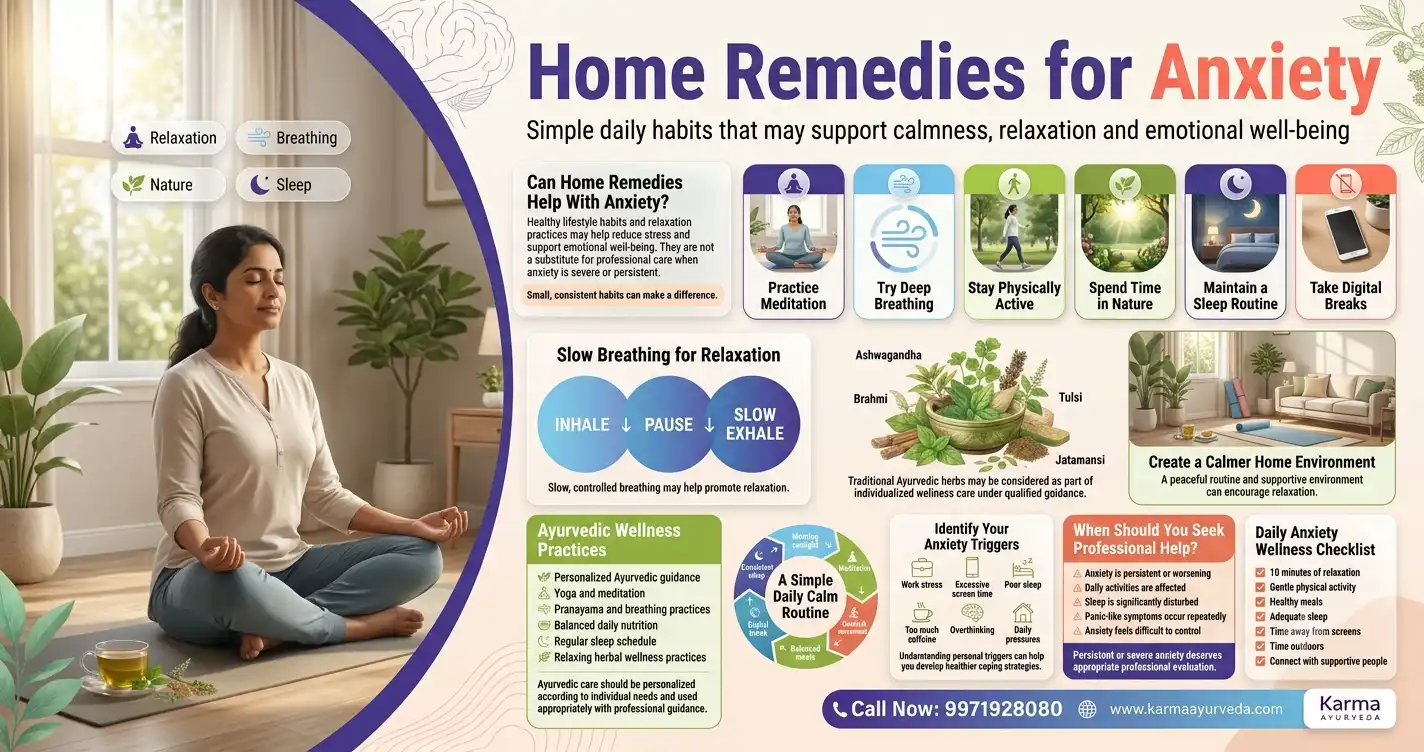
Feeling anxious? A few simple home remedies can help calm the mind and body, especially when stress is occasional or mild. Home remedies for anxiety such as slow breathing, regular movement, better sleep, mindfulness, and calming routines may make those difficult moments a little easier.
The important bit, though, is not to expect one magical remedy to switch off your worries like a light bulb. The mind rarely works that politely.
That familiar feeling can show up in many ways; racing thoughts, a tight chest, restless sleep, constant worrying, or simply feeling like something is wrong even when you cannot quite explain what.
Before reaching for complicated solutions, start with simple things that tell your nervous system, “Hey, we are safe. You can unclench your jaw now.”
Some useful options include:
These approaches are not a substitute for professional care when symptoms are persistent, but they can be useful tools for day-to-day stress management.
When the mind starts racing, breathing often becomes quicker and shallower. Deliberately slowing it down can help shift your attention away from the mental noise.
One simple method is:
Inhale gently for 4 seconds → exhale slowly for 6 seconds.
Repeat this for a few minutes without forcing your breath.
If you are looking for the best breathing exercises for anxiety, slow diaphragmatic breathing is a good place to begin. You do not need an expensive app, fancy equipment, or a Himalayan retreat. Your lungs came free with the package.
The research around breathing and relaxation techniques suggests they can help with stress and anxious feelings, although they should not be considered a standalone treatment for an anxiety disorder.
Sometimes the best thing you can do for an overthinking brain is to get the body moving.
A 15–30 minute walk can help break the cycle of sitting, thinking, worrying, checking your phone, thinking again…and somehow ending up researching something completely unrelated at 2 a.m.
Regular physical activity is associated with better mood and lower stress. Even gentle movement can become part of a healthy routine.
Try:
The goal is consistency, not becoming an Olympic athlete by Thursday.
Mindfulness simply means paying attention to what is happening right now instead of constantly travelling between yesterday's mistakes and tomorrow's imaginary disasters.
You can start with five minutes.
Sit comfortably, notice your breathing, and gently bring your attention back whenever your mind wanders.
A major 2014 systematic review and meta-analysis of 47 trials involving 3,515 participants, published in JAMA Internal Medicine, found moderate evidence that mindfulness meditation programs can improve anxiety and psychological stress.
That does not mean meditation “cures” every problem. It means there is reasonable evidence that it can be a useful part of managing symptoms.
Poor sleep and a worried mind can become a rather annoying two-person team.
When you are tired, everyday problems can feel much bigger than they did the previous morning.
Try keeping a reasonably consistent sleep schedule and:
You do not need a perfect sleep routine. Even making it a little more predictable can help.
That extra cup of coffee may feel like emotional support at 5 p.m., but caffeine can increase restlessness, rapid heartbeat and difficulty sleeping in some people.
If you regularly feel jittery or notice that your symptoms worsen after coffee, tea, energy drinks or other caffeinated beverages, consider reducing your intake gradually.
You do not have to announce a dramatic breakup with chai. Just notice how your body responds.
Lavender is commonly used in relaxation routines, particularly through aromatherapy.
Research is interesting here. A 2019 systematic review and meta-analysis of 65 randomized controlled trials and 7,993 participants found that lavender interventions were associated with reduced anxiety levels, although the researchers also highlighted limitations in the quality and consistency of the available studies.
Another systematic review found potentially favourable effects from lavender aromatherapy, while also calling for better-quality research.
So, lavender may be a pleasant addition to a calming routine; but it should not be treated as a replacement for proper care.
A scattered routine can leave the mind feeling scattered too.
Try giving your day a little structure:
Nothing revolutionary here. Sometimes boringly sensible habits are surprisingly useful.
Ayurveda traditionally looks at mental wellbeing as part of overall health rather than treating the mind and body as two completely separate departments.
An Anxiety Ayurvedic treatment approach may focus on daily routine, diet, sleep, breathing practices, yoga, meditation and individualized herbal support.
The idea is generally to create better balance rather than simply chase one symptom.
However, it is important to be sensible about herbal products. “Natural” does not automatically mean “risk-free.” Supplements can interact with medicines, and their quality and safety can vary. The National Center for Complementary and Integrative Health recommends discussing complementary approaches with healthcare professionals, particularly when medicines or other health conditions are involved.
People often search for Ayurvedic medicine for anxiety because they want a natural option. Ayurvedic practitioners may recommend herbs or formulations depending on the person's symptoms and overall health.
But there is no sensible one-size-fits-all answer.
The right approach depends on factors such as:
If you are considering herbal treatment, getting advice from a qualified practitioner is much safer than picking a product simply because its label says “stress relief.”
Here is the simple distinction:
The search for best medicines for anxiety should also be handled carefully. Medicines are not something to choose based on internet popularity or a friend's experience. A healthcare professional can determine whether medication is appropriate and which option fits the situation.
Similarly, Ayurvedic treatment for anxiety may be considered as a complementary or individualized approach, but it should not delay evidence-based care when symptoms are severe or persistent.
Home strategies are useful, but they have limits.
Consider seeking professional help if worrying or fear:
Professional treatment may include psychotherapy, lifestyle support, medication, or a combination depending on the person's situation. Complementary practices can sometimes be used alongside appropriate care. The NCCIH notes that approaches such as mindfulness and relaxation may help with anxiety-related symptoms, but evidence varies and they should not automatically be considered treatments for anxiety disorders.
There is growing research into breathing, mindfulness, relaxation, exercise and complementary approaches.
For example, the 2014 JAMA Internal Medicine meta-analysis found moderate evidence for mindfulness-based programs in reducing anxiety-related symptoms.
Research on lavender has also produced encouraging findings, although study quality and methods vary considerably.
The overall message from the research is fairly reasonable: these practices may help, but they are not magic tricks.
And honestly, that is probably a healthier way to look at them.
The most useful home remedies for anxiety are often surprisingly simple: slow down your breathing, move your body, sleep properly, reduce excessive caffeine, practice mindfulness and create a calmer daily routine.
If you are interested in Ayurvedic treatment for anxiety, herbs and traditional practices may be explored with appropriate professional guidance. Just remember that persistent or severe symptoms deserve proper evaluation rather than being managed indefinitely with home remedies alone.
You do not have to fix your entire life in one afternoon. Sometimes starting with one calmer breath is enough for today.
Slow breathing, regular physical activity, good sleep and mindfulness are simple options that may help calm anxious feelings.
Slow diaphragmatic breathing with a longer, gentle exhalation is a simple technique to try.
Ayurvedic care may support overall wellbeing and symptom management, but persistent symptoms should also be professionally evaluated.
Some Ayurvedic formulations are traditionally used for mental wellbeing, but the appropriate choice should depend on individual needs and professional guidance.
Seek professional help when symptoms are persistent, difficult to control or begin interfering with sleep, work, relationships or everyday life.
This article is intended for general educational purposes and should not replace professional medical advice, diagnosis or treatment. Herbal or Ayurvedic products may interact with medicines or may not be suitable for everyone. If symptoms are severe, persistent or affecting daily life, consult a qualified healthcare or mental-health professional.
Continue using AI Cursor?Keep it onTurn Off

AyuKarma Testo Build Capsules combine 12 Ayurvedic herbs and minerals to support strength, energy, stamina, physical performance, nourishment and overall daily vitality.

AyuKarma Hair Lush Capsules combine Ayurvedic herbs to support hair growth, reduce hair fall, strengthen roots, nourish the scalp and promote healthier-looking hair.

Karma Garcom Capsules contain Garcinia indica to support healthy metabolism, digestion, weight management, digestive comfort and daily wellness alongside a balanced lifestyle.

Doctor-recommended liver supplement that helps detoxify the liver, support healthy cholesterol, improve digestion & promote liver health. Developed by Dr. Puneet Dhawan with Karma Ayurveda philosophy.

AyuKarma Muscle Magic Capsules combine Ayurvedic herbs to support appetite, digestion, nourishment, healthy weight gain, muscle strength and daily vitality for adults.

AyuKarma Obes-Fit Capsules combine Ayurvedic herbs to support appetite control, digestion, metabolism, healthy weight management, energy and overall wellness alongside an active lifestyle.

AyuKarma Body Detox Capsules combine Ayurvedic herbs to support natural detoxification, digestion, colon cleansing, metabolism, gut wellness and overall rejuvenation for daily vitality.

Doctor-recommended ayurvedic medicine to control diabetes, manage blood sugar levels & reduce diabetes-related complications in diabetic patients. Developed by Dr. Puneet Dhawan with the Karma Ayurveda philosophy.

Doctor-recommended Ayurvedic gut supplement that helps relieve occasional constipation, promote smooth bowel movement, reduce gas & bloating and improve digestion. Developed by Dr. Puneet Dhawan with Karma Ayurveda philosophy.

Doctor-recommended Ayurvedic joint supplement that helps relieve joint pain & stiffness, improve flexibility and support smoother, more comfortable movement. Developed by Dr. Puneet Dhawan with Karma Ayurveda philosophy.

Ayurvedic Kidney Detox Kit for individuals with high creatinine, high BP, diabetes, high uric acid, alcohol consumption habits, frequent painkiller use or early signs of kidney stress.
Second Floor, 77, Block C, Tarun Enclave, Pitampura, New Delhi, Delhi, 110034

Certificate no- AH-2023-0186
JAN 05, 2026 - JAN 04, 2029

US FDA Reg. No.: 14568299376