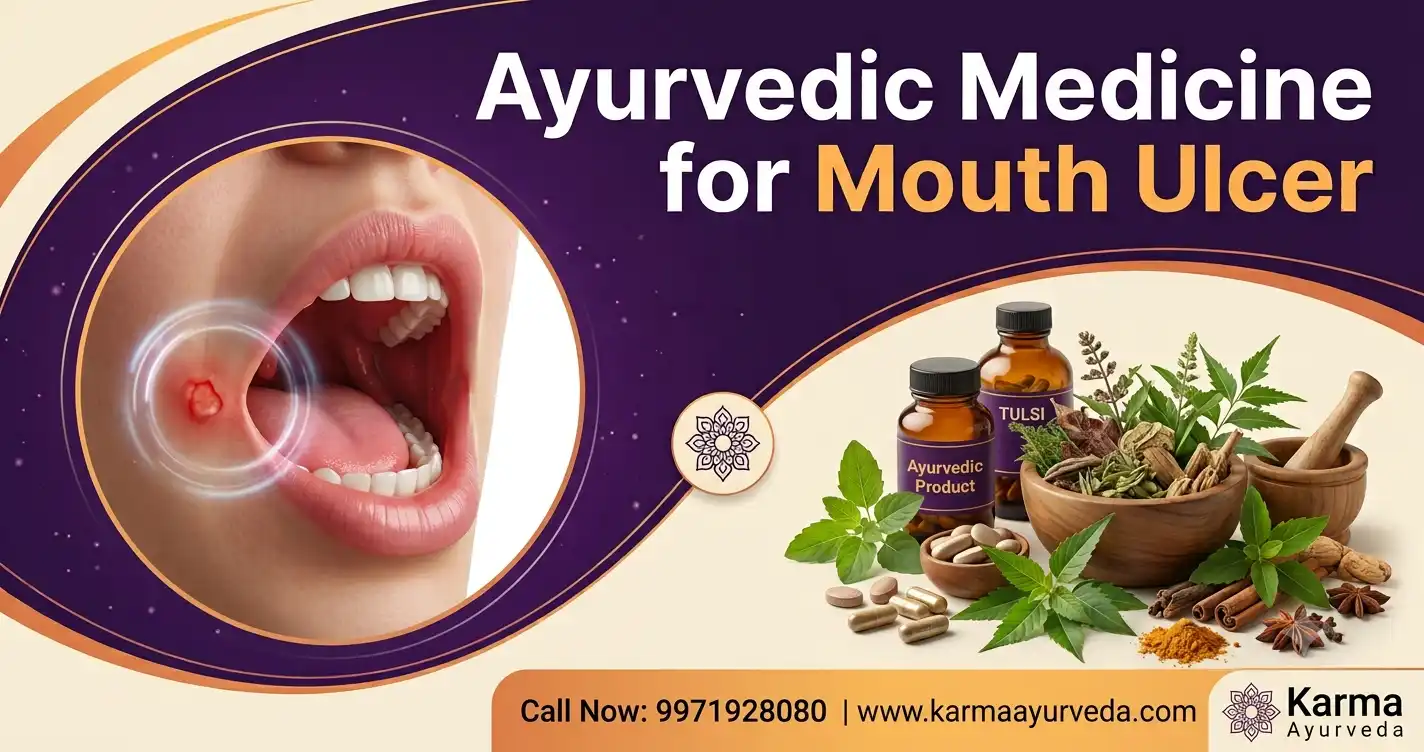
Ayurvedic Medicine For Mouth Ulcer: 5 Natural Options to Know
If you are wondering which ayurvedic medicine for mouth ulcer may help, the answer usually depends on what is causing the sore and how often it returns. Mouth ulcer treatment in Ayurveda generally focuses on soothing irritation, supporting healing, and looking at possible dietary or lifestyle triggers rather than simply chasing the sore itself.
And yes, these tiny ulcers have an impressive talent for appearing exactly when you have an important meeting, wedding, or plate of spicy food waiting for you. Typical!
What Is a Mouth Ulcer?
A mouth ulcer is a small, painful sore that can develop on the tongue, inside the cheeks, gums, lips, or other soft tissues of the mouth. Most simple canker sores are temporary and heal on their own within one to two weeks.
Common triggers can include:
- Accidental biting or minor injury
- Stress and lack of sleep
- Spicy, acidic, or irritating foods
- Nutritional deficiencies such as iron, folate, vitamin B12, or zinc
- Hormonal changes
- Certain medicines
- Dental appliances or sharp teeth
- Some underlying health conditions
For occasional sores, supportive care may be enough. But if they keep returning, become unusually large, or refuse to heal, it is worth finding out why.
How Does Mouth Ulcer Treatment in Ayurveda Approach the Problem?
Ayurveda traditionally looks at oral health as part of overall health. Instead of focusing only on the visible sore, an Ayurvedic practitioner may consider digestion, food habits, daily routine, stress, oral hygiene, and individual constitution.
The goal of Mouth ulcer Ayurvedic Treatment is generally supportive: calm irritation, maintain oral hygiene, encourage comfortable healing, and reduce factors that may be contributing to repeated episodes.
This does not mean every ulcer needs a cupboard full of herbal bottles. Sometimes the simplest answer really is the best one.
5 Best Mouth Ulcer Medicines in Ayurveda
There isn't one universally “best” medicine for everyone. Herbal preparations should be selected according to the person's symptoms and health status. Still, these five traditional ingredients are commonly discussed in Ayurvedic and natural oral-care approaches.
1. Yashtimadhu (Licorice)
Yashtimadhu, commonly known as licorice, has traditionally been used for soothing irritated tissues. It is also studied for its anti-inflammatory and mucosal-supporting properties.
Some oral preparations containing licorice have been investigated for mouth sores, although evidence is not strong enough to treat it as a guaranteed cure.
2. Turmeric
Turmeric contains curcumin, a compound widely studied for its anti-inflammatory properties.
A 2021 systematic review examining nine clinical studies involving 469 participants found that curcumin was associated with reductions in ulcer size and pain in recurrent aphthous stomatitis. However, the researchers also noted that more high-quality trials are needed.
So turmeric is promising, but “promising” and “proven miracle” are two very different sentences.