Ayurvedic Treatment for Paralysis
Ayurvedic treatment for paralysis may be considered as a supportive approach during recovery, especially alongside rehabilitation, physiotherapy, speech therapy and appropriate medical care. Ayurveda focuses on individualized care, movement, diet, daily routine and therapies rather than treating every person with the same formula.
That distinction matters because paralysis is not one single disease. It can happen after a stroke, brain injury, spinal cord problem or certain neurological conditions. So, before thinking about medicines, the first question is always: what caused the loss of movement in the first place?
What Is Paralysis?
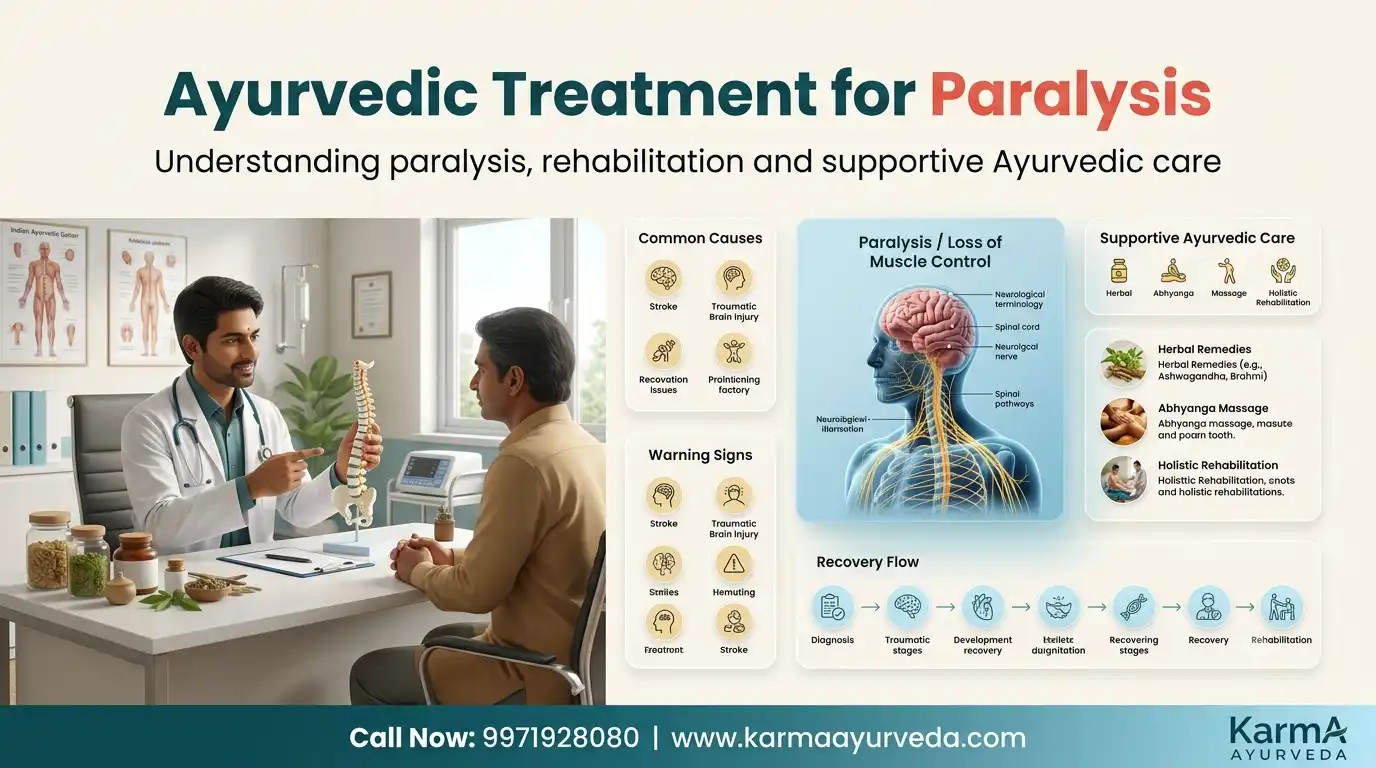
In simple words, paralysis means partial or complete loss of muscle movement in one or more parts of the body. It may affect the face, arm, leg or an entire side.
After a stroke, for example, weakness on one side is commonly called hemiplegia. In Ayurveda, a similar presentation is often discussed under Pakshaghata.
The symptoms can vary quite a bit:
- Weakness or inability to move a limb
- Difficulty walking or maintaining balance
- Facial weakness
- Muscle stiffness or spasms
- Trouble speaking
- Difficulty swallowing
- Changes in coordination
And here is the important bit: if these symptoms appear suddenly, don't wait for home remedies, massage or a miracle potion to “kick in.” Sudden weakness, facial drooping or difficulty speaking can be signs of a stroke and require emergency medical attention. WHO recommends rapid diagnosis and timely stroke care, followed by rehabilitation once the person is medically stable.
How Does Paralysis Treatment in Ayurveda Approach Recovery?
Traditional Ayurveda generally looks at the whole person rather than just the weak arm or leg. The approach may include Ayurvedic medicine for paralysis, external therapies, diet, lifestyle changes and movement-based rehabilitation.
Depending on the person's condition, an Ayurvedic practitioner may consider therapies such as:
- Abhyanga: therapeutic oil massage, when appropriate
- Swedana: selected forms of therapeutic fomentation
- Basti: specialized Ayurvedic therapy used in certain cases
- Gentle movement and stretching
- Diet and daily-routine guidance
- Individualized herbal formulations
The aim is generally to support mobility, comfort, muscle function and day-to-day independence. It is not about promising that someone will wake up tomorrow and sprint down the stairs. Recovery is usually a gradual affair; and unfortunately, the human body did not install a “fast-forward” button.
WHO also describes rehabilitation as a key part of recovery because it helps people improve functioning, reduce disability and regain independence.
Ayurvedic Medicine for Paralysis: What May Be Considered?
There is no single Ayurvedic tablet that is suitable for everyone with movement impairment. The choice depends on the underlying cause, age, symptoms, medications and overall health.
Ayurvedic practitioners may consider herbs and formulations traditionally used for neuromuscular support, but these should be selected professionally rather than picked from an internet list.
Some commonly discussed Ayurvedic ingredients include:
- Ashwagandha
- Bala
- Mahanarayan preparations
- Dashamoola-based formulations
- Rasna
- Certain medicated oils
However, “natural” does not automatically mean “risk-free.” Herbal products can interact with conventional medicines, and some preparations may not be appropriate for people with particular medical conditions.
So, Ayurvedic medicine for paralysis should be viewed as part of an individualized treatment plan; not as a replacement for emergency stroke care or prescribed medication.
5 Best Paralysis Medicines in Ayurveda: Is There Really a Fixed List?
This is where online articles can get a little too enthusiastic.
There isn't a scientifically established universal list of the 5 best medicines for paralysis that works for everybody. Ayurveda traditionally individualizes treatment according to the person's symptoms and constitution.
Instead of chasing a “top five,” a practitioner may consider different categories of support:
Category: Medicated oils
Why it may be considered: Massage and local muscle comfort
Category: Herbal formulations
Why it may be considered: Traditionally used for nerve and movement support
Category: Basti therapies
Why it may be considered: Used in selected Ayurvedic protocols
Category: Diet support
Why it may be considered: Helps maintain overall nutritional health
Category: Rehabilitation
Why it may be considered: Builds practical movement and independence
So if someone hands you a bottle and says, “This is number one, guaranteed,” keep your eyebrows politely raised.
What Does Research Say About Paralysis Treatment in Ayurveda?
This is an area where being honest is more useful than being dramatic.
A 2025 systematic review titled “A Systematic Review on Safety and Efficacy of Ayurvedic Interventions in Hemiplegia (Pakshaghata)” reviewed 30 studies, including nine randomized controlled trials. The researchers found that most studies had substantial methodological limitations and concluded that current evidence was not strong enough to definitively establish the safety and effectiveness of Ayurvedic interventions. They called for better-quality research.
Another important study is the RESTORE randomized controlled trial, published in International Journal of Stroke in 2025. It compared Ayurvedic rehabilitative treatment with conventional physiotherapy in 140 people recovering from ischemic stroke. The Ayurvedic approach was not superior to physiotherapy for sensorimotor recovery, although no major serious adverse events were reported during the trial.
That doesn't mean Ayurveda has nothing to offer. It means the evidence should be described realistically: some approaches may have a supportive role, but stronger research is still needed.
5 Best Medicines for Paralysis: What About Home Remedies?
People often search for Home remedies for paralysis, hoping there is something simple they can do at home.
Some everyday measures can support recovery, but they should complement; not replace; professional rehabilitation.
Helpful habits may include:
- Following the prescribed physiotherapy routine
- Eating a balanced, nutrient-rich diet
- Staying adequately hydrated unless fluid restriction has been advised
- Maintaining a regular sleep schedule
- Avoiding tobacco
- Managing blood pressure, blood sugar and cholesterol
- Keeping the affected limb positioned safely
- Practicing only exercises recommended by a therapist
One particularly important point: do not force a stiff or weak limb through painful movements. More exercise is not automatically better exercise.
For people recovering from stroke, rehabilitation can involve physiotherapy, occupational therapy, speech and language therapy, cognitive support and psychological care. WHO recommends a multidisciplinary approach because recovery is about much more than simply moving an arm or leg.
Paralysis Ayurvedic Treatment: What Can a Treatment Plan Include?
A personalized paralysis Ayurvedic Treatment plan may combine several elements rather than relying on one medicine.
For example:
- Assessment: Understanding the cause, symptoms and current level of function.
- Internal support: Selecting suitable Ayurvedic formulations where appropriate.
- External therapies: Oil massage or other therapies based on the individual's condition.
- Diet: Adjusting meals according to nutritional needs and medical conditions.
- Rehabilitation: Continuing physiotherapy and functional exercises.
- Lifestyle: Improving sleep, activity patterns and daily routines.
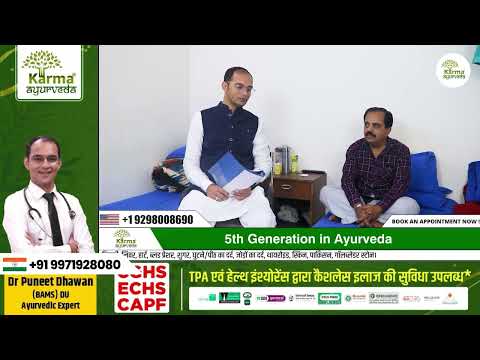
At Karma Ayurveda Hospital, such an approach may be discussed as part of an individualized wellness and rehabilitation plan. Dr. Puneet Dhawan is also associated with Ayurveda-based healthcare education and patient guidance.
The key word here is individualized. Someone recovering from a recent stroke should not simply copy another person's treatment plan because “it worked for uncle's neighbor.”
5 Best Medicines for Paralysis: Why Professional Guidance Matters
The second and third time you see 5 best medicines for paralysis mentioned online, remember that the phrase is more of a search query than a medical prescription.
The same applies to Ayurvedic medicine for paralysis. The right formulation, dose and duration depend on the individual, and safety matters even when the ingredients come from traditional medicine.
Similarly, paralysis treatment in Ayurveda should ideally be planned after understanding the underlying neurological condition and current medications.
And paralysis Ayurvedic Treatment should not delay emergency care, especially when symptoms are new or suddenly worsening.
Can Ayurveda and Rehabilitation Work Together?
This is often the more sensible question.
Rather than treating Ayurveda and rehabilitation as two teams fighting over the same football, they may be considered complementary approaches when medically appropriate.
Physiotherapy works specifically on strength, balance, coordination and functional movement. Occupational therapy helps with everyday tasks. Speech therapy may address communication and swallowing. Ayurvedic care may focus on individualized traditional therapies, diet and lifestyle support.
The RESTORE study is particularly useful here because it showed that Ayurvedic rehabilitation was not superior to physiotherapy, reinforcing why established rehabilitation should remain central to recovery.
Conclusion
Paralysis Ayurvedic Treatment may have a supportive role for some people, particularly as part of a broader rehabilitation plan. Ayurveda traditionally uses individualized medicines, therapies, diet and lifestyle measures rather than one universal remedy.
At the same time, current scientific evidence is not strong enough to claim that Ayurveda can independently reverse neurological damage. The most sensible path is usually timely medical evaluation, appropriate rehabilitation and carefully supervised complementary care.
Recovery can be slow, messy and occasionally frustrating; but small improvements count. Sometimes lifting a finger, standing for a few extra seconds or buttoning a shirt independently is a much bigger victory than it looks.
Key Takeaways
- Paralysis treatment in Ayurveda should be individualized.
- Emergency stroke symptoms need immediate medical attention.
- Rehabilitation remains a central part of recovery.
- Ayurvedic medicine for paralysis should be taken under qualified supervision.
- Research on Ayurvedic interventions is promising in places but still limited overall.
- Home remedies for paralysis should support, not replace, professional care.
- Patience matters; neurological recovery is rarely an overnight job.
FAQs
Can Ayurveda cure paralysis completely?
There is not enough high-quality evidence to say that Ayurveda can completely cure paralysis, but it may be considered as supportive care alongside rehabilitation.
What is the best Ayurvedic medicine for paralysis?
There is no single best medicine; the appropriate formulation depends on the person's cause, symptoms, medications and overall health.
Can massage help after a stroke?
Therapeutic massage may support comfort and mobility in selected patients, but it should be performed appropriately and alongside rehabilitation.
Are home remedies enough for paralysis?
No, home measures alone are not enough; proper medical assessment and rehabilitation are important for safe recovery.
How long does recovery take?
Recovery varies widely depending on the cause, severity, affected area and rehabilitation, so there is no one-size-fits-all timeline.
Disclaimer
This article is for general educational purposes only and does not replace medical diagnosis or treatment. Sudden weakness, facial drooping, speech difficulty or other possible stroke symptoms require emergency medical care. Ayurvedic medicines and therapies should be used only after consultation with a qualified healthcare professional, particularly when other medicines are being taken.