If you are looking for the 5 best paralysis medicines in Ayurveda, the honest answer is that Ayurveda does not have one magic tablet that “controls” paralysis overnight. Certain Ayurvedic medicines and therapies are traditionally used to support movement, muscle strength and recovery, but they should be chosen according to the cause, severity and stage of the condition.
In simple words, paralysis treatment in Ayurveda is generally approached as a combination of internal medicines, massage, diet, gentle exercises and rehabilitation rather than a medicine-only solution. And yes, recovery can be a slow business; rather like waiting for your phone to update when you are already late.
Paralysis means loss or significant reduction of muscle movement in one or more parts of the body. It may affect the face, arm, leg or one entire side.
A common cause is stroke, but nerve injury, spinal cord problems, infections and certain neurological disorders can also lead to weakness or loss of movement.
This distinction matters because the right treatment depends heavily on the underlying cause. If weakness suddenly appears, especially with facial drooping, speech difficulty, confusion or trouble walking, it should be treated as a medical emergency. The World Health Organization recommends rapid assessment and appropriate acute stroke treatment, followed by rehabilitation as soon as the person is medically stable.
So, think of Ayurveda as potentially supportive during recovery; not as a replacement for emergency stroke care.
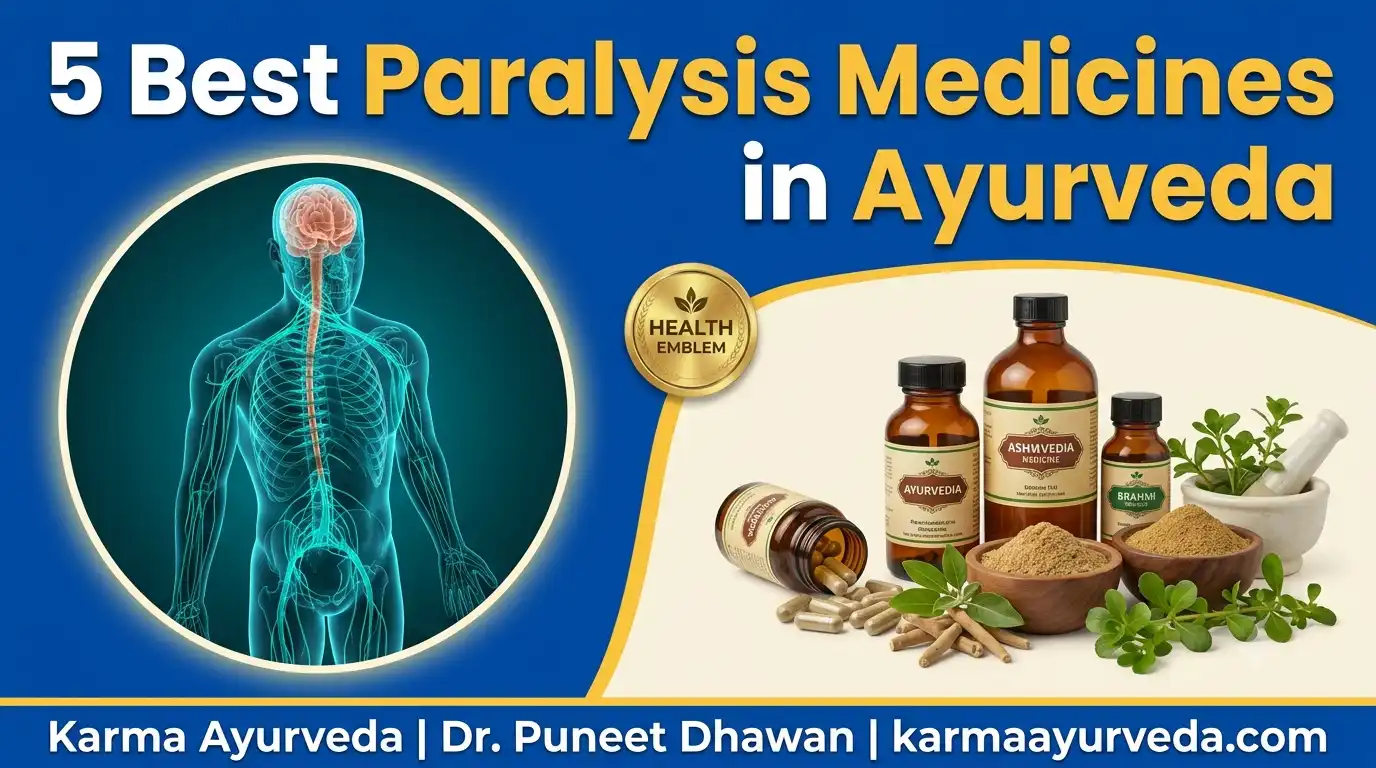
There isn't a scientifically established ranking of the 5 best paralysis medicines in Ayurveda. Ayurvedic physicians traditionally select herbs and formulations according to the person's symptoms and constitution. Some commonly discussed options include:
Ashwagandha is one of the better-known Ayurvedic herbs and is traditionally used to support strength, vitality and nervous-system health.
For someone recovering from weakness, an Ayurvedic practitioner may consider it as part of a broader plan. However, evidence specifically proving that Ashwagandha reverses post-stroke paralysis remains limited.
It can also interact with medicines and may not be suitable for everyone, so “natural” does not automatically mean “take it like candy.”
Bala, traditionally associated with strength and nourishment, has a long history in Ayurvedic practice.
It may be included in formulations or external therapies intended to support weakened muscles and physical recovery. However, high-quality clinical evidence specifically establishing Bala as a treatment for post-stroke paralysis is still lacking.
This traditional oil is commonly used externally in Ayurvedic massage. Gentle massage may be incorporated into a rehabilitation programme to support comfort, mobility and relaxation.
The important word here is support. Massage should complement physiotherapy and rehabilitation rather than replace them.
Mahayogaraj Guggulu is a classical Ayurvedic formulation traditionally used for certain musculoskeletal and neurological complaints.
Because classical formulations can contain multiple ingredients and some Ayurvedic preparations may include mineral or metallic components, this is not something to self-prescribe after reading a random internet list. A qualified practitioner should assess whether it is appropriate and safe.
Ekangveer Ras is another classical formulation traditionally mentioned in Ayurvedic management of conditions involving one-sided weakness.
But again, it belongs in the “doctor decides” category; not the “found it online, let's try it tonight” category. Proper assessment, dosage and product quality matter.
Ayurvedic option: Ashwagandha
Traditionally used for: Strength and vitality
Important note: Evidence for stroke recovery is limited
Ayurvedic option: Bala
Traditionally used for: Weakness and nourishment
Important note: Best used under professional guidance
Ayurvedic option: Mahanarayan Taila
Traditionally used for: External massage
Important note: Supportive, not a replacement for rehab
Ayurvedic option: Mahayogaraj Guggulu
Traditionally used for: Neuromuscular complaints
Important note: Needs practitioner supervision
Ayurvedic option: Ekangveer Ras
Traditionally used for: One-sided weakness
Important note: Don't self-medicate
These are traditional Ayurvedic options, not clinically proven “cures.” The evidence surrounding Ayurvedic interventions for hemiplegia is still developing.
This is where a little honesty is more useful than a giant promise.
A 2025 systematic review titled “A Systematic Review on Safety and Efficacy of Ayurvedic Interventions in Hemiplegia (Pakshaghata)” examined 30 studies, including nine randomized controlled trials. The authors found substantial risk of bias in almost all studies and concluded that the available evidence was not strong enough to definitively establish the safety and effectiveness of Ayurvedic interventions.
Another important study is the RESTORE randomized controlled trial, which evaluated Ayurvedic treatment in people recovering from ischemic stroke. The study found that the Ayurvedic intervention was not superior to physiotherapy for sensorimotor recovery. After statistical adjustment, the difference was no longer significant.
There is also research into herbal medicine and stroke recovery from other traditional-medicine systems. For example, a systematic review of 80 studies involving 8,057 patients reported possible benefits from adjunctive herbal treatment, but the researchers highlighted the low methodological quality and said firm conclusions could not be made.
So the sensible takeaway from the science is simple: paralysis Ayurvedic Treatment is an area worth researching, but stronger and better-designed clinical trials are still needed.
A sensible paralysis treatment in Ayurveda plan may include several pieces working together:
The WHO specifically identifies physiotherapy, occupational therapy, speech and language therapy and psychological support as important parts of stroke rehabilitation.
That means the goal shouldn't be “Ayurveda versus modern medicine.” A safer approach is often appropriate medical care + rehabilitation + carefully supervised complementary support.
People frequently search for Home remedies for paralysis, hoping there is a simple kitchen fix. Unfortunately, there isn't a turmeric-tea shortcut that can repair a damaged brain or nerve.
Still, healthy daily habits can support overall recovery:
Never massage, exercise or move a severely weak limb aggressively without professional guidance. More enthusiasm is not always more recovery.
Ayurvedic support may be discussed during the rehabilitation phase, particularly when a person wants an integrative approach.
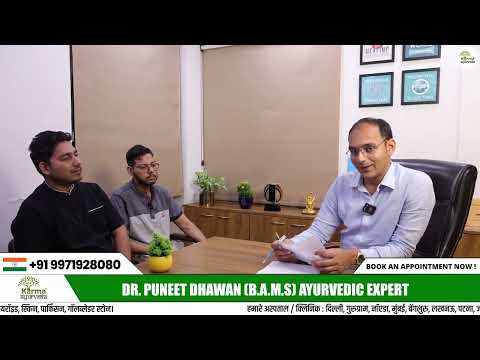
At Karma Ayurveda Hospital, an Ayurvedic assessment may be considered alongside the person's existing medical history and rehabilitation needs. A qualified Ayurvedic doctor, such as Dr. Puneet Dhawan, can help explain which therapies may or may not be appropriate for an individual case.
The key is individualisation. Two people with similar-looking weakness may have completely different underlying problems.
No. This is one of the most important points to remember.
The 5 best medicines for paralysis are not universal because treatment depends on factors such as:
Some Ayurvedic preparations can interact with conventional medicines, and poorly manufactured products may carry safety concerns. The WHO's benchmarks for Ayurveda specifically emphasise quality, safety and appropriate practice.
When people search for paralysis Ayurvedic Treatment, they are usually looking for one thing: hope that movement and independence can improve.
That hope is reasonable; but it needs a realistic plan.
Ayurvedic herbs and traditional therapies may have a supportive role for some people, but current research does not justify calling any five medicines a proven cure. The strongest approach is to identify the cause first, follow appropriate medical treatment, stay consistent with rehabilitation and discuss any Ayurvedic medicine with a qualified practitioner.
In other words, don't put all your eggs; or all your tablets; in one basket. Recovery is usually a team sport.

There is no single best option; the medicine depends on the cause, symptoms, health status and stage of recovery.
There is currently not enough high-quality evidence to say that Ayurveda can completely cure paralysis.
Massage may provide supportive benefits, but it should complement; not replace; professional rehabilitation.
Only after checking with your doctors because herbs and classical formulations can interact with prescribed medicines.
No, home care can support recovery, but proper medical evaluation and rehabilitation are essential.
This article is for general educational purposes only and should not be considered medical advice. Paralysis can have serious causes, including stroke, that require urgent medical attention. Do not stop prescribed medicines or begin Ayurvedic formulations without professional guidance. Treatment should be based on an individual's diagnosis, medical history and overall health.
Continue using AI Cursor?Keep it onTurn Off
AyuKarma Testo Build Capsules combine 12 Ayurvedic herbs and minerals to support strength, energy, stamina, physical performance, nourishment and overall daily vitality.
AyuKarma Hair Lush Capsules combine Ayurvedic herbs to support hair growth, reduce hair fall, strengthen roots, nourish the scalp and promote healthier-looking hair.
Karma Garcom Capsules contain Garcinia indica to support healthy metabolism, digestion, weight management, digestive comfort and daily wellness alongside a balanced lifestyle.
Doctor-recommended liver supplement that helps detoxify the liver, support healthy cholesterol, improve digestion & promote liver health. Developed by Dr. Puneet Dhawan with Karma Ayurveda philosophy.
AyuKarma Muscle Magic Capsules combine Ayurvedic herbs to support appetite, digestion, nourishment, healthy weight gain, muscle strength and daily vitality for adults.
AyuKarma Obes-Fit Capsules combine Ayurvedic herbs to support appetite control, digestion, metabolism, healthy weight management, energy and overall wellness alongside an active lifestyle.
AyuKarma Body Detox Capsules combine Ayurvedic herbs to support natural detoxification, digestion, colon cleansing, metabolism, gut wellness and overall rejuvenation for daily vitality.
Doctor-recommended ayurvedic medicine to control diabetes, manage blood sugar levels & reduce diabetes-related complications in diabetic patients. Developed by Dr. Puneet Dhawan with the Karma Ayurveda philosophy.
Doctor-recommended Ayurvedic gut supplement that helps relieve occasional constipation, promote smooth bowel movement, reduce gas & bloating and improve digestion. Developed by Dr. Puneet Dhawan with Karma Ayurveda philosophy.
Doctor-recommended Ayurvedic joint supplement that helps relieve joint pain & stiffness, improve flexibility and support smoother, more comfortable movement. Developed by Dr. Puneet Dhawan with Karma Ayurveda philosophy.
Ayurvedic Kidney Detox Kit for individuals with high creatinine, high BP, diabetes, high uric acid, alcohol consumption habits, frequent painkiller use or early signs of kidney stress.
Second Floor, 77, Block C, Tarun Enclave, Pitampura, New Delhi, Delhi, 110034