Home Remedies For Paralysis: Simple Ways to Support Recovery at Home
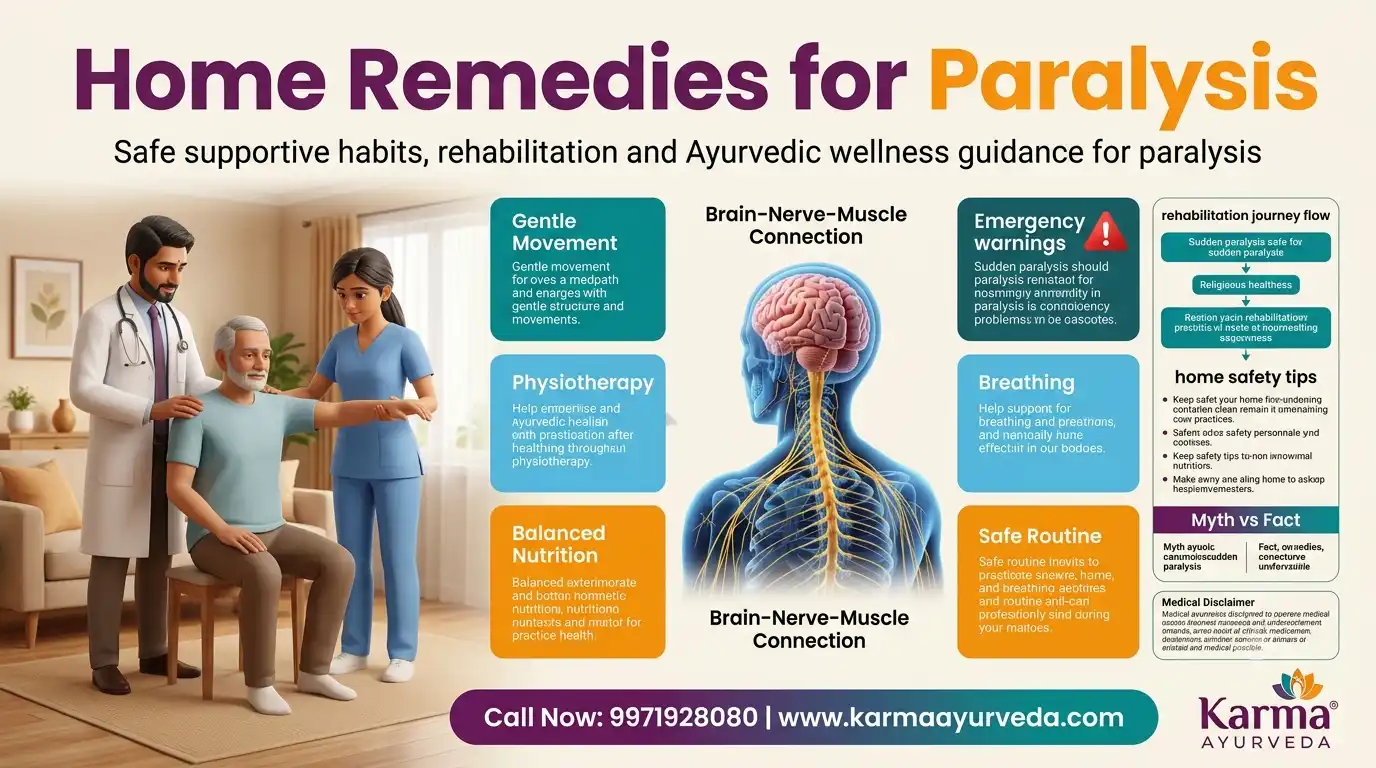
If you’re looking for home remedies for paralysis, the safest answer is simple: home care can support recovery, but it cannot replace emergency treatment, medicines, or professional rehabilitation. The most useful “remedies” are usually regular movement practice, a suitable diet, safe positioning, good sleep, and following the rehabilitation plan.
That may sound less exciting than a miracle oil kept in a kitchen cupboard, but it is much closer to what science supports.
What Does Paralysis Actually Mean?
Paralysis is not one single disease. It is a condition in which a person loses some or all control over movement in one or more parts of the body. A stroke is one of the common causes, but nerve injuries, spinal cord problems, brain disorders and other neurological conditions can also lead to weakness or loss of movement.
This distinction matters because the right care depends entirely on the underlying cause.
If weakness or loss of movement appears suddenly, especially along with facial drooping, speech difficulty, confusion, vision problems or severe dizziness, treat it as a medical emergency. Do not wait for a home remedy to “kick in.” Stroke care is time-sensitive. The American Heart Association/American Stroke Association's 2026 guidance continues to emphasize rapid assessment and organized stroke care. ([American Heart Association Journals]
7 Practical Home Remedies for Paralysis Recovery
The phrase home remedies for paralysis can be a little misleading. What you really want are safe home practices that support rehabilitation.
1. Follow a Personalized Exercise Routine
Movement is one of the biggest pieces of recovery.
A physiotherapist may recommend:
- Gentle range-of-motion exercises
- Repeated hand and finger movements
- Supported standing
- Walking practice
- Balance exercises
- Task-specific activities
- Strengthening exercises when appropriate
The American Heart Association/American Stroke Association recommends repeated, task-specific practice and continued physical activity after formal rehabilitation. ([American Heart Association Journals])
The key word is personalized. Copying an exercise from a random video because it worked for someone's uncle's neighbor is not exactly a medical strategy.