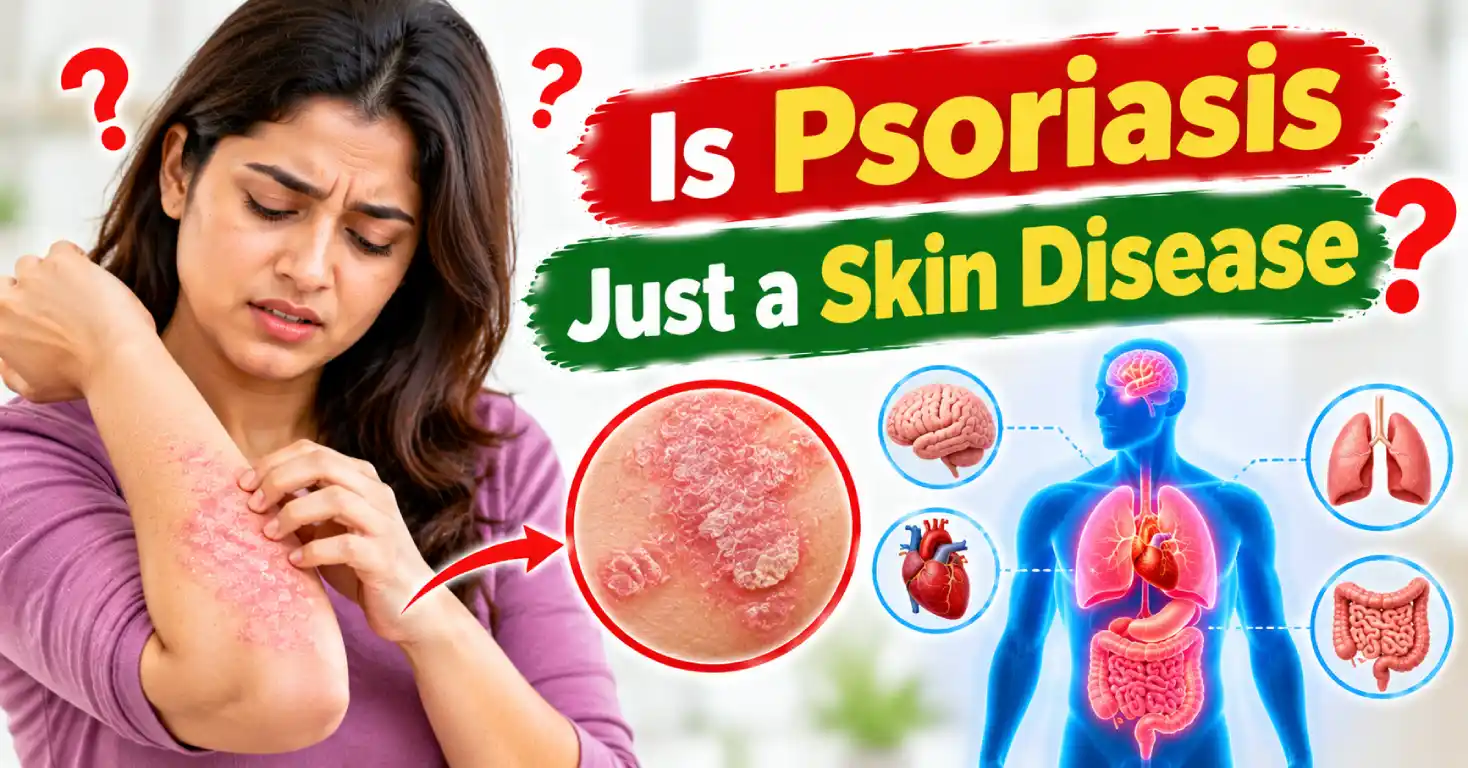
Is Psoriasis Just a Skin Disease?
Short answer: no. Psoriasis is a chronic, immune-driven inflammatory condition that can touch the skin, the joints, your mental health, and your overall health; not just whatever's showing up on your arms or scalp.
That might come as a surprise, since the skin is what everyone notices first; red patches, silvery scales, the itching, the dryness. But there's a lot going on underneath that the skin is just... reporting on. Think of the skin as the messenger here. It's usually the loudest part of the story, but the actual problem is happening in the immune system.
What Exactly Is Psoriasis?
Psoriasis is a chronic inflammatory condition where the immune system goes into overdrive and pushes skin cells to grow way faster than they're supposed to.
Normally skin cells take their time reaching the surface. With psoriasis, that whole process gets fast-tracked, and the result can be:
- Red or inflamed patches
- Thick, silvery-white scales
- Dry, cracked skin
- Itching or burning
- Changes to the nails
- Flaking or scaling on the scalp
- Sometimes joint pain and stiffness
Scientists now know that immune signaling pathways; especially ones involving IL-23 and IL-17; play a big role in driving the inflammation behind a lot of these symptoms.
So no, it's not just "my skin is dry, I need a stronger moisturizer." If only it were that simple.
Why Is Psoriasis Considered More Than a Skin Problem?
The American Academy of Dermatology describes psoriasis as a chronic, multisystem inflammatory disease; meaning its reach goes well past what's visible on your skin. That's exactly why doctors tend to look at the whole person rather than just the patch in front of them.
Some people with psoriasis also deal with:
1. Joint Problems
The big one here is psoriatic arthritis, which can bring:
- Joint pain
- Swelling
- Morning stiffness
- Pain around the tendons
- Swelling in fingers or toes
- Reduced range of motion
Estimates suggest somewhere between 9 and 33% of people with psoriasis go on to develop psoriatic arthritis; the range varies depending on the study and population. If you have psoriasis and start noticing joint stiffness or swelling that doesn't have an obvious explanation, that's worth a conversation with a doctor rather than chalking it up to the chair you sit in or "getting older."
2. Heart and Metabolic Health
Psoriasis has also been linked to cardiovascular disease, obesity, diabetes, and metabolic syndrome. The thinking is that this connection comes down to shared inflammatory, metabolic, and lifestyle factors; not that psoriasis directly causes every one of these conditions.
Which is exactly why overall health matters here. Blood pressure, blood sugar, cholesterol, weight, activity levels, smoking, alcohol; all of it deserves some attention when you're living with a chronic inflammatory condition.
3. Emotional Well-Being
Don't underestimate this part either. Visible patches can make people avoid certain clothes, hold back from meeting new people, or skip swimming altogether. It's easy to feel like everyone's staring, even when they're not.
And an important fact worth repeating: psoriasis is not contagious. You can't catch it from a handshake, sharing food, sitting next to someone, or a hug.
What Causes Psoriasis?
There's no single cause. Genetics, immune activity, and environmental triggers all play a part. Current research points to a strong genetic component, with things like infections, skin injury, smoking, alcohol, and stress acting as triggers in people who are already predisposed.
Common triggers include:
- Skin injuries or repeated scratching
- Certain infections
- Smoking
- Alcohol
- Emotional or physical stress
- Some medications
- Weather changes
- Poor sleep or a disrupted routine
But triggers are different for everyone; something that sets off a flare in one person might do absolutely nothing to another. That's actually why keeping a simple symptom-and-trigger diary can be more useful than it sounds.
Is There a Natural Treatment for Psoriasis?
A lot of people search for a natural treatment for psoriasis because they'd rather not lean entirely on conventional medicine. Lifestyle habits; a balanced diet, regular movement, decent sleep, managing stress, cutting back on smoking and alcohol; can genuinely support your overall skin and inflammatory health.
But "natural" doesn't automatically mean "safe" or "proven." The American Academy of Dermatology has looked into complementary options including herbal therapies, supplements, turmeric/curcumin, vitamin D, and mind-body practices; and for a lot of these, the evidence is either limited or mixed. So none of it should just replace established medical treatment outright. Nature deserves some credit here, sure; but it still doesn't get to skip clinical trials.
What About Natural Psoriasis Treatment?
A natural psoriasis treatment approach usually focuses on supporting overall health through diet, daily habits, stress management, and select traditional practices. Ayurvedic practitioners tend to factor in things like digestion, lifestyle, diet, and individual constitution when putting together a plan.
If you're weighing an Ayurvedic approach, it makes sense to discuss it with a qualified practitioner *and* keep your dermatologist in the loop; especially if you're already on prescription medication. This matters because psoriasis can range from a small patch to extensive disease that needs phototherapy or systemic treatment.
What Are the Best Medicines for Psoriasis?
There's no single answer to the best medicines for psoriasis; it really depends on:
- How severe and widespread it is
- Where the patches are
- Whether nails or scalp are involved
- Joint symptoms
- Past treatments tried
- Other health conditions
- Personal preference
For mild cases, topical treatments are usually the go-to; corticosteroids, vitamin-D analogues, retinoids, calcineurin inhibitors, and other topical options, depending on the case. Phototherapy and systemic medications come into play for more extensive or harder-to-control disease. (American Academy of Dermatology)
A 2025 review in Nature Reviews Disease Primers also notes that modern treatment can include targeted therapies aimed at pathways like TNF, IL-17, and IL-23 for the right patients with moderate-to-severe disease.
So instead of asking "which medicine is the strongest," the better question is: "which treatment actually fits my type and severity of psoriasis?"
What Are the Best Herbs for Psoriasis?
Searches for the best herbs for psoriasis are extremely common, especially among people drawn to Ayurveda or other traditional systems. Some herbs and plant-based preparations have been studied, but the strength of the evidence varies a lot; promising lab results or a small clinical study aren't the same thing as proof that something works reliably for everyone.
Even commonly used herbs can interact with medication or cause side effects. So before taking any herbal capsule, powder, or concentrated extract, it's worth checking the ingredients and talking to a healthcare professional; especially if you're already on treatment.
A Quick Reality Check
| Question | Simple answer |
|---|---|
| Is psoriasis only about skin? | No, it involves the immune system too. |
| Can it affect joints? | Yes, through psoriatic arthritis. |
| Is it contagious? | Nope. A hug won't spread it. |
| Can diet help? | A healthy diet supports overall health, but it isn't a guaranteed cure. |
| Is one treatment best for everyone? | No. Treatment should be individualized. |
Where Does Ayurveda Fit In?
Ayurveda tends to take a broader view; diet, lifestyle, digestion, and individual factors alongside whatever's visible on the skin. If you're looking into Karma Ayurveda for psoriasis treatment, it's worth understanding exactly what any proposed plan involves, what evidence backs it, and how it fits alongside your existing medical care.
The same goes for anyone researching Karma Ayurveda for psoriasis treatment or consulting Dr. Puneet Dhawan; sharing your full medical history, current medications, and how you've responded to past treatments matters a lot more than just describing how the patches look. The goal should always be sensible, personalized care; not a race to find whatever sounds "most natural."
What Does Science Say About Psoriasis?
A few key studies have really shifted how researchers understand this condition. The landmark work on the IL-23/Th17 pathway helped explain how immune signaling drives the chronic inflammation behind psoriasis. Later research into IL-17 and IL-23 specifically led to targeted treatments that can make a real difference for the right patients.
The 2025 Nature Reviews Disease Primers piece on psoriasis pulls together current evidence on its genetics, immune mechanisms, related conditions, and treatment; and flags psoriatic arthritis, cardiovascular disease, metabolic syndrome, and psychological effects as important associated concerns. The American Academy of Dermatology's guidelines echo this too, emphasizing that treatment isn't just about the skin.
Put together, the picture is clearer: treating the visible patches matters, but so does looking past them.
When Should You See a Doctor?
Don't wait until things feel unbearable. It's worth getting checked out if you notice:
- Patches spreading quickly or getting severe
- Painful or swollen joints
- Morning stiffness that won't quit
- Nail pitting or major nail changes
- Itching bad enough to disrupt sleep
- Repeated flare-ups
- Symptoms that aren't improving with your current treatment
Getting evaluated early helps pin down the type and severity of psoriasis and check for anything else going on alongside it. And if joint symptoms show up, mention them specifically; "my knees have felt off lately" might sound like nothing, but it can genuinely help your doctor connect the dots.
Conclusion
So; is psoriasis just a skin disease? No. The skin is often where it becomes visible, but the condition is rooted in immune activity and can come with joint, cardiovascular, metabolic, and psychological effects. (Nature)
That doesn't mean everyone with psoriasis will run into these issues; it just means the condition deserves a wider lens than "treat the patch and move on."
Whether someone sticks with conventional treatment, looks into a natural treatment for psoriasis, considers a natural psoriasis treatment, or takes an integrative approach, the starting point is the same either way: understand the condition properly, and build care around what actually fits the individual.
And yes, moisturizer still earns its place. It just shouldn't be expected to do the whole team's job on its own.
Key Takeaways
- Psoriasis is a chronic, immune-driven inflammatory condition; not just a surface-level skin issue.
- It can come with psoriatic arthritis, cardiovascular disease, metabolic conditions, and psychological effects.
- Not everyone with psoriasis develops these related conditions.
- There's no single best medicine for psoriasis for everyone; it depends on severity and individual circumstances.
- Evidence for herbs and complementary therapies varies, so "natural" shouldn't be mistaken for "proven."
- A healthy lifestyle supports overall well-being but isn't a guaranteed cure.
- Regular medical follow-up matters, especially if joint pain, stiffness, or swelling shows up.
FAQs
Is psoriasis only a skin disease?
No; it's an immune-mediated inflammatory condition that can affect more than just the skin.
Can psoriasis affect the joints?
Yes. Some people with psoriasis develop psoriatic arthritis, which brings pain, stiffness, and swelling.
Is psoriasis contagious?
No; it can't be passed from person to person through touch or close contact.
Are herbs enough to treat psoriasis?
Herbal approaches can be explored as complementary care, but the evidence varies, and they shouldn't automatically replace proven treatment.
Can psoriasis be completely cured?
There's no guaranteed permanent cure right now, but the right treatment can help control symptoms and cut down on flare-ups.
Disclaimer
This article is intended for general educational purposes only and isn't medical advice or a substitute for professional diagnosis and treatment. Psoriasis varies a lot from person to person. Always talk to a qualified dermatologist or healthcare professional before starting, stopping, or changing any medicine, herbal preparation, supplement, or treatment plan.