Unlocking Wellness Naturally
100% Ayurvedic Treatment

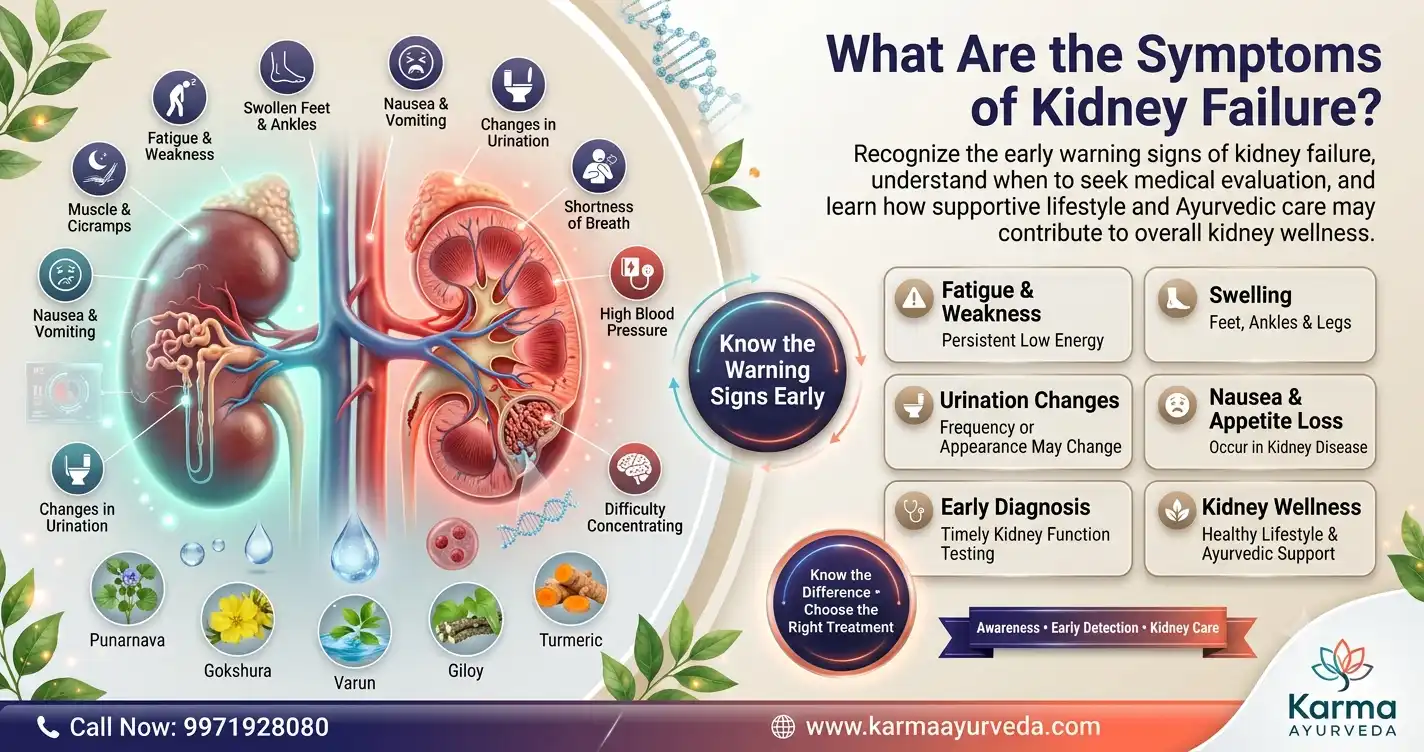
Have you ever ignored tiredness, swollen feet, or frequent trips to the bathroom thinking, "It's probably just one of those days"? Sometimes it is. But sometimes, your kidneys are quietly waving a little red flag.
The symptoms of kidney failure often develop gradually, making them surprisingly easy to overlook. Fatigue, swelling, changes in urination, nausea, itching, muscle cramps, and shortness of breath are some of the most common warning signs. The tricky part? Many of these symptoms can look like everyday health complaints, which is why kidney problems are often discovered later than anyone would like.
Your kidneys are like the housekeeping staff of your body. They work around the clock, filtering waste, balancing fluids, regulating blood pressure, and helping keep your bones and blood healthy. They don't ask for much in return; just a little care and attention. When they begin to fail, your body starts sending signals. The key is knowing how to recognize them before they become impossible to ignore.
Let's walk through the common symptoms of kidney failure, why they happen, and when it's time to stop Googling and actually call your doctor.
Kidney failure happens when the kidneys lose most of their ability to filter waste and excess fluid from the blood. This can happen suddenly (acute kidney injury) or gradually over months or years, leading to chronic kidney disease (CKD) and eventually kidney failure if not managed.
When the kidneys aren't filtering properly, waste products begin to build up in the bloodstream, and that's when symptoms start making an appearance.
Here's what your body may be trying to tell you.
Everyone gets tired. But if you're sleeping well and still feel like you could nap through an action movie, your kidneys might deserve a little attention.
When kidney function declines:
Healthy kidneys remove extra salt and water.
When they struggle:
If your socks start leaving deeper marks than usual, it may be worth mentioning to your healthcare provider.
One of the earliest signs of kidney failure often involves changes in your bathroom routine.
Watch for:
Your kidneys and your bladder usually work like a good team. When communication breaks down, changes become noticeable.
As waste products accumulate in the bloodstream, they may irritate the digestive system.
This may cause:
Food suddenly becoming unappealing isn't always about yesterday's leftovers.
This symptom surprises many people.
Healthy kidneys help balance minerals in the blood. When they don't:
If moisturizers seem to be losing the battle, it may be time to look beyond your skin.
Painful leg cramps, especially at night, may be linked to:
The kidneys help maintain these minerals, so declining kidney function can throw things off balance.
Breathlessness may happen because:
If climbing one flight of stairs suddenly feels like climbing a mountain, it's worth getting evaluated.
Waste products in the blood can affect brain function.
Some people notice:
Your brain enjoys clean blood almost as much as your kidneys do.
Healthy kidneys help regulate blood pressure.
When kidney function declines:
It's a frustrating cycle where each condition makes the other worse.
A buildup of waste products may cause:
Food suddenly tasting like spare change isn't exactly normal.
Everyday Situation
Possible Kidney Warning
Think of this table as a friendly reminder; not a diagnosis.
Several health conditions can damage the kidneys over time.
The most common include:
Keeping these conditions under control may help reduce the risk of kidney damage.
Your risk may be higher if you have:
Regular kidney health checkups become especially important for these groups.
Don't wait until symptoms become severe.
Seek medical advice if you notice:
Simple blood and urine tests can provide valuable information about kidney health.
While not every case is preventable, many people can reduce their risk by taking care of their kidneys every day.
Helpful habits include:
Your kidneys don't need expensive gifts; just consistent healthy habits.
Several respected studies support what doctors have observed about kidney failure symptoms and kidney disease.
The CRIC Study has shown that declining kidney function is strongly associated with fatigue, anemia, cardiovascular disease, and reduced quality of life among people with chronic kidney disease.
The internationally recognized KDIGO Guidelines recommend regular monitoring of kidney function using blood and urine tests, particularly for individuals with diabetes, hypertension, and other risk factors.
The National Kidney Foundation highlights swelling, fatigue, changes in urination, itching, and nausea among the common warning signs that should prompt medical evaluation.
These studies and clinical guidelines reinforce the importance of recognizing symptoms early and seeking timely medical care.
The symptoms of kidney failure can be surprisingly subtle at first, which is exactly why paying attention to your body matters. Feeling unusually tired, noticing swelling, changes in urination, or persistent itching may not always point to kidney disease, but they shouldn't be brushed aside either.
The good news is that early evaluation can help identify kidney problems before they become more serious. A simple conversation with your healthcare provider, along with routine blood and urine tests, can go a long way toward protecting your kidney health.
Raees Kosar from Bihar was diagnosed with advanced kidney disease after his health deteriorated rapidly. He experienced persistent fatigue, swelling in his limbs, nausea, and loss of appetite, all of which significantly affected his daily life. Medical reports revealed a serum creatinine level of 6.7 mg/dL and an eGFR of 10 ml/min, indicating severely reduced kidney function. Based on these findings, he was advised to undergo a kidney transplant. Seeking a non-surgical alternative, Raees chose to begin treatment at Karma Ayurveda.
After a detailed evaluation, he was given a personalized Ayurvedic treatment plan that included herbal formulations, a kidney-friendly diet, lifestyle modifications, and regular monitoring. The treatment focused on supporting kidney function naturally, reducing the burden on the kidneys, and improving his overall health through a holistic approach.
Over the following months, Raees experienced steady improvements in both his symptoms and kidney function. His serum creatinine level decreased from 6.7 mg/dL to 4.3 mg/dL, while his eGFR improved, indicating better kidney performance. He also reported increased energy, reduced swelling, and an overall improvement in his quality of life. His journey highlights how personalized Ayurvedic care, combined with consistent treatment and appropriate medical supervision, may help support kidney health and enhance overall well-being.
Fatigue, swelling, and changes in urination are often among the earliest warning signs.
Yes, early kidney disease can be silent, which is why regular testing is so important.
No, many people have kidney failure without significant pain, especially in the early stages.
Staying hydrated supports kidney health, but it cannot reverse established kidney failure.
If you have diabetes, high blood pressure, persistent symptoms, or a family history of kidney disease, it's wise to speak with your healthcare provider about testing.
This article is intended for educational purposes only and should not be considered medical advice, diagnosis, or treatment. Kidney failure symptoms can have many possible causes, and only a qualified healthcare professional can determine the underlying reason. If you experience persistent swelling, changes in urination, severe fatigue, breathing difficulty, or other concerning symptoms, seek prompt medical evaluation. Never delay or replace professional medical care based solely on information found online.

AyuKarma Testo Build Capsules combine 12 Ayurvedic herbs and minerals to support strength, energy, stamina, physical performance, nourishment and overall daily vitality.

AyuKarma Hair Lush Capsules combine Ayurvedic herbs to support hair growth, reduce hair fall, strengthen roots, nourish the scalp and promote healthier-looking hair.

Karma Garcom Capsules contain Garcinia indica to support healthy metabolism, digestion, weight management, digestive comfort and daily wellness alongside a balanced lifestyle.

Doctor-recommended liver supplement that helps detoxify the liver, support healthy cholesterol, improve digestion & promote liver health. Developed by Dr. Puneet Dhawan with Karma Ayurveda philosophy.
Second Floor, 77, Block C, Tarun Enclave, Pitampura, New Delhi, Delhi, 110034

Certificate no- AH-2023-0186
JAN 05, 2026 - JAN 04, 2029

US FDA Reg. No.: 14568299376