What Causes High Creatinine? The Ultimate Human Guide to Understanding Your Kidney Lab Results
High creatinine causes range from underlying kidney conditions like chronic kidney disease to completely temporary, non-kidney triggers like severe dehydration, heavy weightlifting, a high-protein diet, or specific medications. In short, elevated levels mean there is either extra waste circulating in your bloodstream or your kidneys are temporarily lagging behind on their filtration duties.
If you just opened your blood test portal and saw a little red arrow pointing upward next to your serum creatinine levels, take a deep breath. It is incredibly easy to panic and assume your kidneys are throwing a white flag, but that single number rarely tells the whole story on its own. To really understand what is going on inside your body, we need to look at how creatinine is made, why it piles up, and when you actually need to worry.
What Is Creatinine, Anyway?
Before we start pointing fingers at potential culprits, let’s demystify what creatinine actually is.
Every single day, your muscles are hard at work helping you walk, lift, stretch, and aggressively open snack wrappers. As part of normal muscle energy metabolism, a chemical compound called creatine breaks down into a natural waste product known as creatinine.
Your muscles dump this waste into your bloodstream, and your kidneys; acting as the ultimate 24/7 cleaning crew; filter it out and flush it down the toilet via your urine.
Under normal circumstances, this production-and-removal cycle runs like clockwork. But if your kidneys slow down, or if your body suddenly churns out way more waste than usual, the concentration of creatinine in your blood goes up.
The Primary Kidney-Related Causes
When doctors see elevated serum creatinine, their first order of business is checking whether the kidneys themselves are under physical stress. Because the kidneys filter waste through millions of microscopic units called nephrons, anything that damages these filters will cause waste to back up.
1. Chronic Kidney Disease (CKD)
Chronic kidney disease is a slow, long-term decline in kidney function. The two biggest drivers behind CKD are unmanaged high blood pressure and diabetes. Over time, high blood sugar and excessive pressure damage the delicate blood vessels in the kidneys, making them less efficient at filtering blood.
2. Acute Kidney Injury (AKI)
Unlike CKD, an acute kidney injury happens abruptly. It could be caused by a sudden drop in blood flow (like during severe blood loss or heart issues), direct damage from toxins, or serious bodily infections. A landmark clinical review published in the Journal of the American Society of Nephrology notes that even brief episodes of renal ischemia or nephrotoxicity can cause a rapid, sharp spike in serum creatinine levels within hours.
3. Kidney Infections & Autoimmune Inflammation
Infections like pyelonephritis (a severe kidney infection that travels up from the bladder) can cause temporary swelling and impairment. Similarly, conditions like glomerulonephritis; an inflammation of the kidney's filtering units; prevent your body from clearing out waste efficiently.
4. Urinary Tract Obstructions
If there is a blockage downstream, urine cannot leave the body, creating backpressure that stresses the kidneys. Common culprits include:
- Large kidney stones wedge in the ureters.
- An enlarged prostate in men.
- Abdominal or pelvic tumors.
The Non-Kidney Impostors: When Your Filters Are Fine
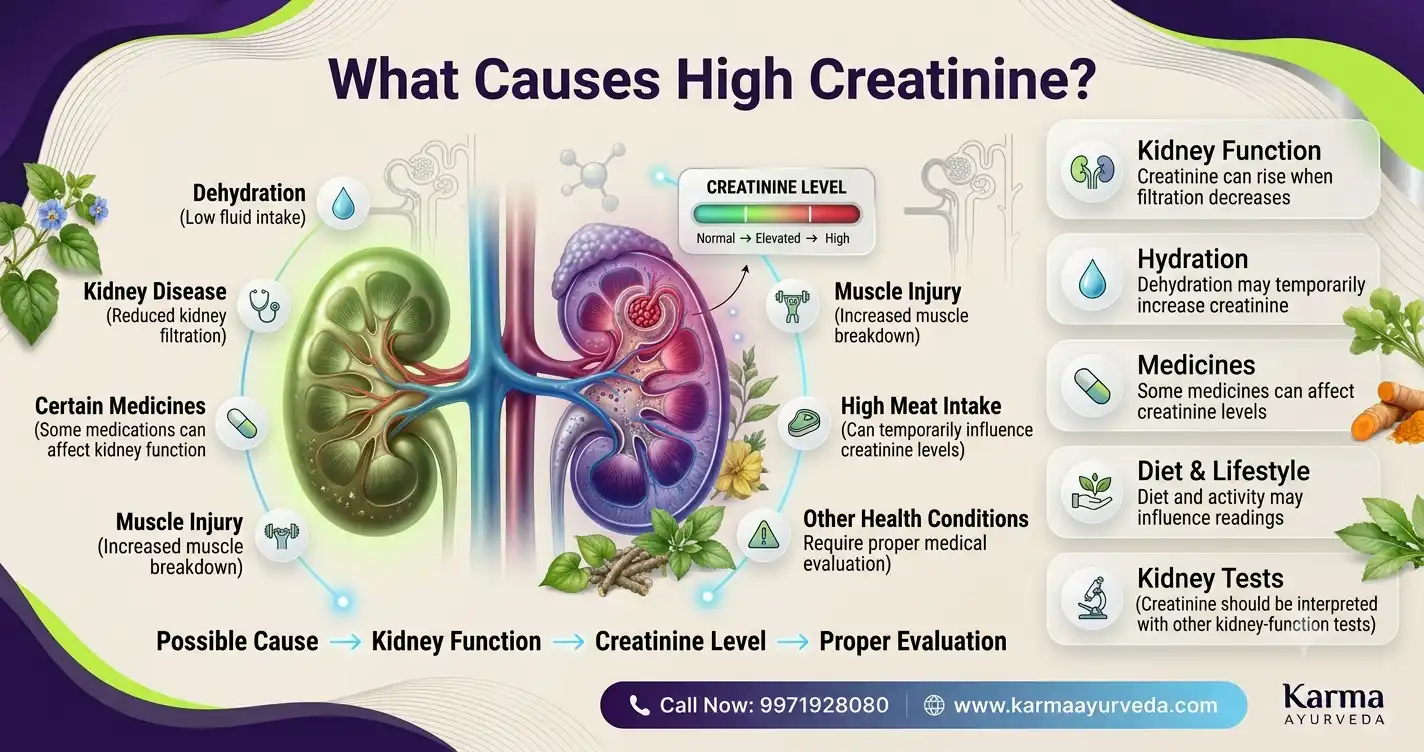
Here is the twist that surprises most people: you can have a high-test result even if your kidneys are perfectly healthy. Certain lifestyle choices and non-renal factors can trick kidney function tests into making things look worse than they are.
1. Dehydration (The Classic False Alarm)
Fluid levels in your body dictate waste concentration. If you haven’t been drinking enough water, your blood volume drops, making the creatinine in your blood appear much more concentrated than it actually is. A classic study referenced by the National Kidney Foundation highlights that simple dehydration is one of the single most frequent causes of transiently high blood urea nitrogen (BUN) and creatinine ratios.
2. Intense Workouts and High Muscle Mass
Did you crush a heavy leg day right before your blood draw? Muscle breakdown during strenuous weightlifting releases extra creatinine into your bloodstream. Furthermore, bodybuilders and folks with above-average muscle mass naturally maintain higher baseline levels simply because they have more muscle tissue generating waste.
3. Diet and Creatine Supplements
If you ate a massive cooked steak the night before your blood test, your lab numbers might jump. Cooking red meat converts its natural creatine into creatinine, which your body absorbs. Likewise, taking daily creatine monohydrate fitness supplements saturates your muscle stores, leading to elevated waste output without causing any actual kidney harm.
4. Medication Interactions
Certain over-the-counter and prescription drugs interfere with how creatinine is processed.
- NSAIDs (like ibuprofen) can reduce blood flow to the kidneys.
- Antibiotics and Heart Meds: Medications like trimethoprim (Bactrim) or cimetidine block the secretion of creatinine in the kidney tubules. A study published in the American Journal of Kidney Diseases observed that trimethoprim can cause a benign "false" increase in blood creatinine of up to 20–30% without affecting the actual filtering ability of the kidneys.
Comparing Temporary Blips vs. True Kidney Concerns
Category: Lifestyle Blip
What Is Happening inside? Extra waste production or low blood fluid volume.
Are the Kidneys Damaged? Nope, the filters are completely fine!
Common Examples: Dehydration, heavy lifting, steak dinners, creatine powder.
Category: Medication Glitch
What Is Happening inside? Drugs block the exit pathway without harming the tissue.
Are the Kidneys Damaged? No structural damage, just temporary competition.
Common Examples: Trimethoprim, Cimetidine, high-dose NSAIDs.
Category: True Kidney Stress
What Is Happening inside? The filtering units are inflamed, injured, or blocked.
Are the Kidneys Damaged? Yes, requires medical attention and monitoring.
Common Examples: High blood pressure, diabetes, kidney stones, CKD.
Signs of Elevated Creatinine to Watch Out For
In its early stages, mild waste buildup rarely causes obvious symptoms. However, if the elevation is caused by true kidney stress, you might notice some subtle signs of high creatinine:
- Puffiness or Swelling (Edema): Fluid buildup in your ankles, feet, legs, or face.
- Changes in Urination: Urinating far less frequently, or noticing dark, foamy, or bubbly urine.
- Unexplained Fatigue: Feeling constantly drained because waste products are building up in your blood.
- Nausea and Loss of Appetite: A metallic taste in your mouth or mild persistent nausea.
- Shortness of Breath: Caused by fluid backing up into the lungs.
How Doctors Figure Out What Is Going On
If your doctor spots a high result, they won't jump to conclusions right away. Instead, they will usually look at your eGFR test (Estimated Glomerular Filtration Rate), which uses your age, gender, and creatinine levels to calculate how well your kidneys are filtering.
They may also order a Cystatin C test; a secondary protein marker that isn't influenced by muscle mass or diet; to confirm whether your kidneys actually need help. Learning how to lower creatinine effectively depends entirely on finding and addressing the root cause, whether that means sipping more water or adjusting medications with your physician.
Key Takeaways
- High creatinine causes split into two categories: true kidney stress (like CKD or infections) and temporary non-kidney factors (like dehydration or supplements).
- Heavy exercise, high-protein meals, and creatine powders can cause temporary spikes on your test without harming your kidneys.
- A single lab reading is a snapshot, not a final diagnosis; trends over time and secondary metrics like eGFR matter far more.
- Always talk to your healthcare provider before stopping medications or making drastic dietary changes.
Frequently Asked Questions
Can drinking a lot of water instantly lower high creatinine levels?
Drinking water lowers creatinine if dehydration caused the spike, but it will not fix structural kidney issues.
Does a high creatinine reading always mean I have kidney disease?
No, temporary factors like intense exercise, high meat consumption, or dehydration can raise levels safely.
Can taking fitness supplements like creatine mess up my lab results?
Yes, creatine supplements naturally break down into creatinine, raising your blood test levels without damaging your kidneys.
What foods should I avoid if my creatinine levels are high?
Limiting large portions of cooked red meat, ultra-processed salty foods, and unverified herbal supplements can help keep levels stable.
How fast can high creatinine levels return to normal?
If caused by temporary dehydration or diet, levels can normalize within a few days of proper fluid intake.
Medical Disclaimer
This article is strictly for informational and educational purposes and should not be taken as medical advice. Laboratory reference ranges vary, and elevated lab values always require professional clinical interpretation. Consult a qualified healthcare professional or nephrologist for personalized medical guidance, diagnosis, and treatment plans regarding your kidney health.