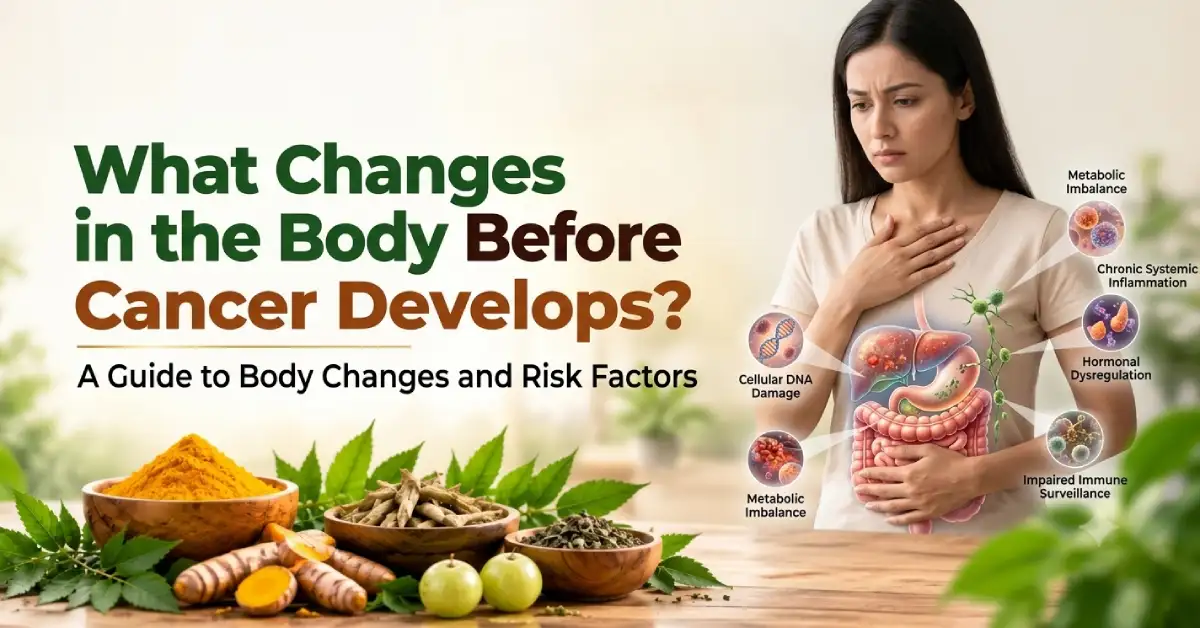
What Actually Happens Inside Your Body Before Cancer Ever Forms a Lump?
Before cancer ever shows up as a noticeable lump or appears on a standard scan, your body goes through a series of subtle microscopic shifts; chronic inflammation, cellular mutations; quietly signaling that something's off. Think of your body like a quiet, hard-working neighborhood: long before any real trouble breaks out, the streetlights start flickering, small maintenance issues crop up, and the overall environment gradually begins to change.
Understanding these early internal shifts is genuinely one of the more powerful tools we have in modern preventive wellness. When cells get stressed, they don't transform overnight; they go through a long, multi-step process of subtle change. Knowing what's happening behind the scenes gives us a real head start in supporting our health through smarter lifestyle choices, targeted nutrition, and traditional care models like Karma Ayurveda for natural cancer treatment.
The Cellular Secret: What Actually Changes Inside First?
Cells are normally remarkably disciplined. They grow, divide, do their assigned jobs, and eventually bow out gracefully through a process called apoptosis; essentially, programmed cellular retirement. But before abnormal growths form, that orderly system starts fraying at the edges.
Here's a quick look at the microscopic cascade that happens long before anything becomes visible:
DNA damage & mutational load: Everyday stressors, environmental factors, or chronic metabolic stress damage cellular DNA faster than the body's internal repair enzymes can keep up.
Chronic low-grade inflammation: Immune cells rush in to repair damage, but if the trigger never actually goes away, that constant biological "heat" ends up creating conditions where irregular cells can thrive.
Hyperplasia and dysplasia: Under sustained stress, tissue cells start multiplying faster than usual (hyperplasia) and begin looking oddly misshapen under a microscope (dysplasia).
Angiogenesis; building new supply lines: Emerging clusters of rogue cells send out chemical signals demanding their own blood supply, essentially building tiny private pipelines to steal oxygen and nutrients from the surrounding tissue.
The Silent Environment: Inflammation and Metabolic Shift
A landmark paper titled Hallmarks of Cancer, by Drs. Douglas Hanahan and Robert Weinberg, pointed out that long before a tumor actually settles in, the surrounding tissue environment starts transforming. Healthy tissue normally relies on efficient, oxygen-based energy processing. Pre-cancerous areas, though, switch over to rapid sugar fermentation; even when there's plenty of oxygen available; a phenomenon known in science as the Warburg Effect.
At the same time, the local immune system goes through a quiet kind of burnout. Instead of clearing out odd-looking cells, fatigued immune cells sometimes get tricked into sending out growth signals that accidentally end up feeding them.
When people explore holistic health paths, guided by experts like Dr. Puneet Dhawan, the main goal is usually to calm down this noisy, inflamed internal terrain. Restoring metabolic balance and cooling chronic tissue irritation helps the body work its way back toward its natural biological equilibrium.
Biological Changes: Healthy Terrain vs. Pre-Cancerous Terrain
Here's a simple breakdown comparing standard healthy tissue with a pre-cancerous microenvironment:
| Biological Marker | Healthy Cellular Terrain | Pre-Cancerous Changes |
|---|---|---|
| Cellular Structure | Neat, uniform, well-behaved | Irregular shape, crowded (Dysplasia) |
| Energy Engine | Clean oxygen-based metabolism | High-sugar fermentation mode |
| Immune Response | Quick to spot and clear rogue cells | Exhausted, tricked into helping bad cells |
| Blood Vessel Network | Standard, well-organized pathways | Unregulated, hasty new pipelines |
| Tissue Environment | Cool, calm, balanced pH | Quietly inflamed, high oxidative stress |
Supporting Your Body's Internal Defense Naturally
Since these early cellular changes lean heavily on chronic stress and metabolic imbalance, nourishing your system with anti-inflammatory compounds can genuinely make a difference. Plenty of people turning to natural cancer treatment options focus first on cleaning up their daily menu, then adding targeted botanical support to help clear out cellular waste.
When it comes to the best foods for cancer patients, or for anyone hoping to reduce tissue stress in general, colour and bitter greens tend to win the day. Foods rich in polyphenols, glucosinolates, and deep pigments essentially work like a cleanup crew for cellular "rust"; oxidative stress.
Plant Helpers & Herbal Support
Throughout history, traditional plant medicine has leaned on specific roots and leaves to calm systemic heat and support immune surveillance. When people talk about the best herbs for cancer support or general immune defense, a few names come up repeatedly in the literature:
Curcumin (from turmeric): Widely studied for its ability to down-regulate inflammatory pathways like NF-kB.
Ashwagandha: Helps modulate cortisol, the stress hormone, and supports healthy immune activity.
Green tea extract (EGCG): Packed with antioxidants that appear to disrupt abnormal blood vessel growth in stressed tissue.
Guduchi & Tulsi: Traditional Ayurvedic staples valued for liver support, blood purification, and metabolic balance.
Integrative clinical spaces like Karma Ayurveda for natural cancer treatment bring these classical botanical principles together with structured diet plans, giving the body the quiet support it needs to stay resilient.
Rebuilding Balance: Integrative Wellness and Modern Care
It's worth remembering that no single herb or dietary swap acts as some solitary magic key. When people look into the best medicines for cancer, or explore supportive traditional systems alongside it, the smartest approach is almost always an integrative one. Pairing precise modern diagnostic tools with time-tested holistic therapies lets you track internal changes accurately, while actively nurturing your body's baseline vitality.
Eating the best foods for cancer patients; leafy greens, cruciferous vegetables, berries, clean proteins; helps keep tissue inflammation low while providing essential fuel for cellular repair. Meanwhile, consulting experienced holistic practitioners like Dr. Puneet Dhawan can help tailor specialized plant protocols and gentle detox strategies suited to your particular constitution. Choosing the best medicines for cancer under expert medical guidance, while backing your body up with the best herbs for cancer care, creates a comprehensive, multi-layered health strategy. Seeking out a well-rounded natural cancer treatment pathway means treating the whole person; not just a set of symptoms.
Key Takeaways
- Early shifts are microscopic. Long before a physical tissue mass forms, cells experience DNA stress, altered energy metabolism, and subtle structural changes.
- Inflammation drives the terrain. Persistent, low-grade tissue irritation creates an environment where abnormal cells can hide and grow.
- Metabolism flips. Stressed cellular environments swap clean oxygen usage for rapid sugar processing; the Warburg Effect.
- Nutrition matters. Incorporating anti-inflammatory, antioxidant-rich foods offers valuable daily protection against cellular damage.
- Holistic support helps. Integrative traditional care can help cool systemic irritation and keep your natural immune defenses alert.
Frequently Asked Questions
What's the very first thing that happens in a cell before it turns pre-cancerous?
The initial trigger is usually cumulative DNA damage or a genetic mutation that slips past the cell's internal repair system.
Can chronic inflammation alone lead to pre-cancerous tissue changes?
Yes; long-term inflammation causes continuous tissue damage and rapid cell turnover, which increases the chances of copy errors in cellular DNA.
How does diet influence pre-cancerous cellular environments?
Nutrient-dense, antioxidant-rich foods help reduce oxidative stress and can help prevent the inflammatory signals that end up nourishing abnormal cells.
What role do traditional herbs play in supporting cellular health?
Certain herbs contain bioactive compounds that may help modulate immunity, reduce oxidative damage, and support the body's natural detox pathways.
Disclaimer
This article is strictly for informational and educational purposes and should not replace professional medical advice, diagnosis, or treatment. Always consult a qualified healthcare provider or oncologist regarding any medical condition, diagnostic testing, or dietary and lifestyle changes.