What Happens If Creatinine Reaches 5? Here's the Honest, No-Panic Answer
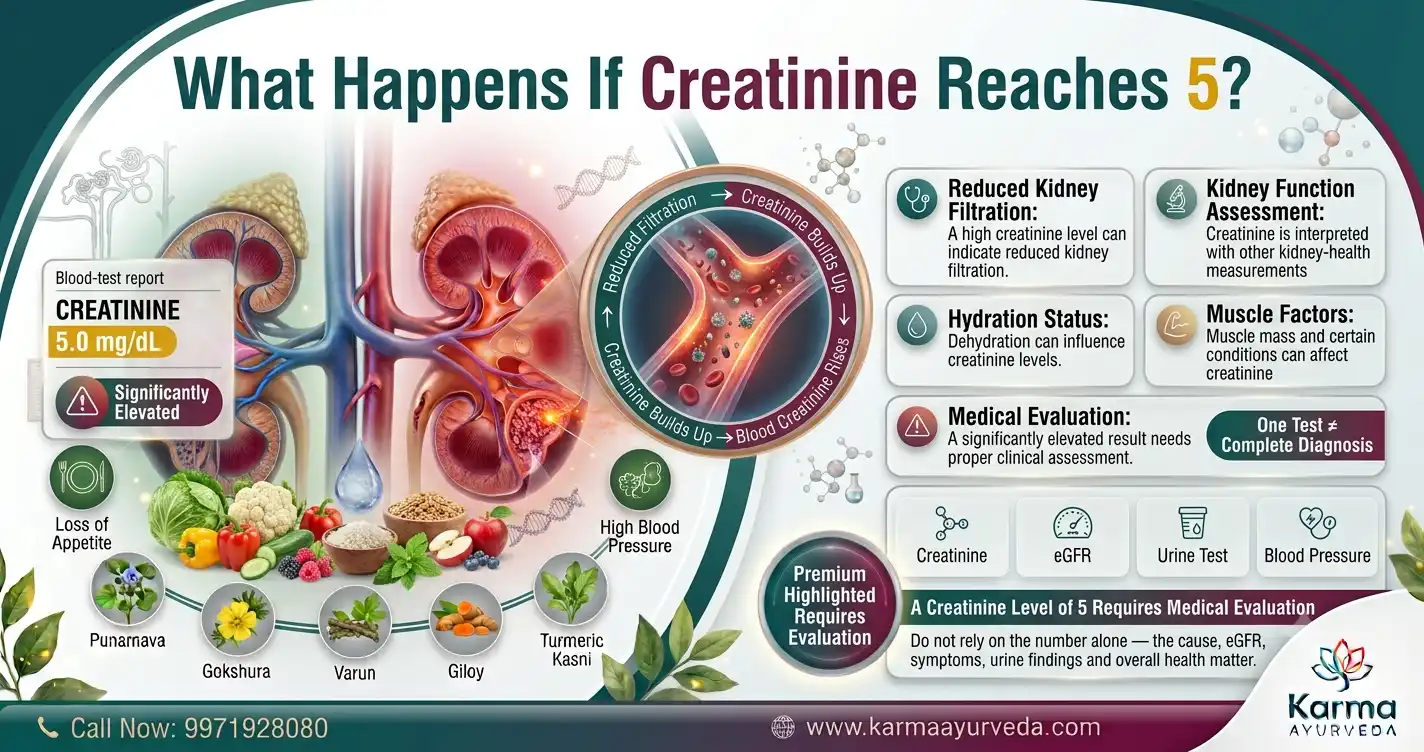
If your creatinine level hits 5 mg/dL, it means your kidneys are struggling hard; most likely you're looking at advanced chronic kidney disease (CKD stage 4 or 5), and it's time to see a nephrologist, like, this week. That's the short answer. Now let's talk about what that actually means for your body, your life, and whether you should be quietly Googling "kidney transplant waitlist" at 2 AM (please don't, at least not yet).
Okay, But What Even Is Creatinine?
Think of creatinine as the exhaust fumes of your muscles. Every time your muscles do their thing; flexing, walking, aggressively scrolling Instagram; they produce a waste product called creatinine. Your kidneys, being the unsung janitors of your body, filter this stuff out of your blood and send it packing through your urine.
A normal creatinine level usually sits somewhere between 0.6 and 1.2 mg/dL, though it varies a bit by age, sex, and muscle mass (bodybuilders, this is your moment to feel smug). When that number creeps up, it's basically your kidneys waving a little flag that says "hey, we're not filtering like we used to."
So What Does a Creatinine of 5 Actually Mean?
A creatinine level of 5 mg/dL is not a "drink more water and call me in the morning" situation. This is serious business. At this point, your estimated glomerular filtration rate (eGFR); the real measure of how well your kidneys are filtering; is typically down in the range associated with Stage 4 or Stage 5 chronic kidney disease, meaning your kidneys might be functioning at only 15–30% (or less) of their normal capacity.
According to guidelines from the National Kidney Foundation and the KDIGO (Kidney Disease: Improving Global Outcomes) organization, once kidney function drops this low, the conversation shifts from "let's manage this" to "let's plan for what's next"; which might include dialysis or, eventually, a transplant discussion.
That said; and this is important; creatinine of 5 doesn't automatically mean "dialysis tomorrow." Some people function relatively okay at this level for a while with the right treatment, especially if the kidney damage happened gradually. Others, especially with acute kidney injury (a sudden spike rather than a slow decline), can actually bounce back significantly once the underlying cause is treated. Context is everything here.
What Causes Creatinine to Climb This High?
- Diabetes; the single biggest cause of chronic kidney disease worldwide, silently damaging the tiny filtering units in your kidneys over years.
- Uncontrolled high blood pressure; basically power-washing your kidneys' delicate blood vessels every single day.
- Chronic kidney disease (CKD) that's been quietly progressing without symptoms (kidneys are annoyingly good at suffering in silence).
- Dehydration or acute illness; sometimes a bad bout of vomiting, diarrhea, or an infection can cause a temporary but dramatic creatinine spike.
- Kidney obstruction; like a stone blocking the plumbing.
- Certain medications (NSAIDs, some antibiotics) that are hard on the kidneys when overused.
What Symptoms Show Up at This Stage?
Kidneys are the strong, silent type; they often don't complain until things are pretty far gone. By the time creatinine is at 5, people commonly report:
- Fatigue that feels like wading through wet cement
- Swelling in the legs, ankles, or around the eyes
- Nausea or a metallic taste that won't quit
- Less frequent (or much more frequent) urination
- Persistent itching
- Trouble concentrating, sometimes called "brain fog"
- Shortness of breath
If several of these sound familiar, that's your cue to stop self-diagnosing via forums and actually book that doctor's appointment.
Creatinine Levels vs. Kidney Function: A Quick (Slightly Sassy) Comparison
- 0.6 – 1.2 mg/dL: Normal range — Kidneys' Mood: Chill, doing their job.
- 1.3 – 2.5 mg/dL: Mild to moderate impairment — Kidneys' Mood: "We're a bit tired, boss".
- 2.5 – 4.9 mg/dL: Significant CKD (Stage 3–4) — Kidneys' Mood: Working overtime, visibly stressed.
- 5.0 mg/dL and above: Severe CKD (Stage 4–5) — Kidneys' Mood: Sending SOS flares, need backup ASAP.
What Should You Actually Do?
First: don't panic-diagnose yourself with Dr. Google. Second: don't ignore it either. A creatinine level of 5 calls for a nephrology consult, a full kidney function panel (including eGFR, electrolytes, and urine tests), and a serious look at the underlying cause.
Depending on what's found, treatment could involve:
- Tight blood pressure and blood sugar control
- Dietary changes; often lower sodium, potassium, and phosphorus
- Medication adjustments (some drugs need to be stopped or dosed differently)
- Treating any reversible cause, like dehydration or an obstruction
- Preparing for dialysis or discussing transplant evaluation if kidney function continues to decline
Research published through bodies like the National Kidney Foundation consistently shows that early nephrology referral; even at advanced stages; improves outcomes and quality of life compared to waiting until a crisis hits. Basically, showing up to the appointment sooner rather than later genuinely helps.
Key Takeaways
- A creatinine level of 5 mg/dL usually points to advanced chronic kidney disease (Stage 4–5).
- It doesn't automatically mean dialysis is starting tomorrow; the cause matters a lot.
- Common culprits include diabetes, high blood pressure, dehydration, and obstructions.
- Symptoms like fatigue, swelling, and nausea often show up around this stage.
- Prompt nephrology care and treating the root cause can meaningfully change the outcome.
CASE STUDY
https://www.youtube.com/watch?v=X5L4LMX4jG4
Mr. Koshal Kumar, a resident of Delhi, was diagnosed with early-stage Chronic Kidney Disease (CKD) complicated by hydronephrosis, a condition in which the kidney swells due to impaired urine drainage. He experienced severe swelling in his hands and feet, reduced urine output, and persistent discomfort, all of which affected his daily life. Medical reports showed a serum creatinine level of 1.5 mg/dL and indicated that approximately 25% of his kidney function had been compromised. He was also advised to undergo bladder surgery but sought a non-surgical alternative at Karma Ayurveda.
After a comprehensive evaluation, Mr. Koshal Kumar received a personalized Ayurvedic treatment plan that included herbal formulations, a kidney-friendly diet, lifestyle modifications, and regular monitoring. The treatment focused on supporting kidney function naturally, improving urine flow, reducing inflammation, and addressing the underlying causes of his condition through a holistic approach.
Over the course of treatment, his condition improved significantly. Follow-up reports showed his serum creatinine level decreased from 1.5 mg/dL to 0.9 mg/dL, while the swelling in his hands and feet resolved, urine output returned to normal, and hydronephrosis improved. As a result, he was able to avoid the previously recommended bladder surgery. His journey demonstrates how personalized Ayurvedic care, combined with consistent treatment and appropriate medical supervision, may help support kidney health and improve overall quality of life.
Frequently Asked Questions (FAQs)
Is a creatinine level of 5 reversible?
Sometimes; if it's caused by a temporary issue like dehydration or an infection, it can improve significantly once that's treated.
Does creatinine of 5 mean I need dialysis immediately?
Not necessarily; doctors look at symptoms, eGFR, and overall health before deciding, so it's a "let's evaluate," not an automatic "start today."
Can diet lower a high creatinine level?
Yes, a kidney-friendly diet low in sodium, potassium, and phosphorus can genuinely help slow things down, alongside medical treatment.
What's a dangerously high creatinine level?
Generally, anything above 5 mg/dL is considered severe and needs urgent medical attention, though "dangerous" really depends on the individual's baseline and symptoms.
Should I see a specialist for this?
Absolutely; a nephrologist (kidney specialist) is the right person to guide next steps once creatinine climbs this high.
Disclaimer
This article is for general informational purposes only and isn't a substitute for professional medical advice, diagnosis, or treatment. Creatinine levels and kidney health depend on many individual factors. Please consult a licensed nephrologist or physician for personalized guidance regarding your specific situation.