Unlocking Wellness Naturally
100% Ayurvedic Treatment

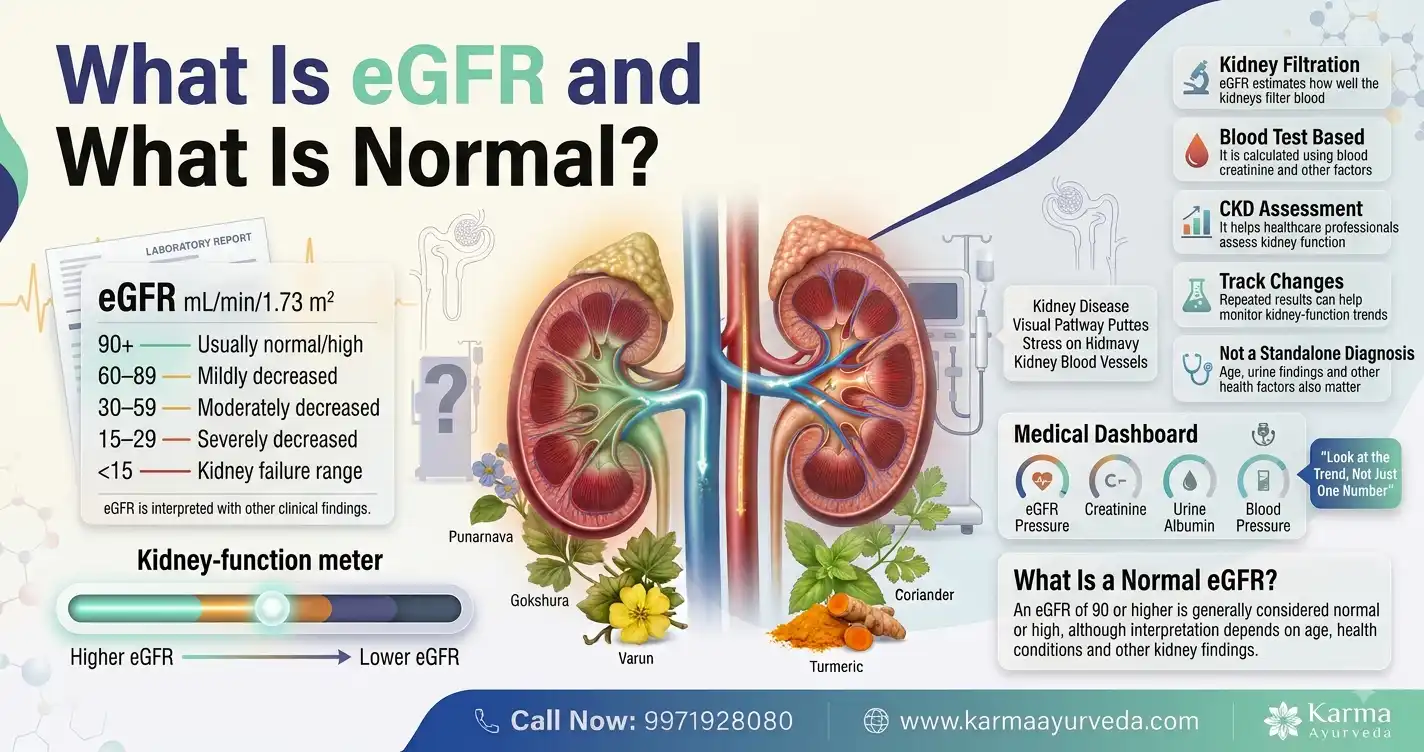
eGFR is an estimate of how well your kidneys are filtering waste from your blood. In most adults, an eGFR of 90 or above is considered normal, although the expected number can naturally decrease with age.
One of the most important numbers on that report is eGFR, short for estimated glomerular filtration rate. It gives doctors an idea of how efficiently your kidneys are filtering your blood.
But here is the important part: eGFR isn't a score where 100 means you get a gold medal and 89 means you need to panic. Your age, health, urine protein levels, medications, and other factors all matter.
So, let's make this number much less mysterious.
eGFR (estimated glomerular filtration rate) is a calculated estimate of how much blood your kidneys can filter in one minute.
Your kidneys contain millions of tiny filtering units called nephrons. These filters continuously clean your blood, removing waste and excess fluid while keeping useful substances in your body.
The eGFR calculation usually uses your blood creatinine level along with factors such as age and sex. Modern equations recommended by the National Kidney Foundation and American Society of Nephrology use race-free methods, including the 2021 CKD-EPI equation.
In simple language:
Creatinine is one of the clues. eGFR is the calculated estimate that helps explain what that clue may mean for kidney filtration.
And yes, that means eGFR isn't directly measured from the blood sample. It is estimated. Hence the little “e” in eGFR.
For most adults, a normal eGFR is generally 90 mL/min/1.73 m² or higher. However, there is an important wrinkle: eGFR naturally tends to decrease with age.
The National Kidney Foundation lists approximate average eGFR values such as:
These are population averages; not personal targets carved into a kidney-shaped stone. Your own result needs to be interpreted in context.
Research also supports the idea that kidney filtration generally declines as people age. A 2024 population-based study involving around 12,000 people found that eGFR decreased progressively with age.
So, an eGFR of 85 in a 25-year-old and an eGFR of 85 in a 70-year-old don't necessarily tell exactly the same story.
Here is the commonly used eGFR range for chronic kidney disease classification:
These categories come from the GFR classification used in current kidney disease guidelines.
But here's something people often miss:
An eGFR between 60 and 89 does not automatically mean you have chronic kidney disease.
If there is no other evidence of kidney damage, such as persistent albumin in the urine, G1 or G2 eGFR levels alone do not meet the criteria for CKD.
In other words, don't see an 82 on your report and immediately start imagining dialysis machines.
Not necessarily.
A single eGFR result is more like a snapshot than the entire movie.
eGFR can be influenced by several things, including:
For chronic kidney disease, doctors generally look for evidence that reduced kidney function or kidney damage has persisted for at least three months.
This is why one unusual result usually deserves context and, when appropriate, repeat testing rather than instant panic.
This is where kidney testing gets interesting.
Your eGFR tells you about filtration, but another important test checks for kidney damage.
That test is the urine albumin-to-creatinine ratio, or uACR.
Albumin is a protein that normally stays in your blood. If significant amounts repeatedly appear in your urine, it can indicate damage to the kidney's filtering barrier.
The current classification system considers:
So, when evaluating kidney health, eGFR and uACR work better as a team than either one working alone.
Think of it like checking your car. The fuel gauge tells you one thing; the engine warning light tells you something else. Looking at only one dashboard light isn't exactly a complete inspection.
A reduced eGFR can have many possible causes.
Common risk factors for declining kidney function include:
High blood pressure is particularly important because prolonged elevated blood pressure can damage the small blood vessels involved in kidney filtration.
Diabetes can also damage the kidney's filtering structures over time, particularly when blood glucose remains poorly controlled.
The good news is that kidney health isn't completely a “set it and forget it” situation. Managing blood pressure, blood sugar, diet, physical activity, smoking, and medications appropriately can all be part of protecting kidney function.
Sometimes, yes — but it depends entirely on why the eGFR is reduced.
For example, if kidney function temporarily changes because of an acute illness, dehydration, medication effect, or another reversible problem, the number may improve after the underlying issue is addressed.
With chronic kidney disease, however, the goal is often to protect remaining kidney function and slow further decline, rather than expecting the number to magically return to a youthful 120.
And remember: eGFR can naturally fluctuate. Doctors are usually more interested in the trend over time than obsessing over one isolated number.
A study from the Oxford Renal Cohort examined changes in eGFR among older adults and highlighted that kidney function can move in both directions over time, with rapid decline being particularly important to identify.
An eGFR below 60 deserves medical attention, particularly if it remains below 60 for three months or longer.
Persistent eGFR between:
That does not mean everyone with an eGFR below 60 will immediately develop kidney failure.
Kidney disease progression varies considerably from person to person. Doctors may consider your eGFR trend, urine albumin, blood pressure, diabetes status, medications, underlying kidney condition and other health factors.
If you have received a low eGFR result, discussing it with a healthcare professional is much more useful than trying to diagnose yourself using search results at 2 a.m. We've all been there; the internet rarely improves the situation.
People exploring Karma Ayurveda for kidney diseases or searching for Ayurvedic treatment for kidney disease should keep one principle firmly in mind: kidney disease needs proper medical evaluation and monitoring.
Ayurvedic approaches may be explored as supportive care in appropriate situations, but they should not be considered a replacement for essential medical evaluation, prescribed treatment, blood tests, urine testing, or specialist care.
If you are considering any herbal or Ayurvedic product, discuss it with your healthcare professional, particularly if you have reduced kidney function or take prescription medicines. Some herbs and supplements can affect kidney function or interact with medications.
The safest approach is one that puts accurate diagnosis and ongoing monitoring first.
The 2021 CKD-EPI Equation Study: The development of the 2021 creatinine-based CKD-EPI equation supported estimating GFR without using race as a variable, contributing to the current race-free approach recommended by the NKF and ASN.
The Oxford Renal Cohort Study: Researchers followed 884 adults aged 60 and older and examined changes in eGFR over time, helping researchers understand kidney-function trajectories in older adults.
Population-Based German Cohort Research: A large analysis involving more than 12,000 participants found a progressive relationship between age and declining eGFR, while also identifying albuminuria and blood pressure as important factors associated with kidney-function decline.
A 2024 systematic review of 12 studies involving more than 129,000 healthy participants also found that kidney function generally declines with age, although the rate varies substantially between individuals.
So, what is eGFR and what is normal?
In simple terms, eGFR is an estimate of how efficiently your kidneys filter blood. A normal eGFR is generally 90 or higher, but age and the overall picture of your kidney health matter. The most important thing is not to judge kidney health from one number alone.
Look at the bigger picture: eGFR, urine albumin, blood pressure, blood sugar, symptoms, medical history and changes over time.
Your kidneys don't send you a monthly performance report, unfortunately. So these tests are how we keep an eye on what they're quietly doing in the background.
Watch the case study on YouTube:
Patient: Giri Kumar
Age: 6 years
Condition: Nephrotic Syndrome
Giri Kumar, a 6-year-old child, was diagnosed with nephrotic syndrome and experienced recurring episodes of severe swelling. Despite treatment at multiple hospitals, his symptoms repeatedly returned whenever steroid doses were reduced, creating a cycle of steroid dependency and relapse.
After conventional treatment failed to provide lasting stability, Giri’s parents consulted Karma Ayurveda. His treatment plan focused on personalized Ayurvedic care, including herbal formulations, dietary guidance, and supportive therapies aimed at managing nephrotic syndrome and supporting overall kidney health.
The approach emphasized consistent monitoring and a child-specific treatment plan rather than relying solely on symptom control.
According to the case study, Giri’s condition became more stable after following the Ayurvedic treatment plan. His recurring swelling and relapse cycle reportedly reduced, and he became more active and healthier.
Giri Kumar’s story highlights the importance of timely evaluation, consistent care, and close medical monitoring in children with nephrotic syndrome. While the case reports improvement with Ayurvedic care, individual results can vary, and children with nephrotic syndrome should not stop or reduce prescribed steroids or other medicines without guidance from their pediatric nephrologist.
A normal eGFR in most adults is generally 90 mL/min/1.73 m² or higher, although normal values vary with age.
An eGFR of 60 is at the lower boundary of the mildly decreased range and needs context, especially whether kidney damage is present and whether the result persists.
Yes, an eGFR of 90 is generally considered within the normal or high range, provided there isn't other evidence of kidney damage.
It can improve when a temporary or reversible factor is responsible, although chronic kidney disease usually requires focusing on protecting and maintaining remaining kidney function.
No; kidney failure is generally associated with an eGFR below 15, while moderately reduced eGFR values can represent earlier stages of kidney disease.
This article is intended for general educational purposes and should not be treated as medical advice or a diagnosis. eGFR results should be interpreted by a qualified healthcare professional alongside creatinine, urine tests, medical history and other clinical findings. Do not start, stop, or replace prescribed treatment based solely on information in this article.
Continue using AI Cursor?Keep it onTurn Off
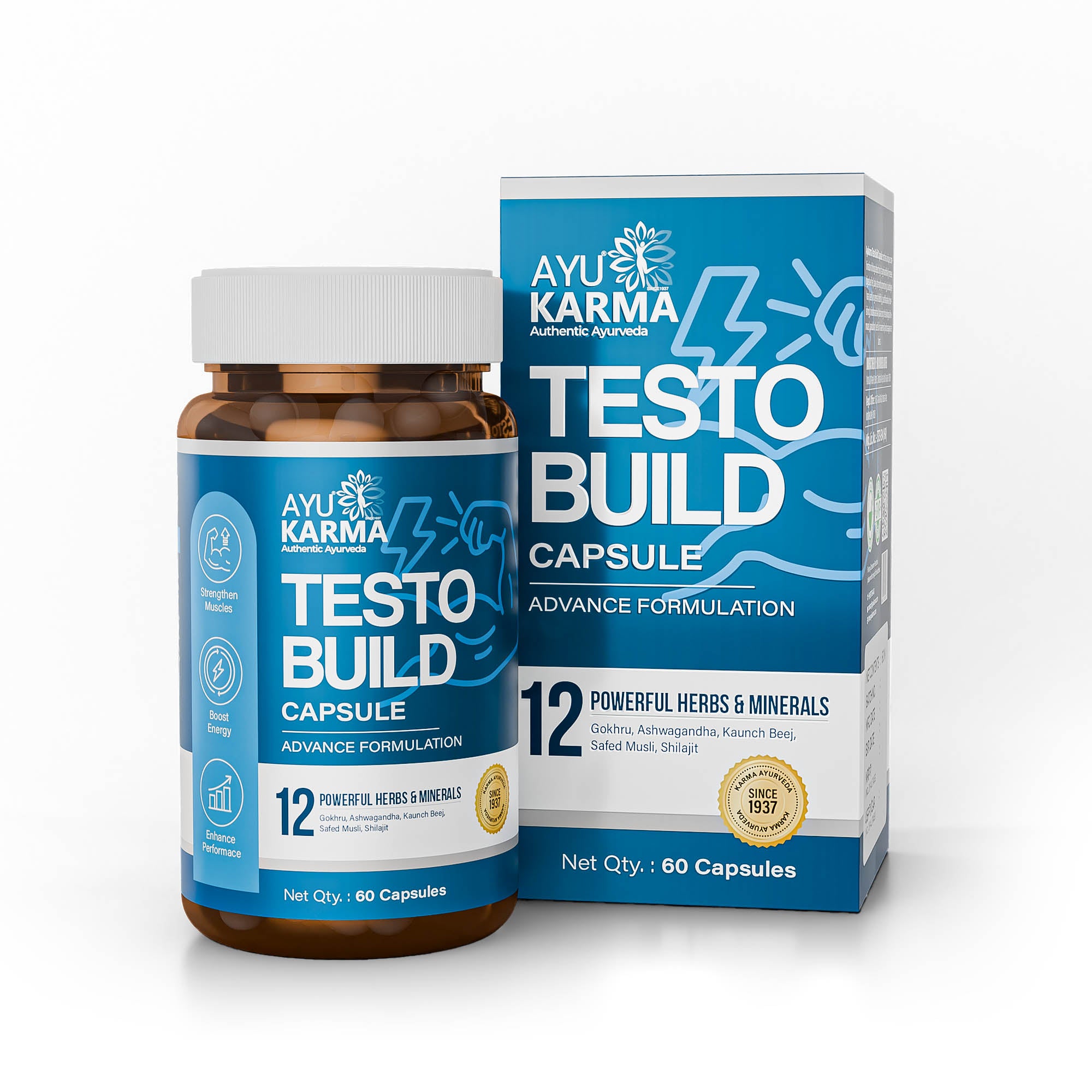
AyuKarma Testo Build Capsules combine 12 Ayurvedic herbs and minerals to support strength, energy, stamina, physical performance, nourishment and overall daily vitality.

AyuKarma Hair Lush Capsules combine Ayurvedic herbs to support hair growth, reduce hair fall, strengthen roots, nourish the scalp and promote healthier-looking hair.

Karma Garcom Capsules contain Garcinia indica to support healthy metabolism, digestion, weight management, digestive comfort and daily wellness alongside a balanced lifestyle.
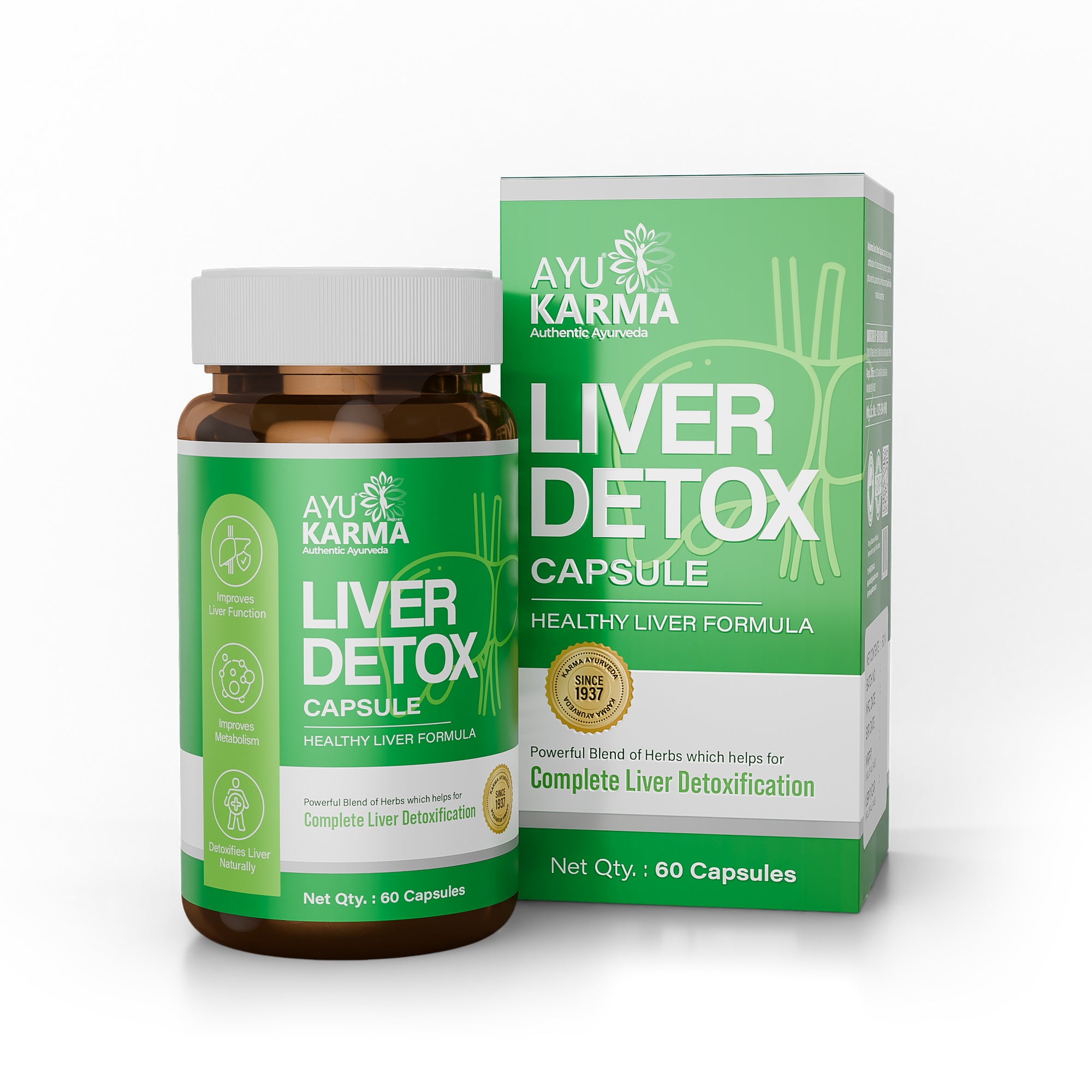
Doctor-recommended liver supplement that helps detoxify the liver, support healthy cholesterol, improve digestion & promote liver health. Developed by Dr. Puneet Dhawan with Karma Ayurveda philosophy.
Second Floor, 77, Block C, Tarun Enclave, Pitampura, New Delhi, Delhi, 110034

Certificate no- AH-2023-0186
JAN 05, 2026 - JAN 04, 2029

US FDA Reg. No.: 14568299376