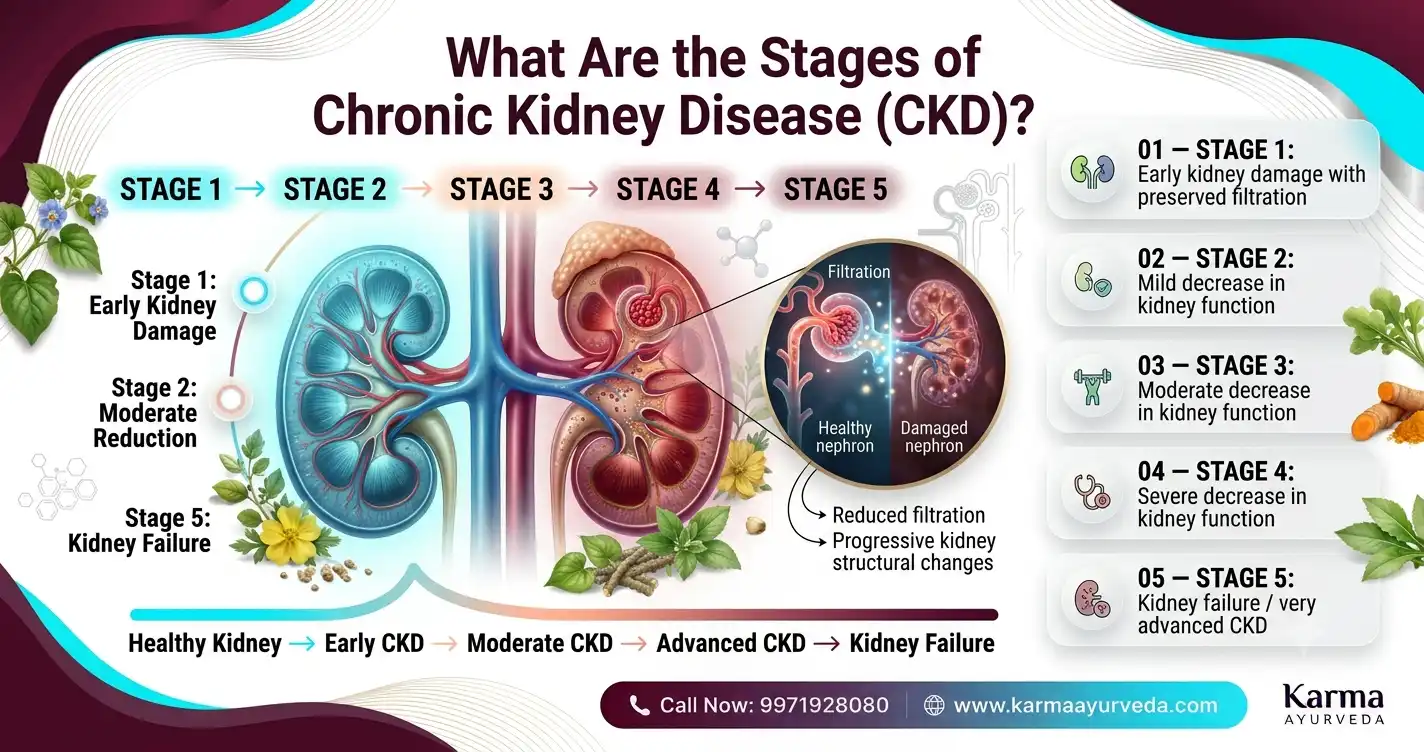
If you're wondering what the stages of chronic kidney disease (CKD) are, here's the simple answer: CKD is divided into five stages based on how well your kidneys filter waste from your blood, which is measured using your estimated glomerular filtration rate (eGFR). The lower your eGFR, the more advanced the kidney damage.
Now, before you imagine your kidneys dramatically waving a white flag, here's the good news: not every stage feels the same, and early-stage CKD often has little to no symptoms. That's exactly why understanding the stages matters. Think of it like your phone battery. At 90%, you're relaxed. At 10%, you're searching for a charger with Olympic-level urgency. Your kidneys also send signals; but sometimes they're a little too polite in the beginning.
Let's break down each stage in a simple, friendly way.
Chronic kidney disease is a long-term condition where the kidneys gradually lose their ability to filter waste, extra fluid, and toxins from the blood. Unlike a sudden kidney injury, CKD develops slowly over months or years.
Healthy kidneys quietly work around the clock by:
When kidney function declines, these jobs become harder to perform.
Doctors primarily use the estimated glomerular filtration rate (eGFR) to determine the stage of CKD.
The eGFR estimates how much blood your kidneys filter every minute.
Think of eGFR like your kidney's report card. Stage 1 says, "Doing okay, but please pay attention." Stage 5 says, "We seriously need help now."

This stage can be a little sneaky.
Your kidneys are still filtering normally, but tests show signs of kidney damage such as:
Usually none.
Yes, that's the tricky part.
Most people discover Stage 1 during routine blood or urine tests rather than because they feel sick.
The kidneys are still doing a pretty decent job, but they're working a little harder.
60–89
Many people still have no symptoms, although some may notice:
These symptoms are subtle enough that many people blame work stress, poor sleep, or "getting older."
Stage 3 is divided into two parts because kidney function starts declining more noticeably.
Kidney function has moderately decreased.
Possible symptoms include:
Symptoms may become more noticeable.
These include:
Many people first realize something is wrong during this stage.
At this point, the kidneys are struggling significantly.
15–29
People with Stage 4 CKD usually require close monitoring because the risk of progression becomes much higher.
Stage 5 is also called end-stage kidney disease (ESKD).
Less than 15
At this stage, the kidneys can no longer remove enough waste to keep the body functioning normally.
Treatment options may include dialysis, kidney transplantation, and comprehensive medical management depending on the individual's condition and healthcare team's recommendations.
Several conditions can gradually worsen kidney disease over time.
The most common causes include:
The encouraging part? Many of these risk factors can be managed.
In many cases, yes.
Although damaged kidney tissue generally cannot regenerate completely, slowing progression is often possible with appropriate medical care and healthy lifestyle choices.
Helpful habits include:
Small, consistent changes often make a meaningful difference over time.
Several well-known studies have shaped how doctors understand and manage chronic kidney disease.
The internationally recognized KDIGO Guidelines classify CKD using eGFR and albuminuria, helping healthcare providers predict disease progression and personalize care.
This large international collaboration showed that lower eGFR and higher urine albumin levels are strongly associated with increased risks of kidney failure, cardiovascular disease, and mortality.
The MDRD Study contributed significantly to estimating kidney function using eGFR and highlighted the importance of early CKD detection.
Here's something many people don't realize.
CKD can quietly progress for years before symptoms become obvious.
Routine screening becomes especially important if you have:
A simple blood test and urine test can often identify problems long before serious symptoms appear.
The stages of chronic kidney disease help doctors understand how well your kidneys are functioning and guide treatment decisions. From Stage 1 to Stage 5, each stage represents a different level of kidney function, with earlier stages often showing few or no symptoms.
The biggest takeaway? Don't wait for your kidneys to "complain loudly." They're famously quiet coworkers. Regular health check-ups, healthy lifestyle choices, and timely medical advice can go a long way in protecting your kidney health.
They range from Stage 1 (mild kidney damage) to Stage 5 (kidney failure), based mainly on eGFR.
Stage 4 and Stage 5 are generally considered the most serious because kidney function is severely reduced.
Stage 3 CKD usually isn't reversible, but its progression can often be slowed with appropriate treatment and healthy habits.
A blood test estimating eGFR, along with urine tests for protein, is commonly used.
Yes, early-stage CKD often causes no symptoms, which is why routine screening is so important.
This article is intended for educational purposes only and should not be considered medical advice, diagnosis, or treatment. Chronic kidney disease varies from person to person, and treatment decisions should always be made in consultation with a qualified healthcare professional. If you experience persistent symptoms or have concerns about your kidney health, seek medical evaluation promptly.
AyuKarma Testo Build Capsules combine 12 Ayurvedic herbs and minerals to support strength, energy, stamina, physical performance, nourishment and overall daily vitality.
AyuKarma Hair Lush Capsules combine Ayurvedic herbs to support hair growth, reduce hair fall, strengthen roots, nourish the scalp and promote healthier-looking hair.
Karma Garcom Capsules contain Garcinia indica to support healthy metabolism, digestion, weight management, digestive comfort and daily wellness alongside a balanced lifestyle.
Doctor-recommended liver supplement that helps detoxify the liver, support healthy cholesterol, improve digestion & promote liver health. Developed by Dr. Puneet Dhawan with Karma Ayurveda philosophy.
AyuKarma Muscle Magic Capsules combine Ayurvedic herbs to support appetite, digestion, nourishment, healthy weight gain, muscle strength and daily vitality for adults.
AyuKarma Obes-Fit Capsules combine Ayurvedic herbs to support appetite control, digestion, metabolism, healthy weight management, energy and overall wellness alongside an active lifestyle.
AyuKarma Body Detox Capsules combine Ayurvedic herbs to support natural detoxification, digestion, colon cleansing, metabolism, gut wellness and overall rejuvenation for daily vitality.
Doctor-recommended ayurvedic medicine to control diabetes, manage blood sugar levels & reduce diabetes-related complications in diabetic patients. Developed by Dr. Puneet Dhawan with the Karma Ayurveda philosophy.
Doctor-recommended Ayurvedic gut supplement that helps relieve occasional constipation, promote smooth bowel movement, reduce gas & bloating and improve digestion. Developed by Dr. Puneet Dhawan with Karma Ayurveda philosophy.
Doctor-recommended Ayurvedic joint supplement that helps relieve joint pain & stiffness, improve flexibility and support smoother, more comfortable movement. Developed by Dr. Puneet Dhawan with Karma Ayurveda philosophy.
Ayurvedic Kidney Detox Kit for individuals with high creatinine, high BP, diabetes, high uric acid, alcohol consumption habits, frequent painkiller use or early signs of kidney stress.
Second Floor, 77, Block C, Tarun Enclave, Pitampura, New Delhi, Delhi, 110034