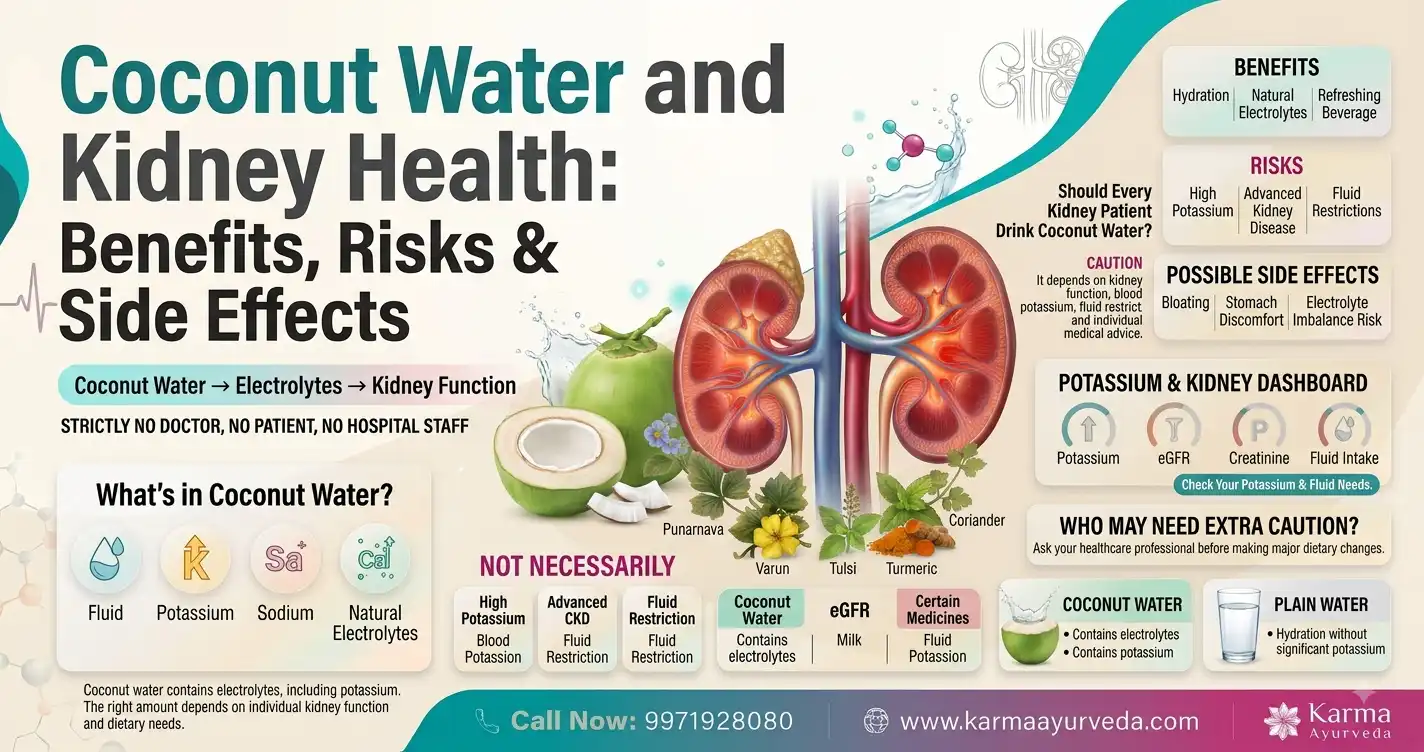
Yes, coconut water can be refreshing and hydrating, but it is not automatically good for everyone with kidney disease. Its biggest catch is potassium, which can become a problem when the kidneys are not able to remove excess potassium properly.
So, when it comes to kidney patients and coconut water, the answer is less “yes or no” and more “it depends.” Your kidney function, blood potassium level, stage of kidney disease, medications, and fluid restrictions all matter.
Coconut water has earned quite a reputation. It is natural, refreshing, packed with electrolytes and somehow manages to make plain water feel slightly jealous. But if you have chronic kidney disease (CKD), there is one nutrient you cannot afford to ignore: potassium.
Coconut water is the clear liquid found inside young coconuts. It contains water along with naturally occurring electrolytes and small amounts of carbohydrates and minerals.
Research reviews have found that potassium is one of the major minerals in coconut water. A recent review published in Foods reported that coconut water may contain roughly 200–290 mg of potassium per 100 mL, although the exact amount varies depending on coconut variety, maturity and processing. (PubMed Central (PMC)
For someone with normally functioning kidneys, this potassium generally isn't a concern.
For someone with advanced kidney disease, however, the story can be different.
Your kidneys help remove excess potassium from your blood.
When kidney function decreases, the body may have a harder time getting rid of extra potassium. This can result in hyperkalemia, or high blood potassium.
And potassium isn't a mineral you want casually piling up. Very high potassium levels can affect muscle function and heart rhythm. The National Kidney Foundation notes that people with CKD may need to monitor potassium depending on their kidney function and blood test results. (National Kidney Foundation)
That is why a drink that looks completely innocent can sometimes need a second look.
This is where things get interesting.
Coconut water may be suitable for some people with kidney disease, but it may need to be limited or avoided by people with high potassium levels, advanced CKD or certain fluid restrictions.
There isn't one coconut-water rule for every kidney patient.
For example, someone with early-stage CKD and normal potassium may have very different dietary restrictions from someone with Stage 4 or Stage 5 CKD.
People on dialysis may have even tighter potassium and fluid restrictions.
The National Kidney Foundation specifically lists coconut water and coconut-based supplements among sources that can contain significant potassium. (National Kidney Foundation)
In other words, don't let the word “natural” do all the decision-making.

There is some interesting research on coconut water and the urinary system, particularly kidney stones.
One study titled “Coconut Water: An Unexpected Source of Urinary Citrate”, published in Journal of Urology, looked at eight healthy adults. Researchers found that drinking coconut water increased urinary citrate by about 29% and urinary potassium by about 130%. (PubMed)
Why does urinary citrate matter?
Citrate can help reduce the formation of certain types of kidney stones. However, this small study involved healthy, non-stone-forming adults; not people with chronic kidney disease.
So it would be a stretch to say, “Coconut water treats kidney disease.”
It doesn't.
The research is interesting, but it doesn't turn coconut water into a kidney medicine.
Coconut water can contribute to hydration because, well, it contains plenty of water. It also provides electrolytes.
The National Kidney Foundation emphasizes that adequate hydration is important for kidney health, but also points out that fluid requirements are not identical for everyone. People with kidney disease; especially those on dialysis; may have specific fluid limits. (National Kidney Foundation)
So drinking more and more coconut water isn't necessarily a kidney-friendly strategy.
Sometimes the kidneys want hydration.
Sometimes they want hydration with boundaries.
Drink: Plain water
Potassium concern: Very low
Kidney-friendly takeaway: Usually the simplest choice
Drink: Coconut water
Potassium concern: Relatively high
Kidney-friendly takeaway: Depends on potassium and fluid needs
Drink: Sugary soft drinks
Potassium concern: Usually lower potassium
Kidney-friendly takeaway: Not a great everyday choice
Drink: Herbal drinks
Potassium concern: Varies widely
Kidney-friendly takeaway: Ingredients matter
The funny little twist here? “Natural” doesn't automatically mean “kidney-friendly.”
Bananas are natural. Potatoes are natural. Coconut water is natural. Potassium doesn't care about marketing.
You should be particularly cautious if you have:
The National Kidney Foundation recommends knowing your recent potassium result and discussing your individual potassium target with your healthcare professional. (National Kidney Foundation)
This is particularly important because potassium levels can change over time. A drink that was fine six months ago may not fit your diet today.
Potentially, yes; especially if consumed in large quantities by someone whose kidneys cannot adequately remove potassium.
The exact potassium content also varies between products and coconuts. Research has demonstrated considerable potassium content in coconut water, and laboratory analysis confirms that potassium is one of its dominant minerals. (ScienceDirect)
There is even a published case report titled “Death by Coconut” describing severe hyperkalemia after excessive coconut-water consumption in a person who had been drinking large amounts during prolonged exercise. It is an unusual case, not a reason to panic about one glass, but it does illustrate that “healthy drink” does not mean “drink unlimited amounts.”
This is a slightly different conversation.
The small Journal of Urology study mentioned earlier found that coconut water increased urinary citrate in healthy adults. Since urinary citrate can be helpful in preventing some calcium-based kidney stones, researchers have shown an interesting potential connection. (PubMed)
But there is an important distinction:
Kidney stones and chronic kidney disease are not the same thing.
Someone trying to prevent kidney stones should not automatically follow the same dietary advice as someone with advanced CKD.
If you have both conditions, your diet needs to account for both.
There isn't a universal “safe glass” for every kidney patient.
The appropriate amount depends on:
If your potassium is normal and your healthcare professional has not restricted coconut water, a small serving may fit into your diet.
But if your potassium is elevated, coconut water may be something you need to avoid or strictly limit.
And please don't treat coconut water as a replacement for your prescribed kidney treatment.
People exploring Ayurvedic treatment for kidney disease often ask whether traditional dietary practices can include coconut water.
Ayurveda places considerable emphasis on food, digestion, lifestyle and individualized care. However, if you have diagnosed kidney disease, dietary decisions should still take your kidney function and laboratory values into account.
If you are considering care through Karma Ayurveda, discuss your complete medical history, current medicines and recent kidney reports with the treating practitioner rather than adding or removing foods based on a general internet list.
That matters because kidney diets are highly individual.
So, coconut water good for kidney patients or not?
The honest answer is: it depends on the individual.
Coconut water can provide fluids and electrolytes, and early research has explored potential benefits related to urinary citrate and kidney stones. But it is also naturally rich in potassium, which can be a serious concern for people with reduced kidney function.
If you have CKD, especially advanced CKD or high potassium, don't assume that because coconut water is natural, you can drink it freely.
Check your potassium.
Know your fluid allowance.
And when in doubt, ask your nephrologist or renal dietitian before making coconut water a daily habit.
Your kidneys have enough paperwork to deal with already.
It may be safe for some people, but those with high potassium or advanced kidney disease may need to limit or avoid it.
Yes, coconut water naturally contains a significant amount of potassium, although the exact amount varies between products.
Not necessarily, because daily intake may be inappropriate if potassium or fluid intake needs to be restricted.
A small human study found it increased urinary citrate, but more research is needed before calling it a treatment for kidney stones. (PubMed)
There is no good evidence that drinking coconut water directly lowers creatinine or reverses chronic kidney disease.
This article is for general educational purposes only and should not replace advice from a nephrologist, registered dietitian or other qualified healthcare professional. Kidney disease and potassium requirements vary widely, so discuss coconut water and other dietary changes with your healthcare team, particularly if you have advanced CKD, hyperkalemia or are receiving dialysis.
Continue using AI Cursor?Keep it onTurn Off
AyuKarma Testo Build Capsules combine 12 Ayurvedic herbs and minerals to support strength, energy, stamina, physical performance, nourishment and overall daily vitality.
AyuKarma Hair Lush Capsules combine Ayurvedic herbs to support hair growth, reduce hair fall, strengthen roots, nourish the scalp and promote healthier-looking hair.
Karma Garcom Capsules contain Garcinia indica to support healthy metabolism, digestion, weight management, digestive comfort and daily wellness alongside a balanced lifestyle.
Doctor-recommended liver supplement that helps detoxify the liver, support healthy cholesterol, improve digestion & promote liver health. Developed by Dr. Puneet Dhawan with Karma Ayurveda philosophy.
AyuKarma Muscle Magic Capsules combine Ayurvedic herbs to support appetite, digestion, nourishment, healthy weight gain, muscle strength and daily vitality for adults.
AyuKarma Obes-Fit Capsules combine Ayurvedic herbs to support appetite control, digestion, metabolism, healthy weight management, energy and overall wellness alongside an active lifestyle.
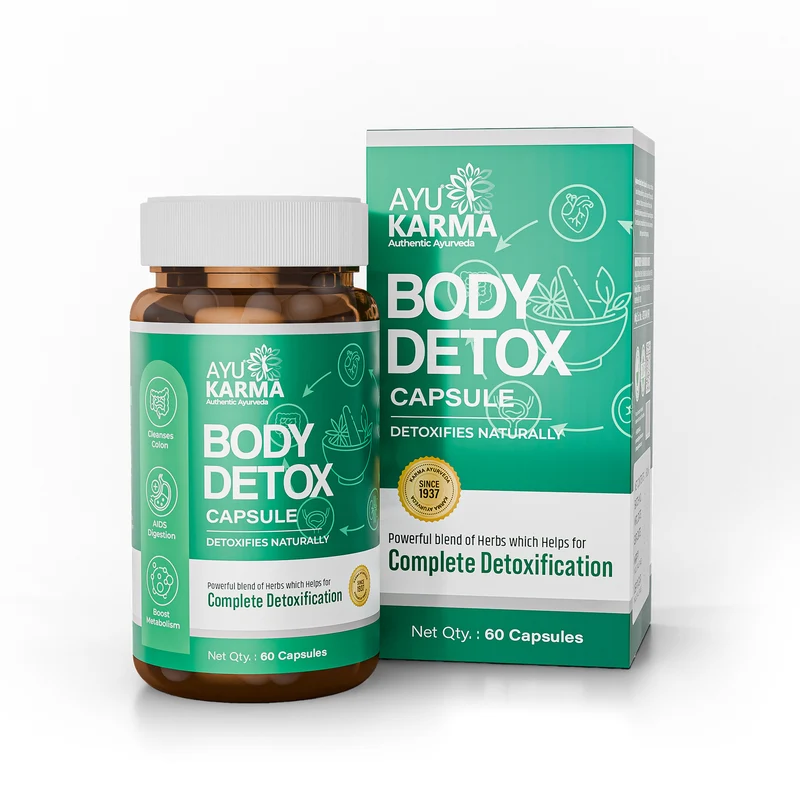
AyuKarma Body Detox Capsules combine Ayurvedic herbs to support natural detoxification, digestion, colon cleansing, metabolism, gut wellness and overall rejuvenation for daily vitality.
Doctor-recommended ayurvedic medicine to control diabetes, manage blood sugar levels & reduce diabetes-related complications in diabetic patients. Developed by Dr. Puneet Dhawan with the Karma Ayurveda philosophy.
Doctor-recommended Ayurvedic gut supplement that helps relieve occasional constipation, promote smooth bowel movement, reduce gas & bloating and improve digestion. Developed by Dr. Puneet Dhawan with Karma Ayurveda philosophy.
Doctor-recommended Ayurvedic joint supplement that helps relieve joint pain & stiffness, improve flexibility and support smoother, more comfortable movement. Developed by Dr. Puneet Dhawan with Karma Ayurveda philosophy.
Ayurvedic Kidney Detox Kit for individuals with high creatinine, high BP, diabetes, high uric acid, alcohol consumption habits, frequent painkiller use or early signs of kidney stress.
Second Floor, 77, Block C, Tarun Enclave, Pitampura, New Delhi, Delhi, 110034