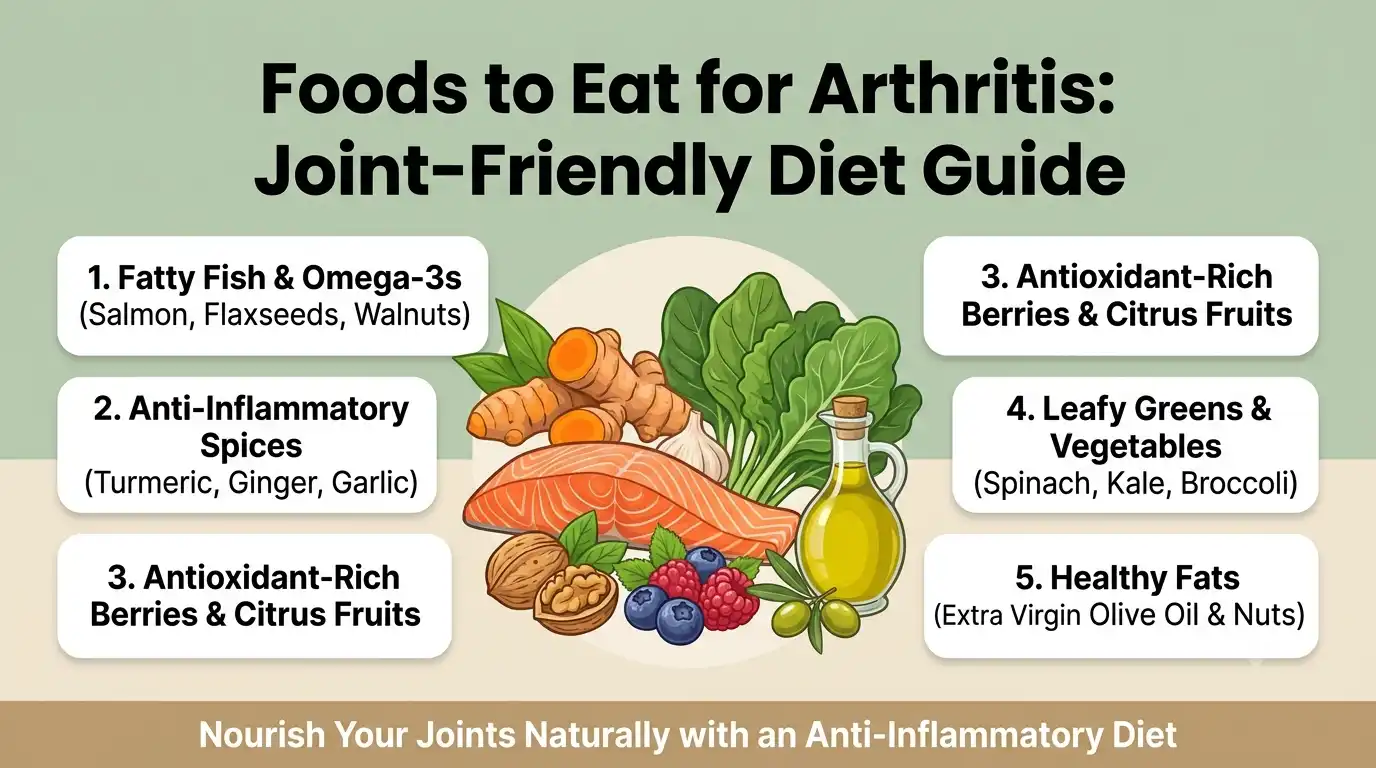
Which Foods Should You Eat for Arthritis?
If you have arthritis, focus on Foods to eat in Arthritis such as vegetables, fruits, whole grains, nuts, seeds, legumes and omega-3-rich foods like fatty fish. At the same time, cutting back on highly processed foods, excess sugar and unhealthy fats can make your overall diet more joint-friendly.
The good news is that eating for joint health does not mean surviving on boiled vegetables and looking sadly at a plate of salad. Your food can still be colorful, tasty and very much worth looking forward to.
Arthritis is an umbrella term covering several conditions, including osteoarthritis, rheumatoid arthritis and gout. Because these conditions are not exactly twins, dietary needs can differ too. Still, one common idea is becoming increasingly clear: a balanced eating pattern rich in whole foods may support overall health and help manage inflammation and body weight.
Why Does Food Matter in Arthritis?
Food cannot magically rebuild a worn-out joint overnight. Unfortunately, there is no supermarket aisle labelled “instant cartilage.”
But what you eat regularly can influence body weight, metabolic health and the availability of nutrients involved in normal muscle, bone and connective-tissue function. Some dietary patterns are also associated with lower levels of inflammatory markers.
For example, Mediterranean-style diets are rich in vegetables, fruits, legumes, whole grains, nuts, seeds, fish and olive oil. Research has linked this style of eating with improvements in some measures of inflammation and joint-related symptoms.
For people with osteoarthritis who are overweight or obese, weight management can be particularly important because reducing excess body weight can reduce the mechanical load placed on weight-bearing joints.
The American College of Rheumatology and Arthritis Foundation guideline strongly recommends exercise and weight loss for people with knee or hip osteoarthritis who are overweight or obese.
So, instead of searching for one magical food, think bigger: build a better overall plate.
8 Foods to Eat for Arthritis
1. Fatty Fish
If you eat fish, options such as salmon, sardines, mackerel, herring and tuna can be useful additions to your meals.
These fish provide omega-3 fatty acids, particularly EPA and DHA. Omega-3 fats have been studied for their potential role in inflammatory pathways, particularly in conditions such as rheumatoid arthritis.
The Arthritis Foundation notes that omega-3-rich fish may help reduce inflammatory markers such as C-reactive protein and interleukin-6.
Easy idea: grilled fish with vegetables, or fish added to a simple whole-grain meal.
If you are vegetarian, walnuts, flaxseeds and chia seeds provide plant-based alpha-linolenic acid (ALA), another type of omega-3 fat.
2. Berries and Other Colourful Fruits
Strawberries, blueberries, raspberries, cherries, pomegranate and other colourful fruits bring antioxidants and plant compounds called polyphenols to the table.
Research continues to examine how compounds such as anthocyanins and quercetin may influence oxidative stress and inflammatory pathways.
A 2018 study published in Food & Function discussed the potential role of polyphenol-rich fruits in managing osteoarthritis.
And there is another advantage: fruit is considerably more exciting than staring at a vitamin tablet.
Try:
- Berries with plain yogurt
- A bowl of seasonal fruit
- Pomegranate over a salad
- Cherries as a snack when available
3. Green Leafy Vegetables
Spinach, fenugreek leaves, kale, lettuce and other leafy greens provide fibre, vitamins, minerals and various plant compounds.
Broccoli deserves special attention because it belongs to the cruciferous vegetable family and contains sulforaphane. Research has explored sulforaphane for its possible effects on inflammatory pathways and cartilage-related processes.
You do not need to eat a mountain of broccoli every day.
A practical approach is simply to include vegetables in at least two major meals.
4. Nuts and Seeds
A small handful of nuts can be surprisingly useful nutritionally.
Walnuts, almonds, pistachios and other nuts provide healthy fats, protein, fibre and minerals. Walnuts are also a source of plant-based omega-3 ALA.
Seeds such as flaxseed and chia can also be added to meals.
The trick is portion size. Nuts are nutritious, but they are not weightless. Eating an entire packet while watching television is technically possible, but perhaps not the nutritional strategy we are aiming for.
Choose unsalted nuts and seeds and keep portions moderate.
5. Beans and Legumes
Lentils, chickpeas, beans and peas are excellent sources of plant protein and fibre.
They can be especially helpful for people trying to reduce their dependence on heavily processed or fatty meat-based meals.
Fibre-rich eating patterns have also been investigated in relation to knee osteoarthritis and metabolic health.
In an Indian kitchen, this is actually good news because dal has already been doing the heavy lifting for generations.
Try:
- Moong dal
- Masoor dal
- Chana
- Rajma
- Chickpeas
- Mixed lentils
6. Whole Grains
Instead of making refined carbohydrates the centre of every meal, consider whole or minimally processed grains such as oats, barley, brown rice and whole-grain wheat.
Whole grains provide fibre and several micronutrients.
You can also experiment with traditional grains such as millets if they suit your digestion and overall dietary requirements.
The goal is not to ban roti or rice. It is to create a more balanced plate around them.
7. Extra Virgin Olive Oil
Extra virgin olive oil contains monounsaturated fats and plant compounds such as oleocanthal, which has attracted scientific interest because of its effects on inflammatory pathways.
Research discussed by the Arthritis Foundation suggests that olive oil may be a useful component of an anti-inflammatory eating pattern.
You do not have to turn every meal into a Mediterranean cooking show. A modest amount can be used in salads, vegetables or cooking where appropriate.
8. Ginger, Garlic and Other Flavourful Foods
Here is where healthy eating becomes much less boring.
Ginger and garlic contain bioactive compounds that have been studied for their potential anti-inflammatory properties.
Research has investigated ginger for osteoarthritis-related pain as well as inflammatory markers in rheumatoid arthritis, although evidence is not strong enough to treat these foods as replacements for medical care.
Use them in:
- Vegetable dishes
- Soups
- Dal
- Stir-fries
- Homemade chutneys
And yes, garlic breath is a small price to pay for a tasty dinner.
Frequently Asked Questions
1. Which foods are best for arthritis?
Vegetables, fruits, whole grains, legumes, nuts, seeds, healthy fats and omega-3-rich fish are sensible choices for a joint-friendly eating pattern.
2. Is banana good for arthritis?
Yes, banana can be part of a balanced diet and provides nutrients such as potassium, although it is not a specific treatment for arthritis.
3. Should people with arthritis avoid sugar?
It is sensible to limit excess added sugar, particularly from sugary drinks and highly processed desserts, rather than worrying about naturally occurring sugars in whole fruits.
4. Is turmeric good for arthritis?
Turmeric contains curcumin, which has been studied for inflammatory and pain-related effects, but evidence does not mean turmeric should replace prescribed arthritis treatment.
5. Can Ayurveda help with arthritis?
Ayurvedic care may be considered as a complementary, individualised approach, but treatment should be discussed with a qualified practitioner and should not replace necessary medical evaluation.
Disclaimer
This article is intended for general educational purposes and does not provide individual medical advice. Arthritis has many forms, and dietary requirements can vary significantly. If you have persistent joint pain, swelling, stiffness or reduced movement, consult a qualified healthcare professional for appropriate evaluation and treatment.