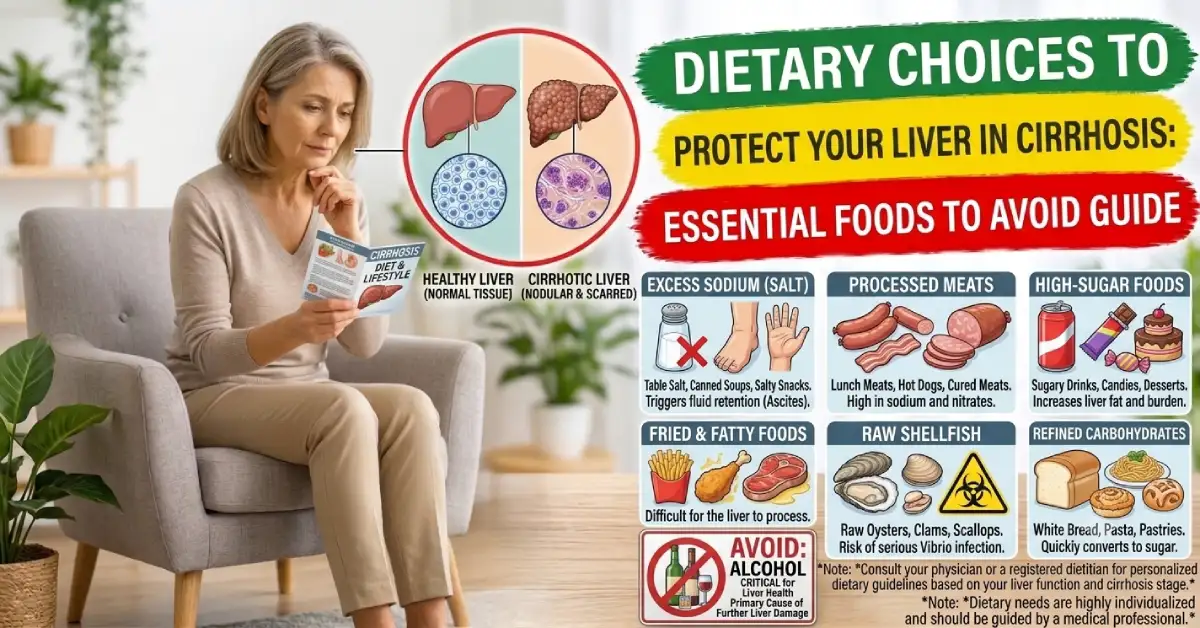
Foods to Avoid in Cirrhosis
There are several types of food that one should avoid when suffering from cirrhosis: alcohol, highly salty and processed food, raw or undercooked seafood, overly sugary and fried foods, and red meat in some cases. Cirrhosis is a liver disease causing a long-term scarring of the organ; therefore, the type of food consumed is important for coping with the disease.
If your liver could send you a message, it would likely be: "Please, STOP adding extra work." Many people also search for the Ayurvedic treatment of cirrhosis in addition to diet and foods to avoid in cirrhosis.
Food Matters So Much Here
When the scarring in the liver grows, the work becomes extremely difficult for your liver. First of all, fluid begins to accumulate in your abdomen and legs. Second of all, it becomes easier to get infections. Thirdly, the body finds it difficult to build muscle. As you can see, having a good diet helps to reduce the pressure from the liver.
Please Skip These List
- Alcohol in every form. No one-glass negotiations.
- Salty foods such as chips, pickles, instant noodles and canned soups as sodium aggravates the build-up of fluids in ascites.
- Raw or undercooked shellfish may contain Vibrio vulnificus bacteria that is dangerous for those with severe liver disease.
- Deep-fried and greasy food that is hard to digest
- Sugary beverages and confectioneries which promote the fatty changes in the organ
- Highly processed meats like sausages and bacon, which contain a lots of salt
- Unverified herbal supplements because some can damage the liver even more
EASL guideline on nutrition in chronic liver disease (Journal of Hepatology, 2019) suggests limiting sodium in cases of fluid retention to approximately 2 grams a day and totally avoiding alcohol in the cases of cirrhosis.
Skip vs. Swap: A Quick Cheat Sheet
| Skip it | Try this | |
|---|---|---|
| Salty chips | Unsalted nuts or roasted chana | At last, the person understands me! |
| Whiskey or beer | Lime water or herbal tea | I can finally rest. |
| Raw oysters | Well-cooked fish | Hello, safety. |
| Packaged noodles | Home-cooked dal with light seasoning | Now we're talking. |
Wait, Does It Mean Cutting Protein As Well?
Actually, people with cirrhosis of the liver need more protein, not less. In many cases, they lose muscles, and this condition is called cachexia. A review by Plauth and colleagues published in the Clinical Nutrition journal in 2019 claims that the amount of protein consumed daily should be from 1.2 to 1.5 grams per kilo of body weight in most cases. Besides, it is beneficial for people with cirrhosis to consume snacks before going to bed. In the trial conducted by Yamanaka-Okumura and colleagues and published in the Nutrition journal in 2012, it was found that bedtime snacking improves some nutritional markers in cirrhosis patients. However, the doctor or dietitian should determine the exact amount of protein and other nutrients according to the patient's condition.
Habits That Make Everyday Life Easier
Some Home tips for avoiding cirrhosis and its flare-ups, easy enough to start this week:
- Eat the meals every 3-4 hours instead of three meals a day
- Read food labels carefully, because sodium is hiding in surprising places.
- Season food with herbs, lemon and garlic instead of salt.
- Wash all fruits and vegetables and cook all food properly
- Maintain a normal body weight
- Get vaccinated for hepatitis A and B if advised
- Never use painkillers or supplements without consulting your doctor.
Another study on the same topic, which was carried out by Berzigotti and colleagues and published in Hepatology in 2017, reported that physical activity and weight control is the cause of good outcome in patients with cirrhosis, so a short daily walk may play a crucial role.
The Ayurvedic Aspect
Ayurveda links trouble with the liver with the aggravated Pitta dosha and poor functioning of digestion (agni). Therefore, usually, such problems in Ayurveda mean light and easy-to digest food, bitter taste, established routines and the use of specific herbs. It should be emphasized that many people use this cirrhosis Ayurvedic treatment alongside of the conventional medicine, not instead of it.
This area of research is very early. In a review by Girish and Pradhan (Indian Journal of Medical Research, 2008) some Indian herbs useful for the liver are described, although most evidence is based on animal or small human studies. A meta-analysis by Hadi and others (Phytotherapy Research, 2018) devoted to silymarin shows that this herb had limited effectiveness in chronic liver conditions. So, it is promising but not a miracle cure.
Here are the herbs discussed most frequently concerning best herbs for cirrhosis treatment in Ayurveda:
- Bhumyamalaki (Phyllanthus niruri)
- Kutki (Picrorhiza kurroa)
- Punarnava
- Guduchi (giloy)
Please don't start any of them on your own. In cirrhosis, even "natural" can be risky, and your pantry is no substitute for a hepatologist.
Wrapping Up
Eating well with cirrhosis isn't about perfection. It's about steady, kind choices, like less salt, no alcohol and enough protein. Practitioners such as Dr. Puneet Dhawan emphasise personalised care, because no two livers have the same story. If you want a holistic add-on, you could discuss Karma Ayurveda for cirrhosis treatment with a qualified doctor who knows your reports. And tonight, maybe let the pickle jar rest.
Key Takeaways
- Avoid alcohol completely and keep salt low.
- Skip raw shellfish, fried food, sugary drinks and processed meats.
- Don't cut protein unless your doctor says so, since muscle loss is common.
- Small, frequent meals and a bedtime snack can help.
- Check every herb or supplement with your doctor first.
FAQs
What foods should be avoided in cirrhosis?
Alcohol, salty and processed foods, raw shellfish and greasy fried snacks top the list.
Can I eat eggs with cirrhosis?
Usually yes, in sensible amounts, but check with your doctor or dietitian.
Is a low-protein diet recommended in cirrhosis?
Not usually, since most people need enough protein to protect their muscles.
Why is salt so risky in cirrhosis?
It makes the body hold water, which can worsen swelling in the belly and legs.
Can Ayurveda reverse cirrhosis?
No herb has been proven to reverse scarring, so treat it as supportive care only.
Disclaimer
This blog is for general information only and is not medical advice. Cirrhosis needs proper diagnosis and personalized care, so please consult a qualified healthcare professional or dietitian before changing your diet or starting any herb, supplement or therapy, especially if you take regular medication.