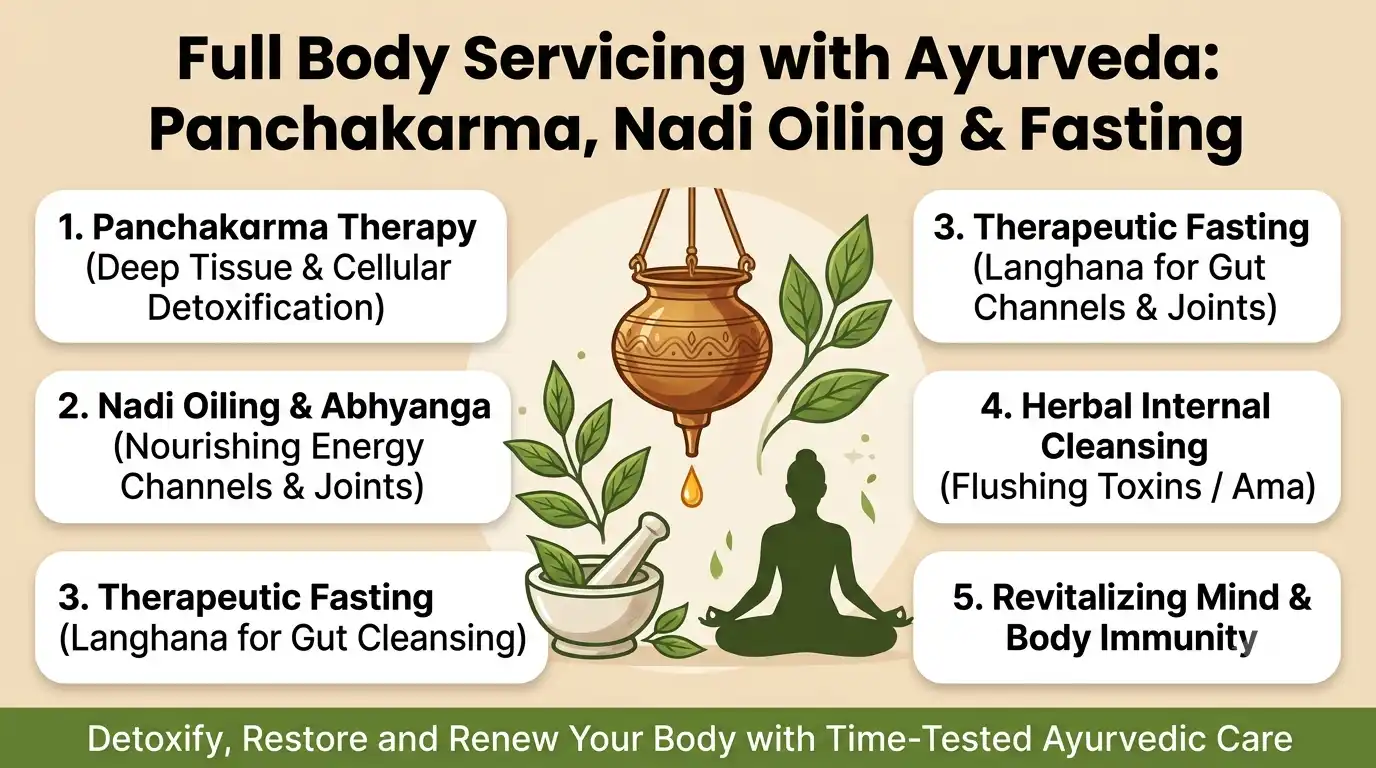
Full Body Servicing with Ayurveda: Panchakarma, Nadi/Navel Oiling, and Intermittent Fasting
Think of your body like a car that has been running for years: it does a remarkable job, but occasionally it needs more than just another cup of coffee. Ayurvedic wellness practices such as Panchakarma, oil massage, navel oiling, mindful eating, and fasting can be used as part of a broader lifestyle routine; but they are not magic “detox buttons.”
The interesting part is that some of these traditional practices now have emerging scientific research behind them, while others are still supported mainly by traditional Ayurvedic understanding rather than strong clinical evidence.
Key Takeaways
- Ayurveda focuses on digestion, routine, sleep, movement, food and mental balance rather than a quick “cleanse.”
- Panchakarma therapy is traditionally a supervised, multi-stage Ayurvedic treatment and should not be treated like a weekend DIY detox.
- Oil massage, or Abhyanga, may support relaxation and stress reduction.
- Navel oiling is traditionally practiced, but strong evidence that it “detoxes” the body is lacking.
- Time-restricted eating may support certain metabolic markers, but fasting isn't automatically better just because the clock says so.
- Simple habits often matter more than dramatic detox programs.
So, What Does “Full Body Servicing” Actually Mean?
Let's clear up one thing first.
Your body doesn't collect “toxins” like an old kitchen chimney collecting grease. Your liver, kidneys, lungs, gut and skin already have sophisticated systems for processing and eliminating waste.
So when people talk about a full body detox, a more sensible interpretation is supporting the body's normal physiological processes through better food, adequate sleep, physical activity, hydration, stress management and appropriate medical care.
This is where Ayurveda gets interesting.
Traditional Ayurvedic wellness places considerable emphasis on Agni, or digestive capacity, along with daily routines, seasonal habits, massage, herbs, movement and controlled dietary practices.
In modern language, some of these ideas overlap with things we already know are useful: eating patterns, sleep regularity, stress reduction and physical activity.
In other words, you don't necessarily need a bathtub full of mysterious green liquid. Your body has enough chemistry going on already.
Frequently Asked Questions
Is Panchakarma safe to do at home?
Panchakarma is best undertaken with qualified supervision because some procedures can cause dehydration, electrolyte changes or other complications.
Does navel oiling detox the body?
There is currently no strong clinical evidence that belly-button oiling detoxifies internal organs, although it may moisturize the skin and feel relaxing.
Can intermittent fasting improve metabolic health?
Research suggests time-restricted eating may modestly improve some metabolic markers, but benefits vary and it isn't suitable for everyone.
Can I drink tulsi tea every day?
For many healthy adults, ordinary unsweetened tulsi tea can be part of a balanced diet, but concentrated supplements require more caution.
Is Ayurveda a replacement for medical treatment?
No; Ayurvedic practices can complement healthy living and appropriate care but shouldn't replace necessary diagnosis or prescribed treatment.
Disclaimer
This article is intended for general educational purposes and does not replace personalized medical advice, diagnosis or treatment. Ayurvedic therapies, herbs and fasting may not be appropriate for everyone. People who are pregnant, elderly, taking medication, or managing a medical condition should consult an appropriately qualified healthcare professional before making significant dietary or therapeutic changes.