Unlocking Wellness Naturally
100% Ayurvedic Treatment

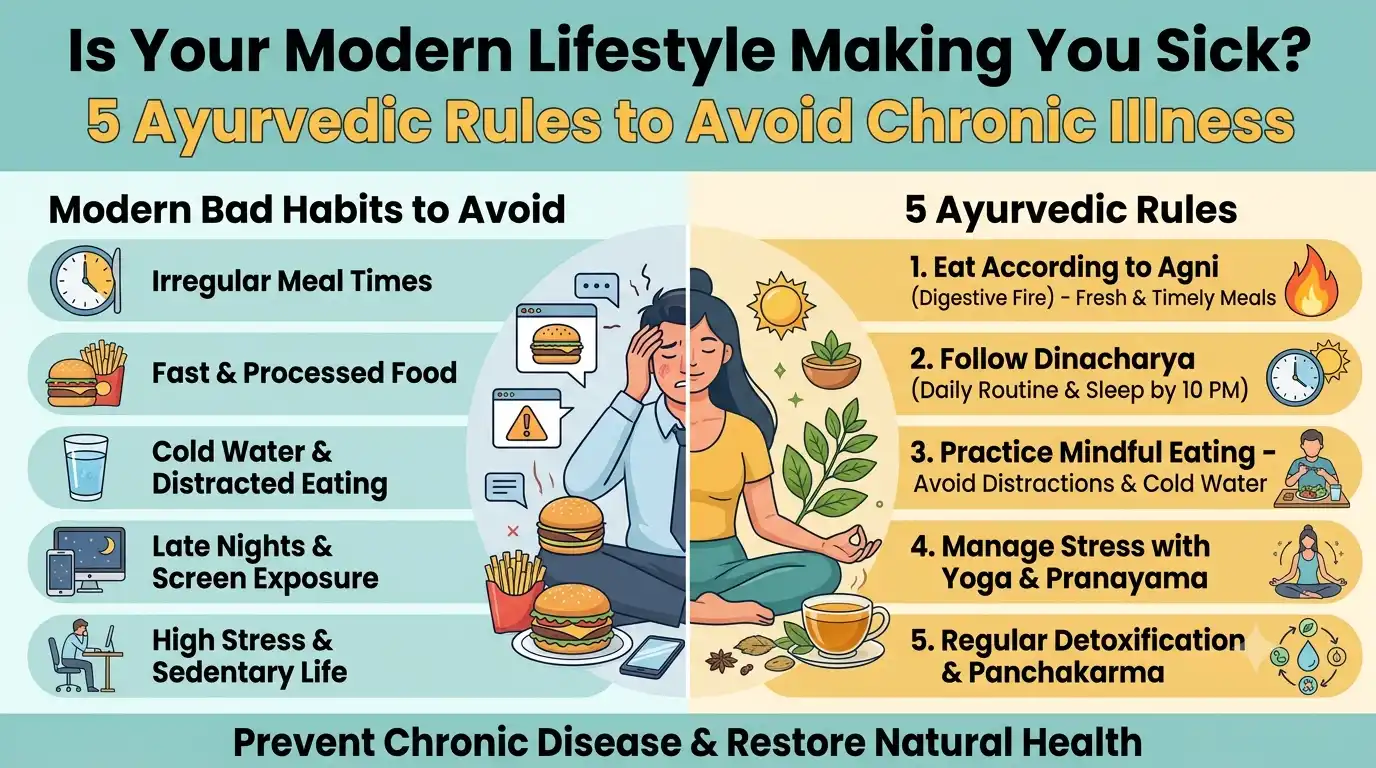
Yes, your modern lifestyle can quietly increase the risk of chronic illness; especially when poor food choices, inactivity, stress, irregular sleep, and constant stimulation become everyday habits.
The good news? You don't need to abandon modern life and move into a forest; a few sensible Ayurvedic habits can help you build a healthier routine.
We live in a slightly strange era. We have food delivered in 20 minutes, meetings that could have been emails, watches that count our steps, apps that remind us to breathe; and somehow, we're still forgetting to breathe.
The problem isn't modern life itself. It's the daily habits that come with it.
Long sitting hours, highly processed foods, poor sleep, chronic stress, excessive screen time, alcohol, smoking and little physical activity can gradually push the body toward problems such as obesity, high blood pressure, type 2 diabetes and cardiovascular disease. The World Health Organization identifies unhealthy diet, physical inactivity, tobacco use and harmful alcohol consumption among the major preventable risk factors for noncommunicable diseases. (World Health Organization)
This is where Ayurveda offers an interesting perspective: instead of waiting until the body starts shouting, pay attention while it is still whispering.
How modern lifestyle causes chronic diseases is not really a mystery. Most of the damage comes from small habits repeated for years rather than one dramatic mistake.
Think about an ordinary day:
One day isn't likely to ruin your health. But when this becomes your normal routine for years, the effects can accumulate.
WHO notes that unhealthy diets and insufficient physical activity can contribute to raised blood pressure, high blood glucose, abnormal blood lipids and excess body weight; major metabolic risk factors for chronic disease. (World Health Organization)
And then there's highly processed food. A 2024 BMJ umbrella review, which brought together 45 pooled analyses involving nearly 9.9 million people, found that greater exposure to ultra-processed foods was associated with several adverse health outcomes, including cardiometabolic problems. The researchers also pointed out that the strength of evidence varied across outcomes, so this isn't a case of "one biscuit equals disaster." (BMJ)
In other words, your body isn't keeping score of one samosa. It's responding to your overall pattern.
Ayurveda has long emphasized dinacharya, or daily routines, along with appropriate food, movement, sleep and balance.
These ideas shouldn't replace medical care or be treated as guaranteed disease-prevention methods. But many of the basic lifestyle principles overlap nicely with modern preventive-health advice.
Here are five practical rules that don't require you to throw away your Wi-Fi password.
This may sound almost painfully obvious, but it's surprisingly easy to forget.
Traditional Ayurvedic thinking places considerable importance on food quality, digestion, timing and mindful eating. Modern nutrition research, meanwhile, increasingly focuses on the overall quality of dietary patterns rather than chasing one magical ingredient.
A simple goal is to make your everyday meals revolve more around:
WHO's guidance on healthy diets similarly emphasizes variety and a combination of foods such as whole grains, legumes, vegetables and fruits. (World Health Organization)
The BMJ 2024 umbrella review also found consistent associations between higher ultra-processed food exposure and several adverse health outcomes, although not every association had equally strong evidence. (BMJ)
So, no, you don't have to declare war on packaged food.
Just don't let the packet become the most reliable member of your family.
A simple comparison
Eating while scrolling
Packaged snack every evening
Huge late-night dinner
Sugary drinks all day
Random meal timing
This is one of the foundations of a Daily Ayurvedic routine for healthy living: making food a regular, conscious part of the day rather than something squeezed between notifications.
Sleep is often treated as the first thing we sacrifice and the first thing we complain about.
"I'll sleep early tonight."
Famous last words.
Poor sleep doesn't simply make you grumpy the next morning. Sleep interacts with appetite, mood, metabolism, immune function and cardiovascular health.
Ayurveda traditionally considers appropriate sleep, or nidra, an important part of maintaining overall balance. Modern research also supports the importance of adequate, regular sleep for health.
Your practical sleep routine can be remarkably boring:
You don't need a Himalayan cave.
You need a bedtime.
One of the biggest problems with modern life is that our brains may be working overtime while our legs are barely involved.
We sit to work.
Sit to travel.
Sit to eat.
Sit to watch television.
Then we wonder why walking up two flights of stairs feels like a personal attack.
Physical inactivity is a recognized risk factor for noncommunicable diseases. WHO recommends regular physical activity as part of preventing and managing chronic health problems. (World Health Organization)
Movement doesn't have to mean becoming a gym enthusiast overnight.
Try:
The goal is not to punish your body for eating dessert.
The goal is to make movement a normal part of your day.
This is also central to how to prevent lifestyle diseases naturally: improve the habits that influence blood pressure, body weight, blood sugar and cardiovascular fitness.
Modern stress is particularly sneaky because it doesn't always look dramatic.
Sometimes it's simply 37 browser tabs open in your brain.
Work pressure, financial concerns, social media, constant notifications and lack of downtime can leave people feeling permanently "switched on."
Ayurveda traditionally uses practices such as meditation, breathing exercises, yoga and mindful routines to support mental balance.
Modern research also continues to investigate mindfulness, yoga and related mind-body practices for stress management and general wellbeing. They shouldn't be marketed as cures for chronic disease, but they can be useful additions to a broader healthy lifestyle.
Try creating small periods during the day where you aren't consuming information.
Tiny things. Surprisingly useful.
And if you're wondering about signs your lifestyle is ruining your health, persistent fatigue, poor sleep, declining fitness, unexplained weight changes, frequent digestive discomfort or consistently elevated blood pressure are worth paying attention to rather than brushing off as "just getting older."
This may be the most Ayurvedic lesson of all: consistency matters.
People often want health to work like a software update.
"Take this for seven days and restart your system."
Unfortunately, humans don't come with a restart button.
Ayurvedic traditions emphasize dinacharya, or structured daily habits. A sensible modern version could include:
This is what a realistic Daily Ayurvedic routine for healthy living can look like: not an elaborate 25-step morning ritual, but simple habits repeated often enough to become second nature.
The phrase how to prevent lifestyle diseases naturally can sometimes make people imagine complicated herbal formulas, mysterious powders and a cupboard full of bottles.
Prevention can actually be much less glamorous.
These fundamentals matter because how modern lifestyle causes chronic diseases is closely connected with the accumulation of modifiable risk factors over time. WHO identifies tobacco, physical inactivity, unhealthy diet and harmful alcohol use as major behavioural contributors to noncommunicable disease. (World Health Organization)
Ayurveda can provide a traditional framework for thinking about daily routine, food, digestion, rest and balance, but it should complement; not replace; evidence-based medical evaluation and treatment when illness is present.
If you want Ayurvedic tips for long term wellness, forget the pressure to completely transform your life on Monday morning.
Start smaller.
Try the "one percent better" approach:
These changes may look almost too ordinary.
That's precisely the point.
Health is usually built through ordinary things done consistently.
Another useful set of Ayurvedic tips for long term wellness is to pay attention to your body's signals; appetite, digestion, energy, sleep and stress; without becoming obsessed with every tiny sensation.
You don't need to panic because you felt sleepy after lunch.
But if your body has been sending the same warning email for six months, maybe open it.
Some signs your lifestyle is ruining your health can be surprisingly easy to dismiss because they develop gradually.
Watch for patterns such as:
These signs don't automatically mean you have a chronic disease. They simply deserve attention, particularly if they persist.
And the other set of signs your lifestyle is ruining your health may appear in your reports before you feel anything at all. Conditions such as hypertension, high cholesterol and elevated blood glucose can remain relatively quiet for years, which is why routine health checks matter.
You don't have to reject technology, stop eating restaurant food or wake up at 4 a.m. to become healthier.
The smarter approach is to make modern convenience work for you instead of against you.
Ayurveda's emphasis on routine, moderation, food, movement, rest and mental balance fits surprisingly well with many basic principles of preventive health.
The trick is consistency.
Not perfection.
It can support healthy habits such as balanced eating, regular routines, movement and stress management, but it should not replace proven medical prevention or treatment.
Consistency is a good place to start; regular meals, adequate sleep, daily movement and sensible routines matter more than complicated rituals.
Yes, long-term inactivity, unhealthy diets, tobacco, harmful alcohol use and other behavioural factors are established contributors to noncommunicable disease risk. (World Health Organization)
Start simply with consistent sleep and meal times, regular movement, mindful eating, relaxation and a routine you can realistically maintain.
Not at all; a few sustainable changes made consistently are far more realistic than trying to become a completely different person overnight.
This article is for general educational purposes and is not a substitute for professional medical advice, diagnosis or treatment. Ayurvedic practices should be used thoughtfully and with qualified guidance, particularly if you have an existing medical condition or take prescribed medicines. Speak with your healthcare professional before making significant changes to your treatment or lifestyle.

AyuKarma Testo Build Capsules combine 12 Ayurvedic herbs and minerals to support strength, energy, stamina, physical performance, nourishment and overall daily vitality.

AyuKarma Hair Lush Capsules combine Ayurvedic herbs to support hair growth, reduce hair fall, strengthen roots, nourish the scalp and promote healthier-looking hair.

Karma Garcom Capsules contain Garcinia indica to support healthy metabolism, digestion, weight management, digestive comfort and daily wellness alongside a balanced lifestyle.

Doctor-recommended liver supplement that helps detoxify the liver, support healthy cholesterol, improve digestion & promote liver health. Developed by Dr. Puneet Dhawan with Karma Ayurveda philosophy.
Second Floor, 77, Block C, Tarun Enclave, Pitampura, New Delhi, Delhi, 110034

Certificate no- AH-2023-0186
JAN 05, 2026 - JAN 04, 2029

US FDA Reg. No.: 14568299376