Unlocking Wellness Naturally
100% Ayurvedic Treatment

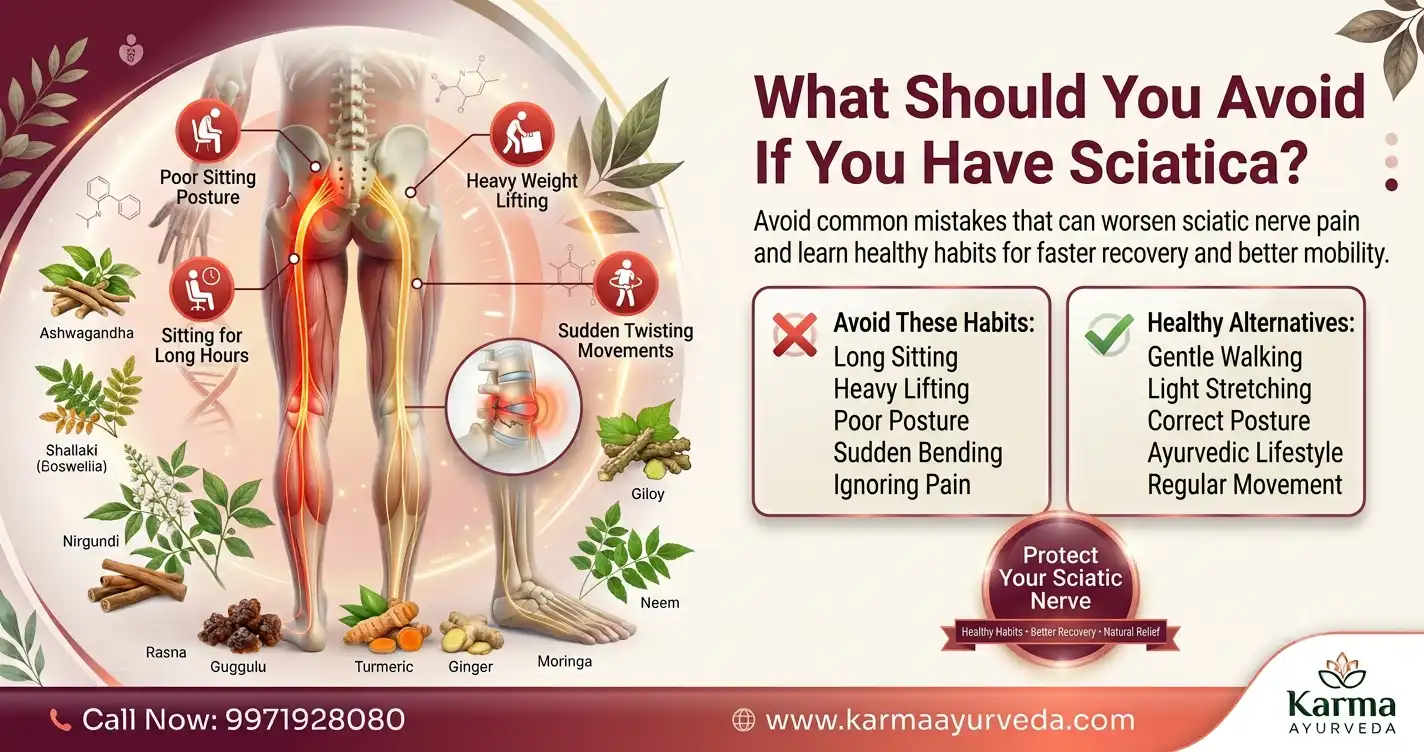
If you are dealing with sciatica, you should immediately avoid prolonged sitting, heavy bending or twisting, prolonged bed rest, high-impact workouts, and aggressive hamstring stretch that tug directly on an already angry nerve. Steering clear of these triggers gives your spine the physical breathing room it needs to start healing.
Here is your “no-go zone”, when you are dealing with persistent sciatica pain:
It feels counterintuitive, doesn't it? When your leg is on fire, sitting down feels like the most reasonable thing to do. However, sitting puts significantly more mechanical pressure on your lower lumbar discs than standing or walking.
When you slouch into a soft couch or sit hunched over a desk for six hours straight, you flatten the natural lordotic curve of your lower back. This pushes your spinal discs backward, right into the territory of your sciatic nerve root.
Back in the day, the standard medical advice for a bad back was: "Go to bed for two weeks and don't move." Modern spine science has thoroughly debunked this myth.
A classic Cochrane Systematic Review published by Hagen et al. evaluated multiple randomized controlled trials on bed rest versus staying active for acute low back pain and sciatica. The researchers found that staying in bed for extended periods does not speed up recovery and can actually weaken core muscles, stiffen joints, and prolong functional disability compared to gentle, guided activity.
When the back of your thigh feels tight and burning, your brain screams: "Stretch it out!" So you bend forward, reach for your toes, and hold your breath.
Here is the catch: that tightness in your hamstring is usually not a short muscle; it is neural tension from a pinched nerve pulling tight like a guitar string.
If there is one biomechanical recipe for worsening a lumbar herniated disc, it is lifting something heavy while rotating your torso.
Classic spine biomechanics research; pioneered by Dr. Alf Nachemson and expanded by researchers like Dr. Hans-Joachim Wilke; showed that bending forward while twisting dramatically increases intradiscal pressure and shear forces in the lumbar region.
Now is not the time to train for a marathon or try to set a personal record on heavy barbell squats.
When managing chronic nerve irritation, many individuals look beyond conventional ice packs and painkillers to explore traditional systems of wellness. In Eastern holistic practices, nerve pain is often viewed as an imbalance in bodily energies and circulation.
For instance, seeking structured guidance through Ayurvedic treatment for Sciatica focuses on balancing Vata dosha; the kinetic energy in the body associated with movement, nerve signals, and dryness. Practitioners often utilize soothing herbal oil therapies (like Abhyanga or Kati Basti) alongside gentle internal herbal preparations to calm nervous system distress.
If you are exploring specialized centers for holistic spine care, consulting with institutions like Karma Ayurveda Hospital can provide insights into customized lifestyle routines, detoxifying therapies (Panchakarma), and traditional herbal remedies. Finding the best Ayurvedic medicines for Sciatica typically involves personalized assessments by a certified Vaidya, who can recommend herbs like Guggulu, Ashwagandha, or Rasna based on your specific constitution rather than a generic one-size-fits-all prescription.
For those considering Karma Ayurveda for Sciatica treatment, combining time-tested Sciatica Ayurvedic treatment protocols with modern spine hygiene; like avoiding heavy lifting and improper sitting; offers an integrative path toward long-term comfort.
Activity
Sitting at Work
What NOT to Do (Ouch!)
Slouching into a soft chair like a melting ice cream cone.
What to Do Instead (Ahhh...)
Sit upright with a small lumbar cushion and feet flat.
Activity
Tying Shoes
What NOT to Do (Ouch!)
Bending straight over at the waist with locked knees.
What to Do Instead (Ahhh...)
Sit down, bring your foot up to your opposite knee.
Activity
Morning Routine
What NOT to Do (Ouch!)
Jumping straight out of bed and bending down to pick up slippers.
What to Do Instead (Ahhh...)
Roll to your side first, push up with arms, then stand gently.
Activity
Exercising
What NOT to Do (Ouch!)
Running on concrete or doing heavy weighted deadlifts.
What to Do Instead (Ahhh...)
Light walking, swimming, or gentle water walking.
Activity
Stretching
What NOT to Do (Ouch!)
Forcing toe-touches until your leg shakes in agony.
What to Do Instead (Ahhh...)
Gentle dynamic nerve gliding exercises guided by a physio.
While most sciatica cases gradually resolve with smart activity modifications and conservative care, certain "red flag" symptoms require urgent medical evaluation:
Yes, light walking on flat surfaces is generally safe and helps reduce inflammation by boosting blood flow to your spine.
Heat relaxes tight muscles around the nerve, but use ice during the first 48 hours of an acute flare to calm active nerve inflammation.
Sleeping on your side with a pillow between your knees or flat on your back with a pillow under your knees usually keeps the spine neutral.
Slouching increases pressure on lumbar discs and compresses nerve roots, making posture a major factor in flare-ups.
This article is for informational and educational purposes only and does not constitute formal medical advice, diagnosis, or treatment. Always seek the advice of a qualified physician, physical therapist, or healthcare provider regarding any spine or nerve condition, and never disregard professional medical advice because of something you have read here.
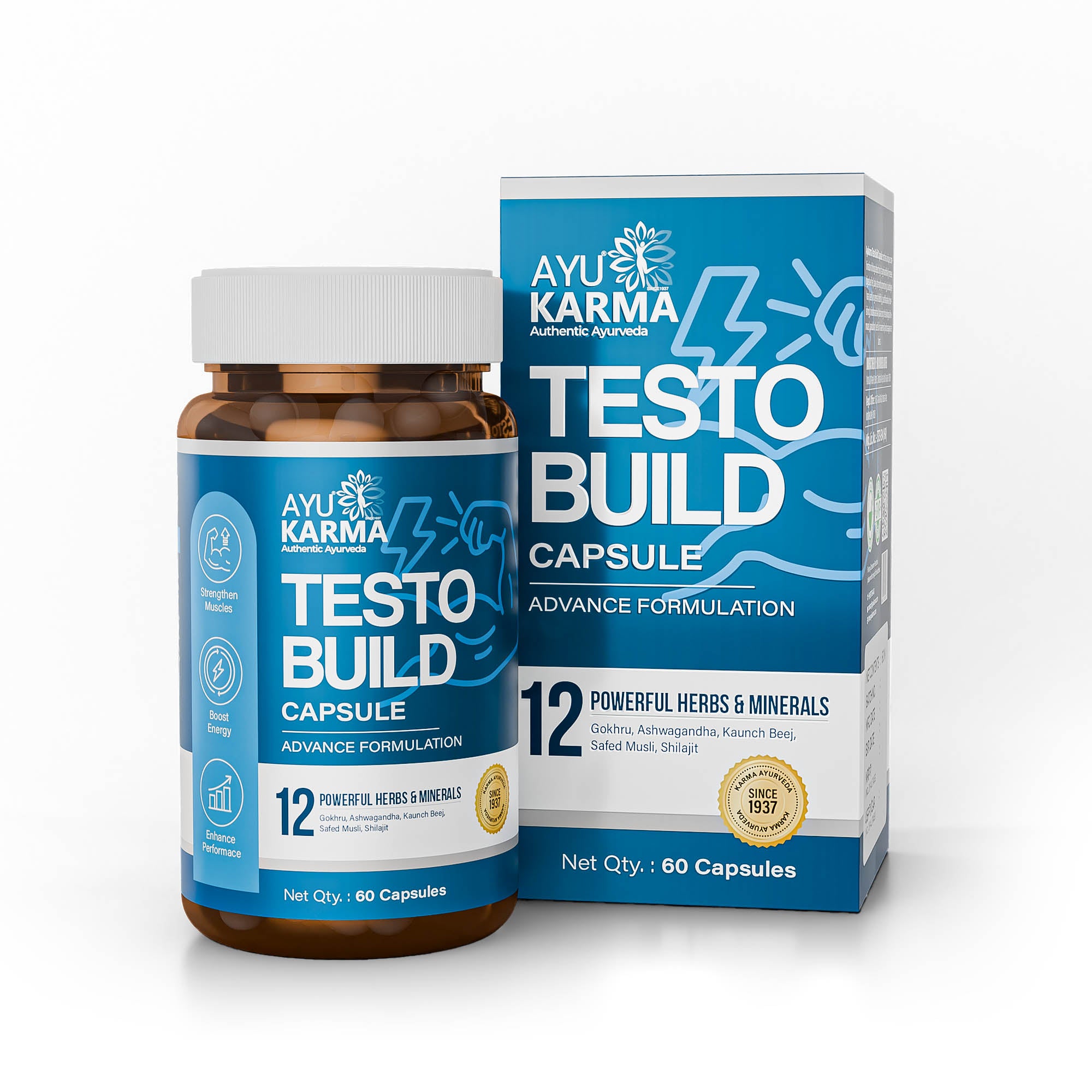
AyuKarma Testo Build Capsules combine 12 Ayurvedic herbs and minerals to support strength, energy, stamina, physical performance, nourishment and overall daily vitality.
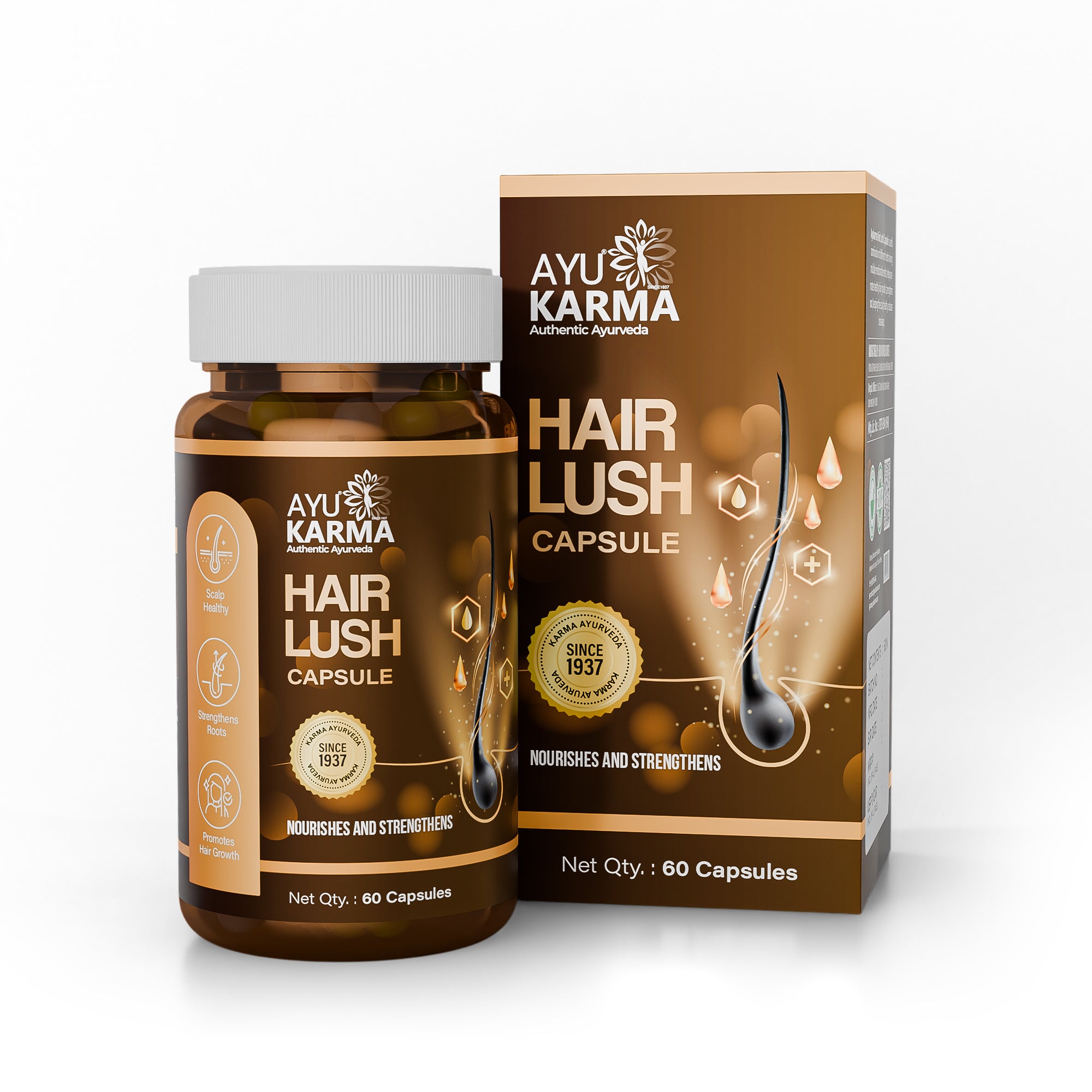
AyuKarma Hair Lush Capsules combine Ayurvedic herbs to support hair growth, reduce hair fall, strengthen roots, nourish the scalp and promote healthier-looking hair.
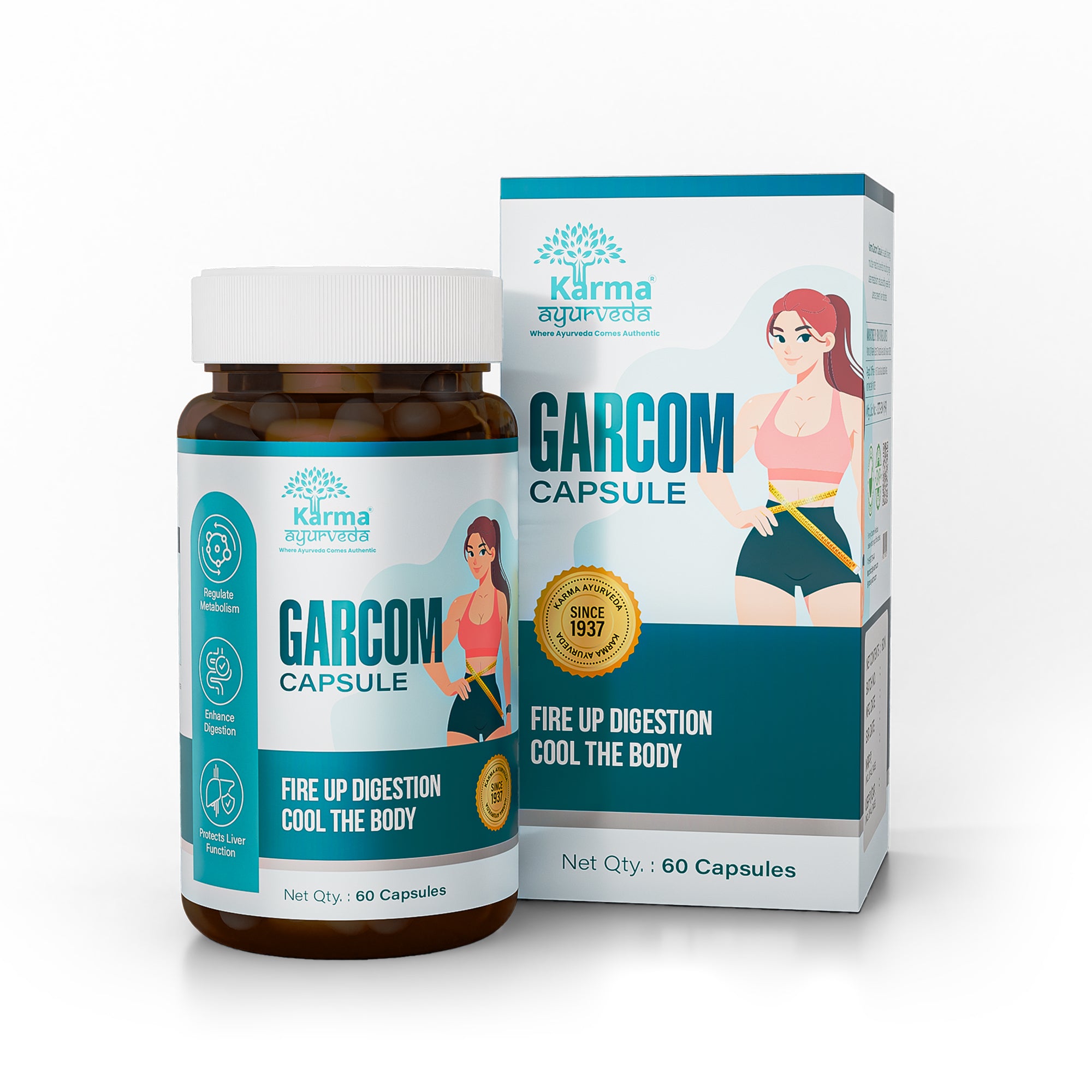
Karma Garcom Capsules contain Garcinia indica to support healthy metabolism, digestion, weight management, digestive comfort and daily wellness alongside a balanced lifestyle.
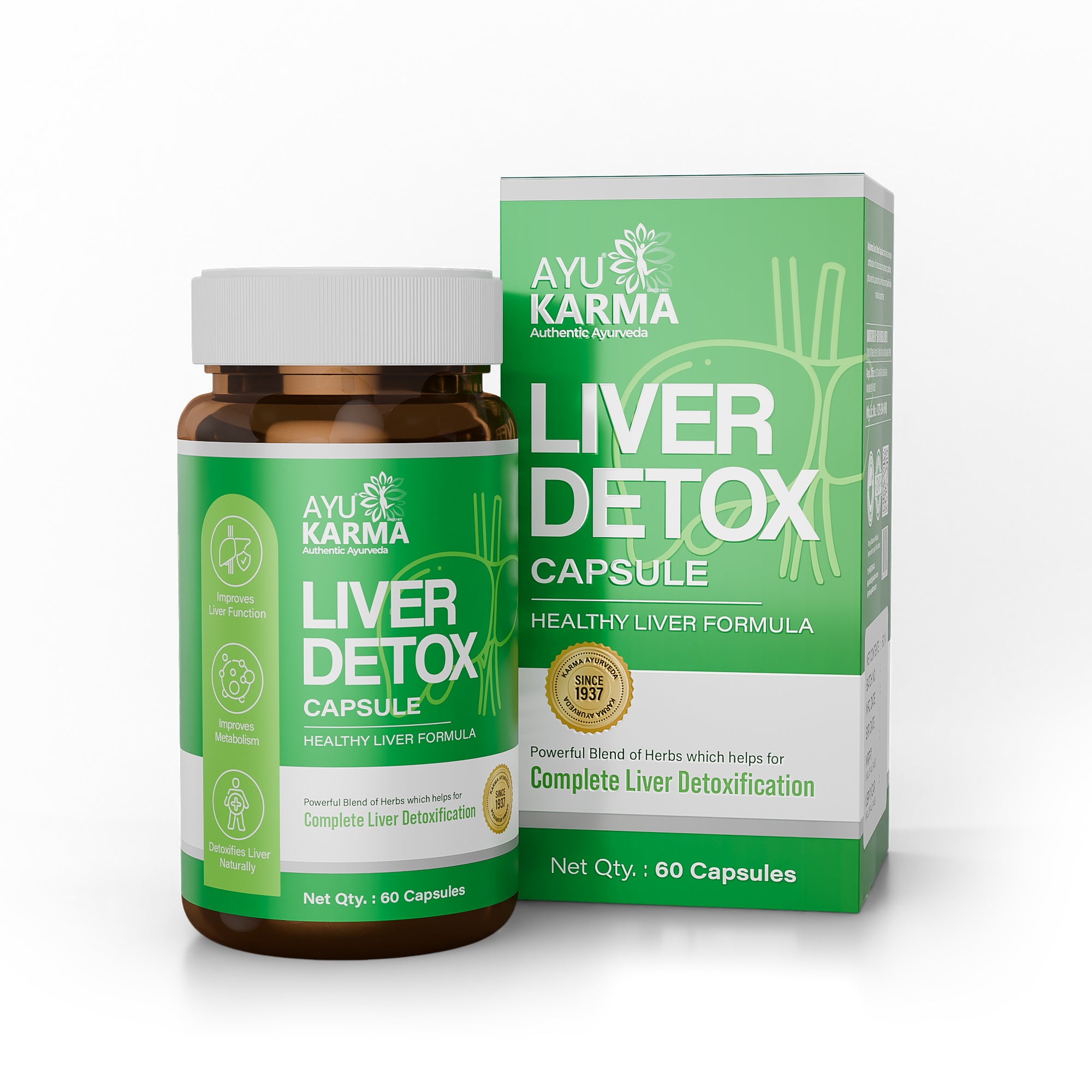
Doctor-recommended liver supplement that helps detoxify the liver, support healthy cholesterol, improve digestion & promote liver health. Developed by Dr. Puneet Dhawan with Karma Ayurveda philosophy.
Second Floor, 77, Block C, Tarun Enclave, Pitampura, New Delhi, Delhi, 110034

Certificate no- AH-2023-0186
JAN 05, 2026 - JAN 04, 2029

US FDA Reg. No.: 14568299376