
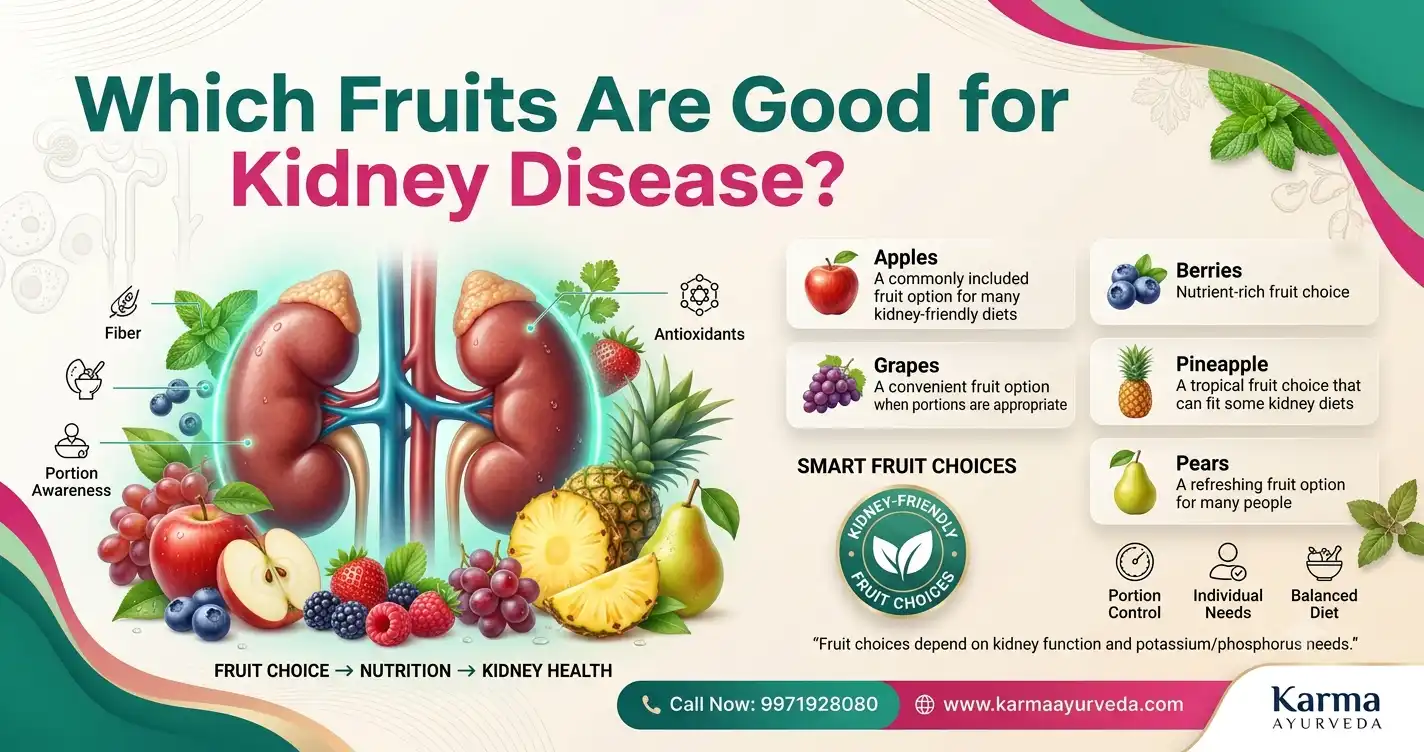
If you have kidney disease, yes, you can still enjoy fruits; but the right choice depends on your kidney function, potassium levels, and your doctor's advice. The good news? Plenty of delicious fruits are naturally kidney-friendly and can fit into a healthy diet.
Let's be honest; getting diagnosed with kidney disease often comes with a list of "don't eat this" and "avoid that." Somewhere in the middle of all those food restrictions, fruits start looking suspicious too. Is a banana now your enemy? Should apples become your best friend? And what about mangoes, grapes, or oranges?
Don't worry. Fruits aren't the villains here. In fact, many of them provide vitamins, antioxidants, fiber, and hydration that support overall health. The trick is simply choosing the right fruits in the right portions.
Let's make this simple.
Healthy kidneys help balance minerals like potassium, phosphorus, and sodium in the body. When kidneys aren't working well, these minerals; especially potassium; can build up in the blood.
High potassium (called hyperkalemia) may affect heart rhythm, which is why people with advanced chronic kidney disease (CKD) are often advised to monitor potassium intake.
That doesn't mean all fruits are off-limits.
Instead, think of it like shopping with a budget. Some fruits are "budget-friendly" for kidneys, while others are "premium purchases" that need portion control.
Here are some commonly recommended kidney-friendly fruits that are generally lower in potassium.
Some fruits naturally contain higher amounts of potassium. That doesn't automatically mean you should never eat them; but they may need to be limited depending on your kidney stage and blood test results.
These include:
If your potassium levels are normal, your healthcare provider may still allow moderate portions.
The key word here is personalization.

Usually, yes.
People in the early stages of chronic kidney disease often have fewer dietary restrictions compared to those with advanced CKD or dialysis.
Many nephrologists encourage a balanced intake of fruits and vegetables because they provide:
However, once kidney function declines significantly or potassium levels rise, fruit choices may need adjustment.
Several scientific studies support including appropriate fruits as part of a balanced kidney diet.
1. CRIC (Chronic Renal Insufficiency Cohort) Study
The CRIC Study found that dietary quality, including healthy plant foods, was associated with better overall outcomes in people living with CKD. While potassium intake must be individualized, whole fruits remain an important part of a healthy eating pattern.
2. KDIGO 2024 Clinical Practice Guideline
The KDIGO 2024 Clinical Practice Guideline for CKD recommends individualized nutrition plans rather than blanket food restrictions. Potassium-rich foods should be adjusted based on laboratory values rather than eliminated automatically.
3. National Kidney Foundation Guidance
The National Kidney Foundation emphasizes choosing fruits based on potassium content and kidney function instead of avoiding all fruits altogether.
Together, these recommendations reinforce one simple message: there isn't one fruit list that fits everyone with kidney disease.
Here are a few habits that make fruit safer and healthier.
Choose Fresh More Often
Fresh fruits usually contain less added sugar than canned versions.
Watch Portion Sizes
Even kidney-friendly fruits can become excessive if portions are very large.
Read Food Labels
Fruit cups, juices, and dried fruits often hide added sugar or concentrated potassium.
Spread Fruit Through the Day
Instead of eating three bananas in one sitting (your kidneys might protest), enjoy smaller servings throughout the day.
Don't Judge Fruits by Color
Purple, red, yellow, or green; color doesn't tell you potassium levels.
Whole fruits usually win this round.
Sorry, juice lovers.
People on dialysis often receive different nutrition advice than those with early CKD.
Because dialysis removes some potassium; but not always enough; fruit choices depend on:
Your renal dietitian may recommend specific serving sizes rather than complete avoidance.
Eating healthy doesn't have to feel like homework.
Try these easy combinations:
Simple wins.
Myth: Kidney patients should never eat fruit.
Reality: Most people with kidney disease can eat fruit; the type and quantity simply vary.
Myth: Bananas are always forbidden.
Reality: They may need to be limited if potassium is high, but not everyone has to avoid them.
Myth: Fruit juice is healthier than fruit.
Reality: Whole fruit usually provides more fiber and keeps blood sugar steadier.
Myth: Expensive fruits are healthier.
Reality: Apples often do just as much good as exotic imported fruits.
Your wallet can relax.
Choosing the best fruits for kidney disease isn't about memorizing a "good" and "bad" list; it's about understanding your kidney health, potassium levels, and overall nutrition needs.
For many people with CKD, fruits like apples, blueberries, grapes, strawberries, pineapple, and cranberries can be enjoyable additions to a balanced diet. Others may need to limit higher-potassium fruits depending on their lab reports.
The smartest approach? Eat a variety of fruits that suit your individual health condition, follow your healthcare team's advice, and remember that moderation often beats restriction.

Your kidneys; and your taste buds; can usually find a happy middle ground.
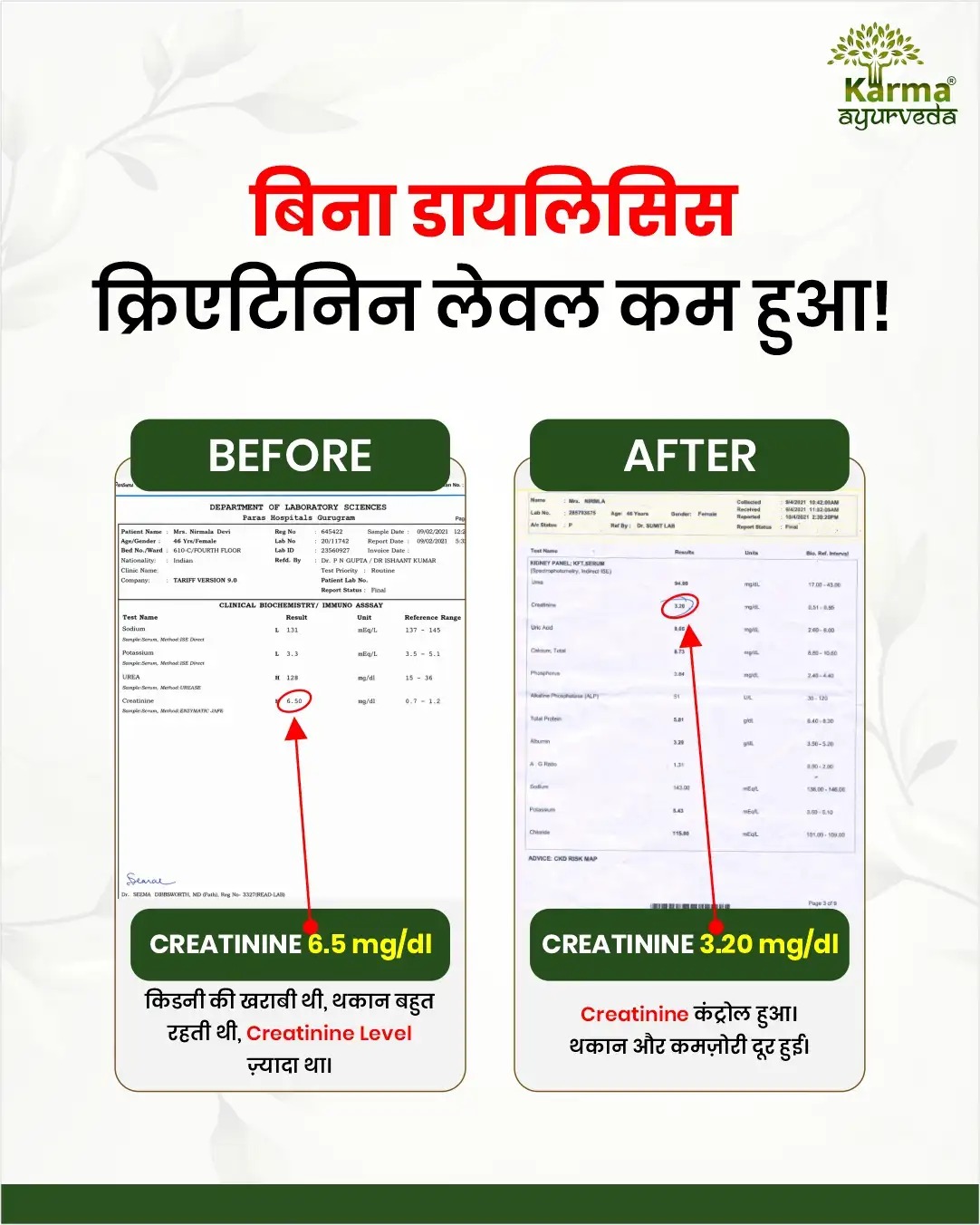
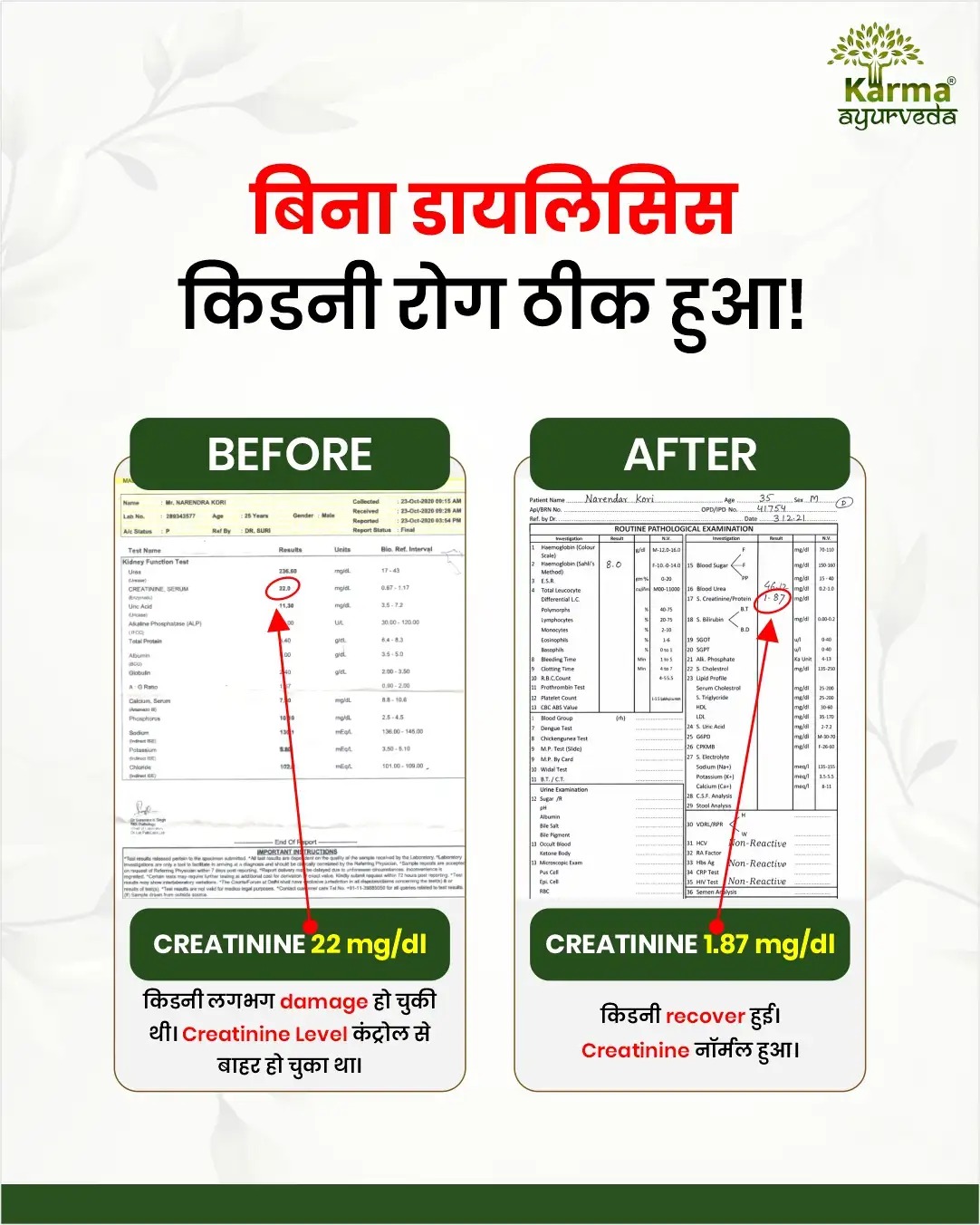
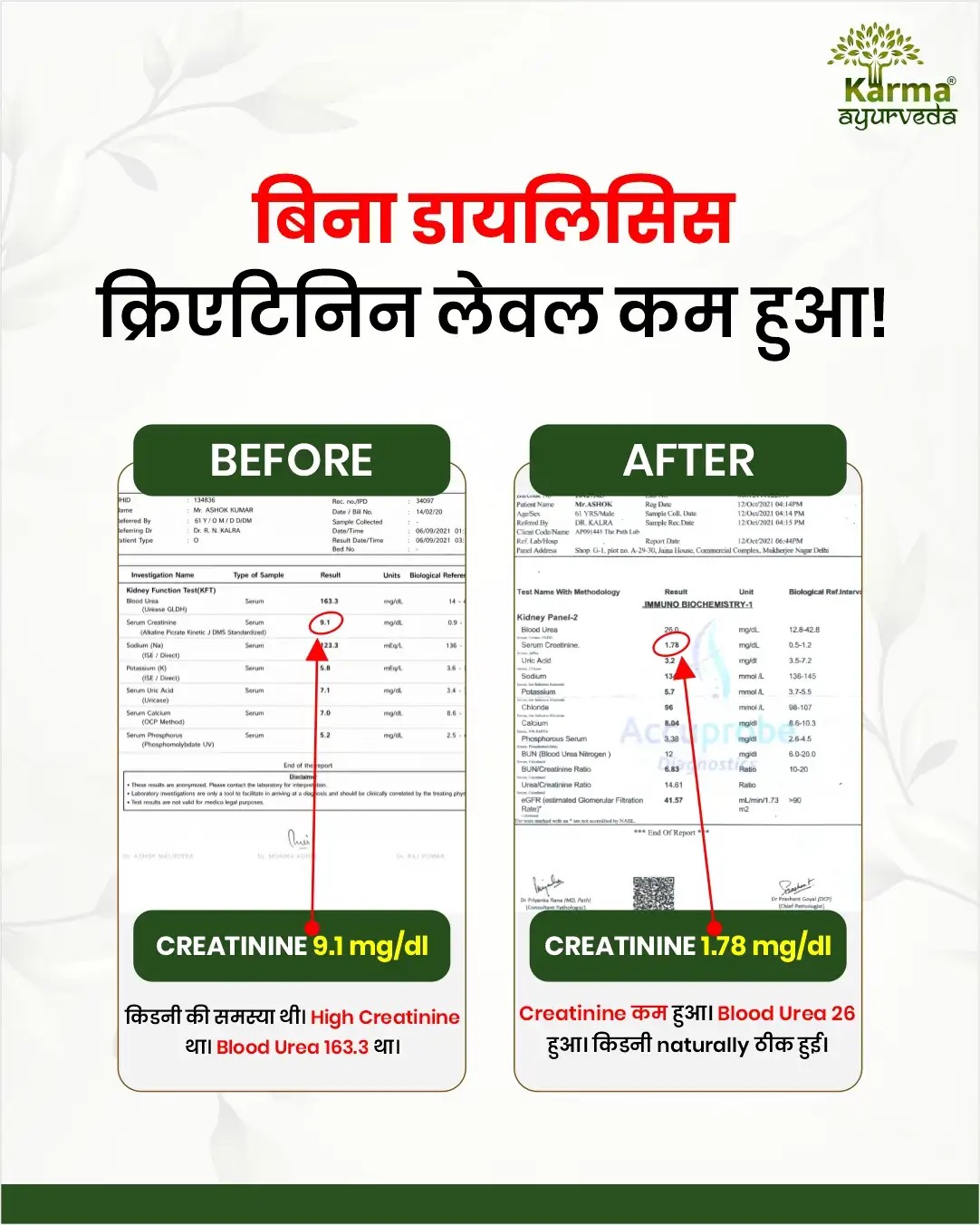
Mr. Yashpal, a resident of Sonipat, Haryana, was diagnosed with advanced kidney disease and had become dependent on dialysis three times a week. His declining kidney function caused extreme fatigue, weakness, fluid retention, and severely limited his ability to carry out everyday activities. Medical investigations revealed a serum creatinine level of 9 mg/dL, indicating significantly impaired kidney function. Hoping to find an alternative to long-term dialysis, he sought treatment at Karma Ayurveda.
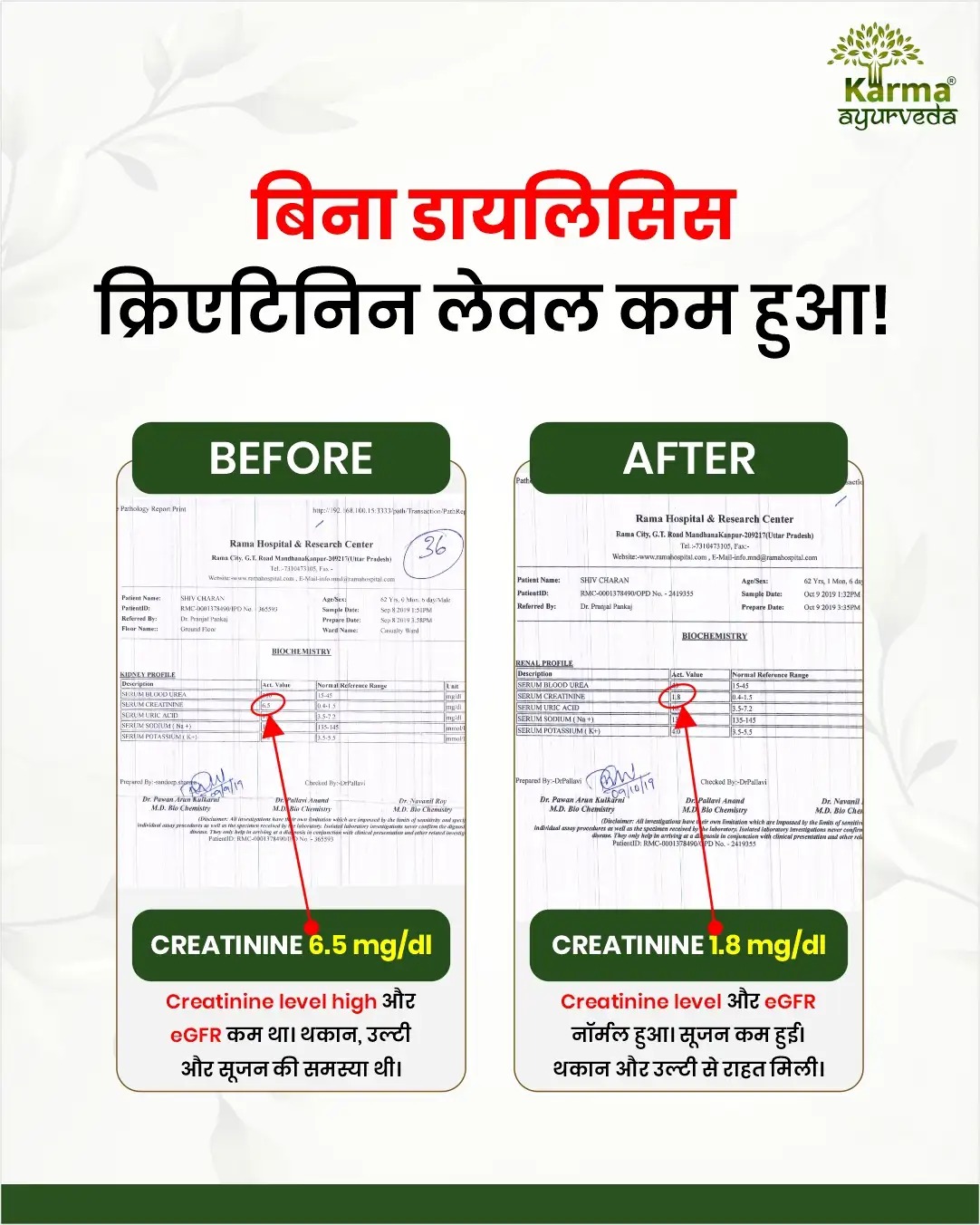
Following a detailed evaluation, Mr. Yashpal received a personalized Ayurvedic treatment plan that included herbal formulations, a kidney-friendly diet, lifestyle modifications, and regular medical monitoring. The treatment focused on supporting kidney function naturally, reducing the burden on the kidneys, and improving his overall health through a holistic approach.
Over the course of treatment, his condition improved significantly. Follow-up reports showed his serum creatinine level decreased from 9 mg/dL to approximately 2 mg/dL, reflecting substantial improvement in kidney function. As his health improved, he was able to discontinue dialysis and regain his independence. He also reported increased energy, better stamina, and the ability to resume long working hours and normal daily activities. His journey demonstrates how personalized Ayurvedic care, combined with consistent treatment and appropriate medical supervision, may help support kidney health and improve quality of life. While individual outcomes vary, his experience highlights the potential benefits of a comprehensive, holistic approach to kidney care.
Apples and blueberries are commonly considered kidney-friendly because they're nutritious and relatively low in potassium.
Yes, but only if potassium levels and your healthcare provider's advice allow it.
Yes, grapes are generally considered a kidney-friendly fruit when eaten in appropriate portions.
Pineapple is often a good option because it contains less potassium than many tropical fruits.
In many cases yes, provided the fruit choice and serving size match individual kidney function and dietary recommendations.
This article is for educational purposes only and should not replace medical advice. Fruit recommendations for kidney disease vary depending on the stage of CKD, potassium levels, medications, and overall health. Always consult your nephrologist or a registered renal dietitian before making significant dietary changes, especially if you have advanced kidney disease or are on dialysis.
AyuKarma Testo Build Capsules combine 12 Ayurvedic herbs and minerals to support strength, energy, stamina, physical performance, nourishment and overall daily vitality.
AyuKarma Hair Lush Capsules combine Ayurvedic herbs to support hair growth, reduce hair fall, strengthen roots, nourish the scalp and promote healthier-looking hair.
Karma Garcom Capsules contain Garcinia indica to support healthy metabolism, digestion, weight management, digestive comfort and daily wellness alongside a balanced lifestyle.
Doctor-recommended liver supplement that helps detoxify the liver, support healthy cholesterol, improve digestion & promote liver health. Developed by Dr. Puneet Dhawan with Karma Ayurveda philosophy.
AyuKarma Muscle Magic Capsules combine Ayurvedic herbs to support appetite, digestion, nourishment, healthy weight gain, muscle strength and daily vitality for adults.
AyuKarma Obes-Fit Capsules combine Ayurvedic herbs to support appetite control, digestion, metabolism, healthy weight management, energy and overall wellness alongside an active lifestyle.
AyuKarma Body Detox Capsules combine Ayurvedic herbs to support natural detoxification, digestion, colon cleansing, metabolism, gut wellness and overall rejuvenation for daily vitality.
Doctor-recommended ayurvedic medicine to control diabetes, manage blood sugar levels & reduce diabetes-related complications in diabetic patients. Developed by Dr. Puneet Dhawan with the Karma Ayurveda philosophy.
Doctor-recommended Ayurvedic gut supplement that helps relieve occasional constipation, promote smooth bowel movement, reduce gas & bloating and improve digestion. Developed by Dr. Puneet Dhawan with Karma Ayurveda philosophy.
Doctor-recommended Ayurvedic joint supplement that helps relieve joint pain & stiffness, improve flexibility and support smoother, more comfortable movement. Developed by Dr. Puneet Dhawan with Karma Ayurveda philosophy.
Ayurvedic Kidney Detox Kit for individuals with high creatinine, high BP, diabetes, high uric acid, alcohol consumption habits, frequent painkiller use or early signs of kidney stress.
Second Floor, 77, Block C, Tarun Enclave, Pitampura, New Delhi, Delhi, 110034