Unlocking Wellness Naturally
100% Ayurvedic Treatment

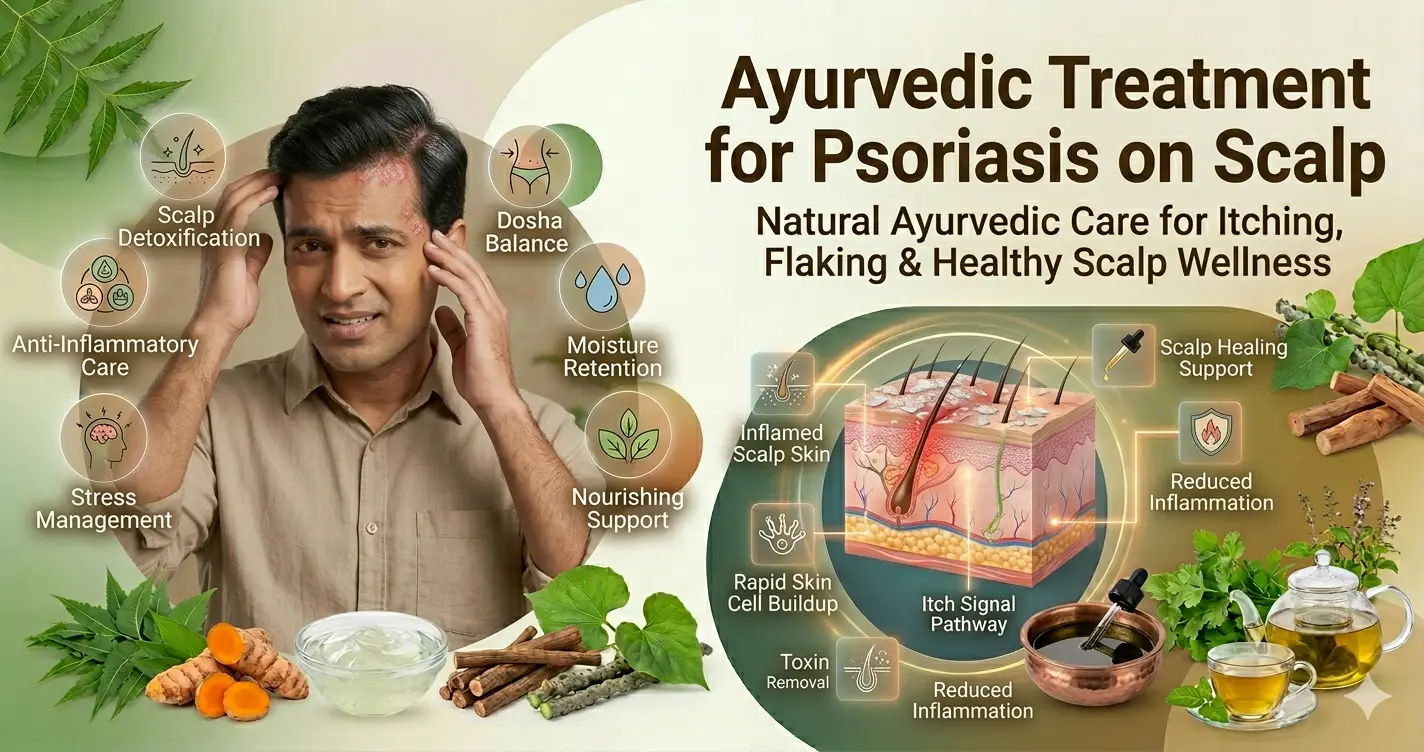
Let’s be honest; dealing with scalp psoriasis is not just about the itching. It’s the flakes on your shoulders, the constant urge to scratch (even in public), and that awkward moment when someone thinks it’s just dandruff. If you’ve been struggling with this stubborn condition, don’t worry; you’re not alone, and yes, Ayurveda might just have some soothing answers.
In this blog, we’ll talk about how Ayurveda looks at scalp psoriasis and how you can manage it naturally without turning your life upside down.
In simple words, scalp psoriasis is when your skin goes into overdrive and starts producing new cells too quickly. These cells pile up, forming thick, itchy, and sometimes painful patches.
From an Ayurvedic perspective, this condition is linked to an imbalance of Vata and Kapha doshas. When your body’s natural balance gets disturbed; thanks to stress, poor diet, or lifestyle; your skin starts reacting.
You might be surprised, but your scalp isn’t acting up just for fun. There are real reasons behind it:
Basically, your body is trying to tell you, “Hey, something’s not right!”
Now comes the interesting part. Ayurveda doesn’t just treat symptoms; it tries to fix the root cause. Think of it as repairing the foundation instead of repainting the walls.
Ayurveda believes in removing toxins (Ama) from the body. Treatments like Panchakarma help cleanse your system from within.
This is where centers like Karma Ayurveda Hospital come into the picture, offering therapies that aim to balance your doshas naturally.
If your scalp could talk, it would probably beg for oil massage. Ayurvedic oils help reduce dryness, itching, and inflammation.
Some commonly used oils include:
Regular oil massage not only nourishes your scalp but also gives you a mini stress-relief session. Win-win!
Ayurveda uses herbs that have been trusted for centuries. Some popular ones include:
Many people looking for Ayurvedic treatment for scalp psoriasis find these herbs helpful when used consistently.
You can’t eat junk all day and expect your skin to behave. Sorry, that’s just not how it works.
Ayurveda recommends:
And what to avoid?
Following a proper psoriasis scalp treatment naturally approach means treating your gut as well.
Stress is like petrol for psoriasis; it makes everything worse.
Even 10–15 minutes a day can make a difference. Your scalp (and your mind) will thank you.
While home remedies are helpful, sometimes you need proper guidance. That’s where experienced professionals like Dr. Puneet Dhawan step in.
With personalized treatment plans, Ayurvedic experts focus on your body type, symptoms, and lifestyle to create a solution that actually works for you.
Let’s clear one thing; Ayurveda is not a “magic overnight fix.” It’s more like a slow and steady friend who actually helps you heal.
If you stick to the routine, follow the diet, and take your remedies seriously, you’ll start seeing improvements.
This is why many people searching for natural remedies for scalp psoriasis eventually turn to Ayurveda for long-term relief.
Remember, patience is key.
This is the million-dollar question.
Ayurveda focuses on managing the condition and reducing flare-ups. Many people experience long-term relief when they follow the treatment properly.
If you’re exploring psoriasis treatment in Ayurveda, think of it as a journey toward better health; not just a quick fix.
Scalp psoriasis can be annoying, frustrating, and sometimes even embarrassing; but it’s manageable.
With the right combination of Ayurvedic therapies, lifestyle changes, and a bit of patience, you can take control of your condition.
And remember; you’re not alone in this. Thousands of people are switching to best Ayurvedic treatment for psoriasis options to find relief without harsh side effects.
So, take a deep breath, oil your scalp, sip some herbal tea, and trust the process. Your healing journey has already begun.
Ayurveda helps manage symptoms and reduce flare-ups, but consistency is key for long-term relief.
Neem oil and coconut oil are commonly used for soothing and moisturizing the scalp.
It varies, but most people start noticing improvement within a few weeks of regular treatment.
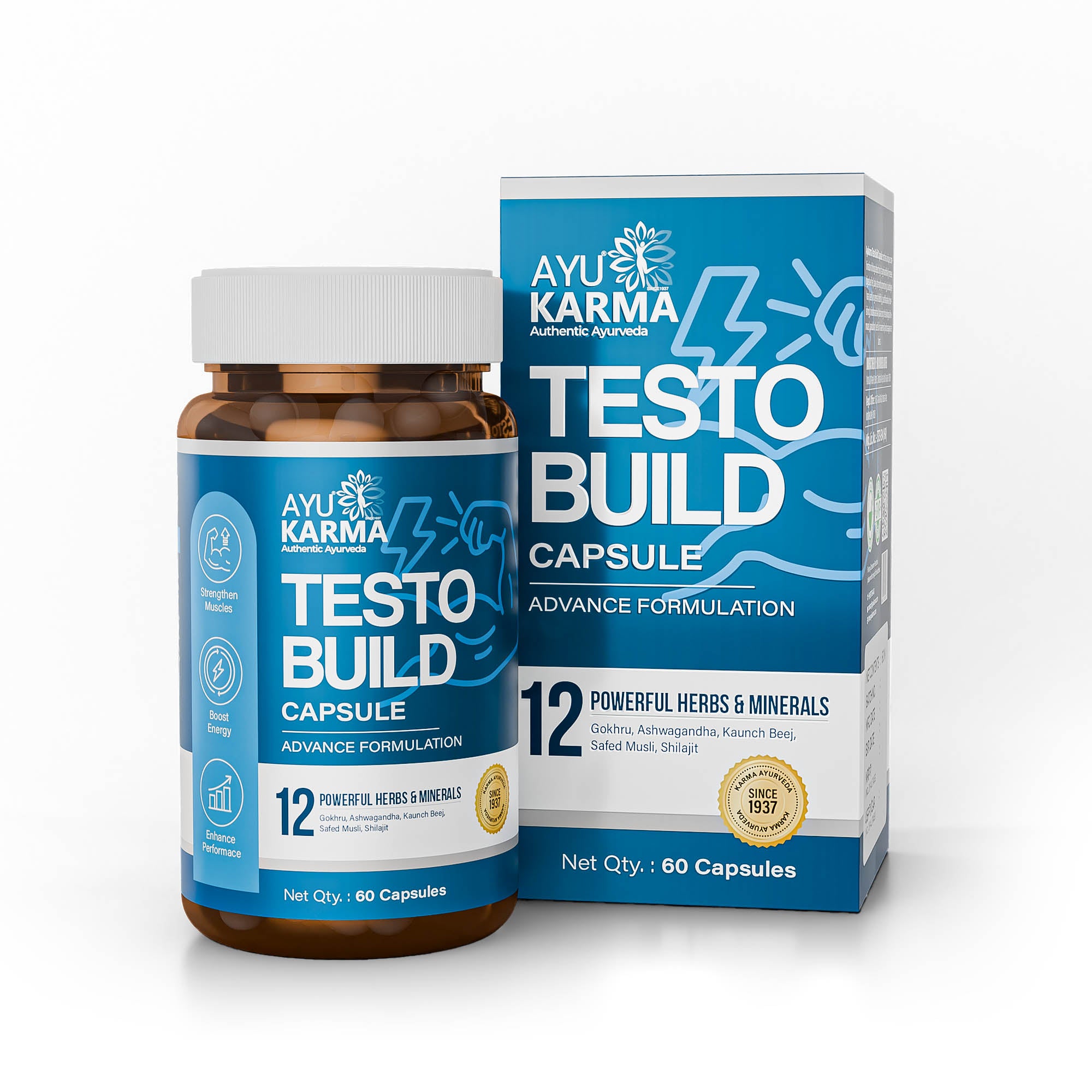
AyuKarma Testo Build Capsules combine 12 Ayurvedic herbs and minerals to support strength, energy, stamina, physical performance, nourishment and overall daily vitality.
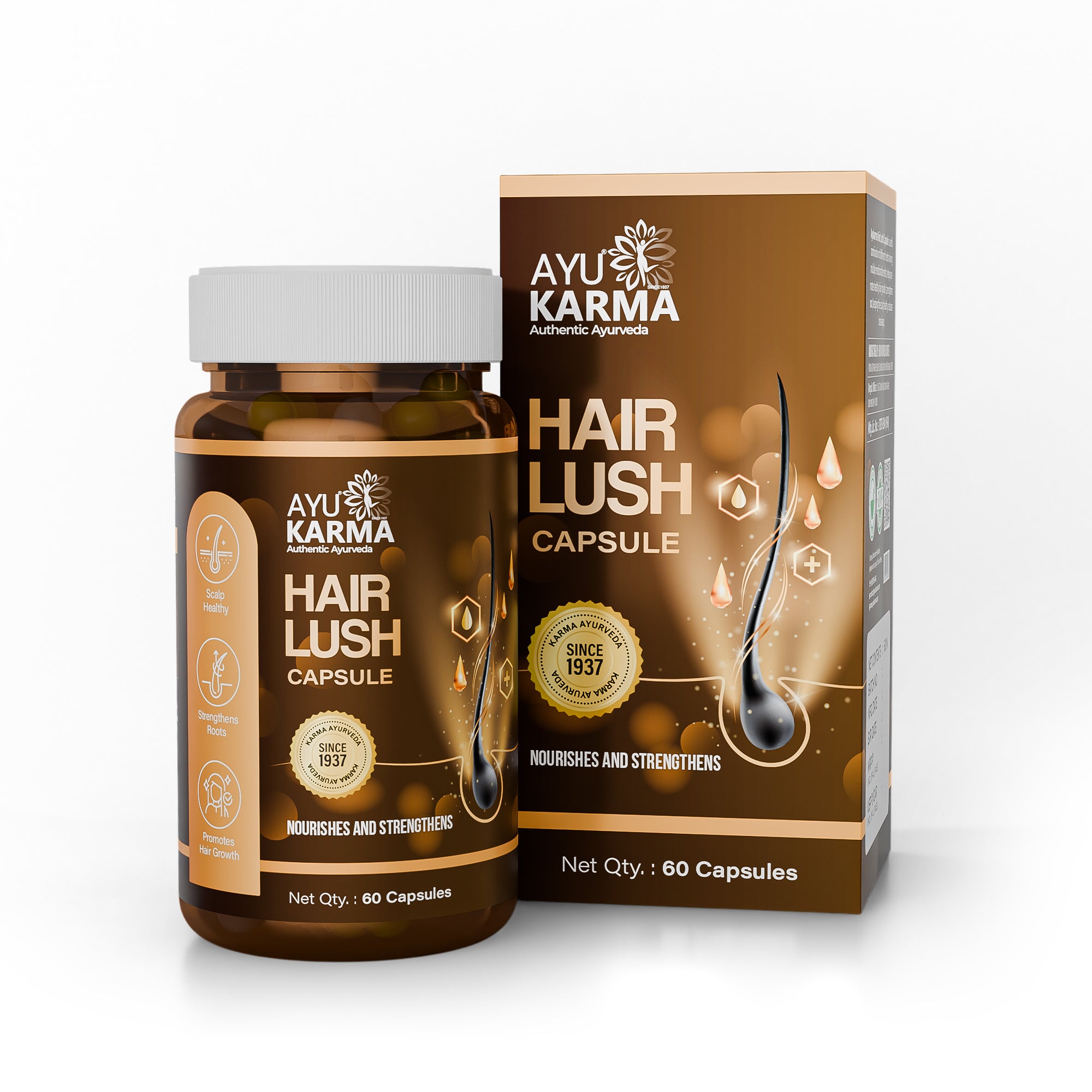
AyuKarma Hair Lush Capsules combine Ayurvedic herbs to support hair growth, reduce hair fall, strengthen roots, nourish the scalp and promote healthier-looking hair.
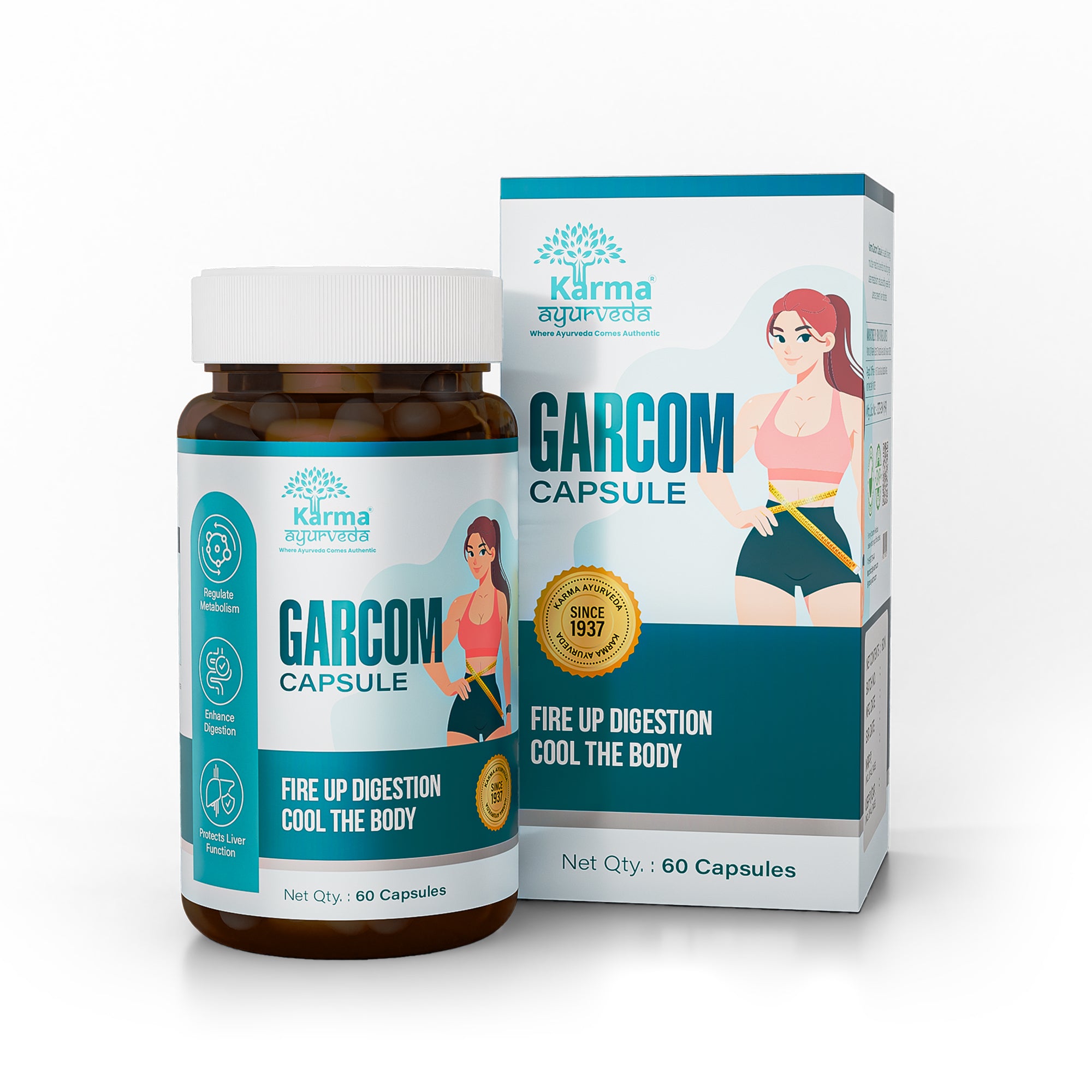
Karma Garcom Capsules contain Garcinia indica to support healthy metabolism, digestion, weight management, digestive comfort and daily wellness alongside a balanced lifestyle.
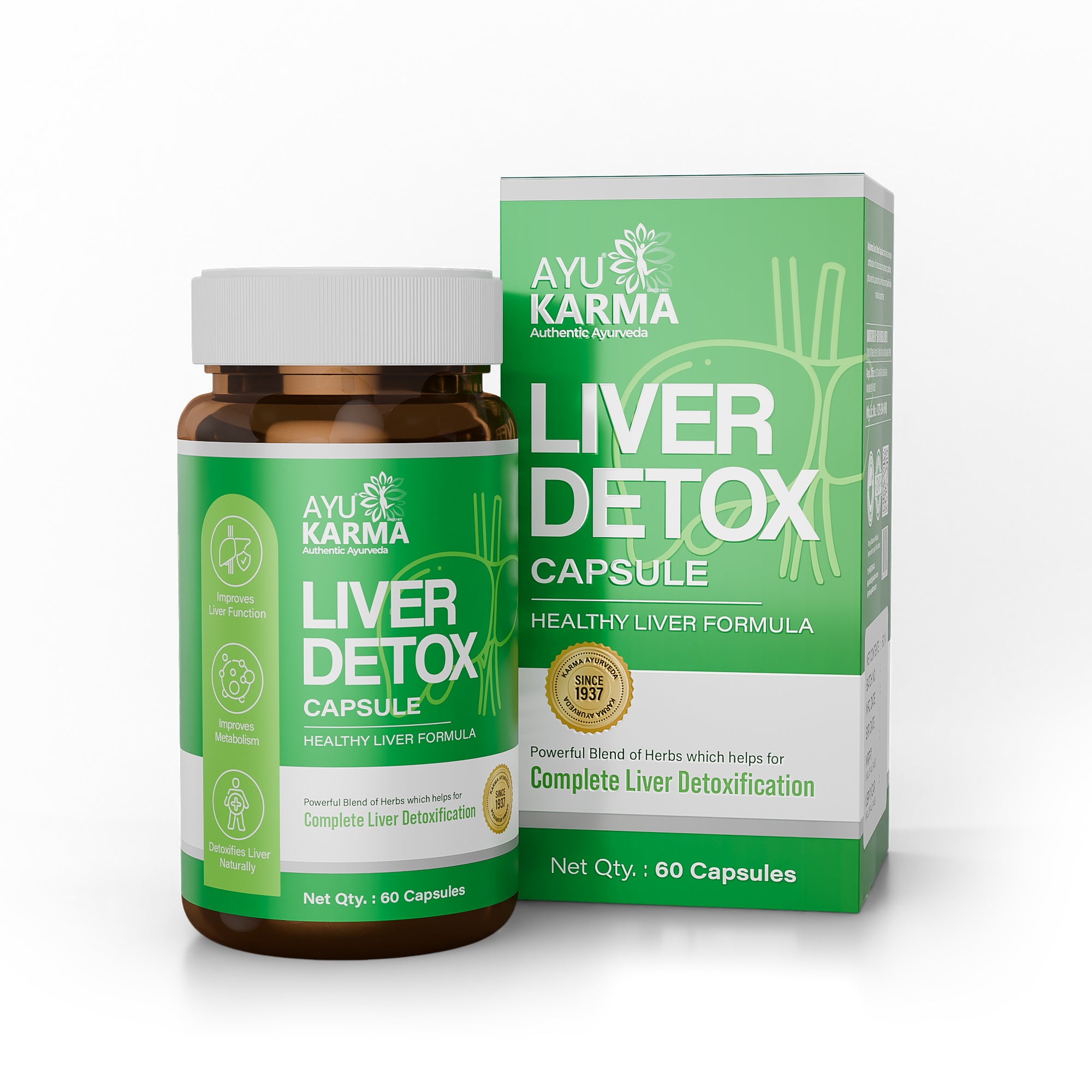
Doctor-recommended liver supplement that helps detoxify the liver, support healthy cholesterol, improve digestion & promote liver health. Developed by Dr. Puneet Dhawan with Karma Ayurveda philosophy.
Second Floor, 77, Block C, Tarun Enclave, Pitampura, New Delhi, Delhi, 110034

Certificate no- AH-2023-0186
JAN 05, 2026 - JAN 04, 2029

US FDA Reg. No.: 14568299376