Best Sciatica Treatment in Jaipur
The best sciatica treatment in Jaipur is one that goes after the root cause of the nerve compression, not just the pain; which is exactly why Ayurveda has quietly become the city's go-to option for people tired of popping painkillers every few hours. If you've ever felt that electric, shooting pain zip from your lower back down to your toes (usually at the exact moment you're trying to look cool getting out of an auto-rickshaw), you already know this isn't your average backache.
Let's talk about it properly, shall we? No jargon, no scary medical drama; just a real conversation about what sciatica actually is, why it loves picking on desk workers and scooter riders alike, and which treatment routes in Jaipur are genuinely worth your time.
Wait, What Even Is Sciatica?
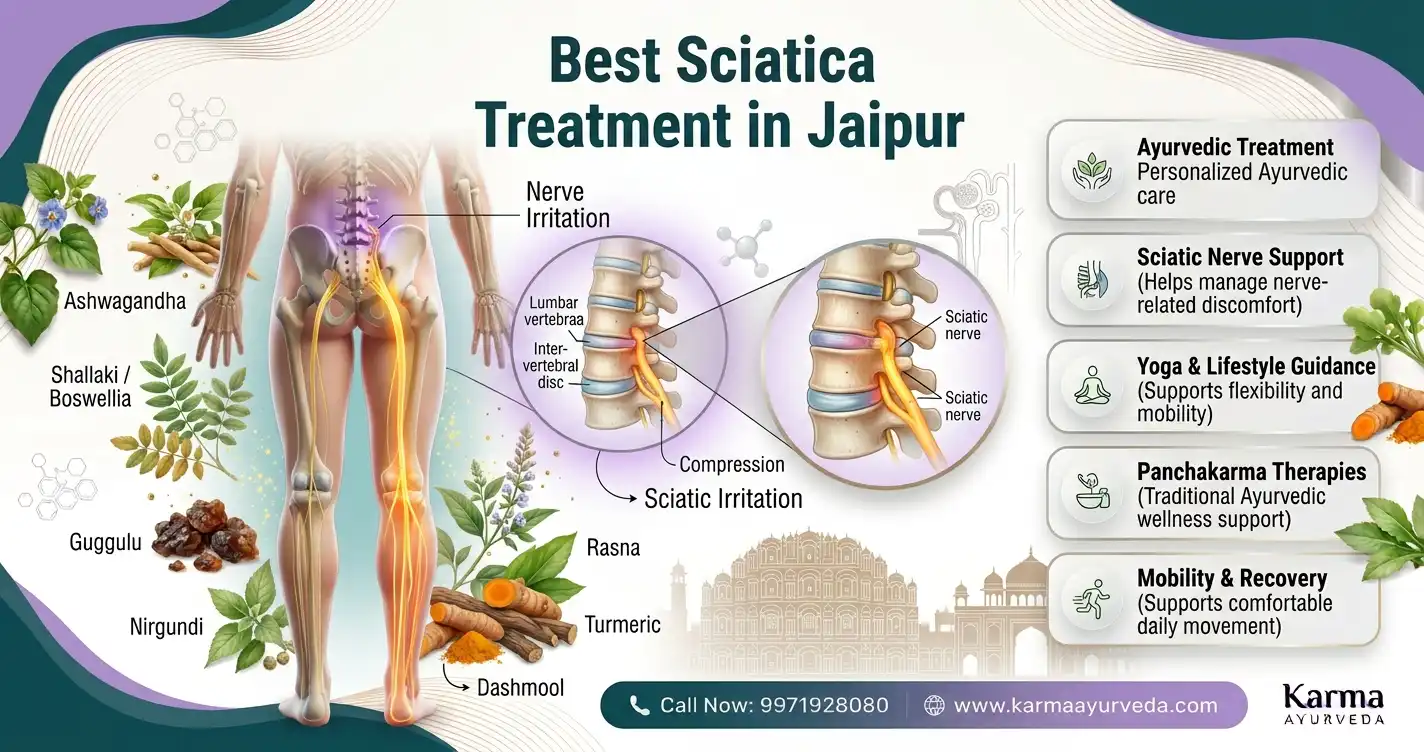
Your sciatic nerve is the longest nerve in your body; it starts in your lower back and runs all the way down each leg. When something (a slipped disc, a tight piriformis muscle, or just Grandma's favourite villain "age") presses on it, you get pain, tingling, or numbness that can honestly make walking to the fridge feel like a marathon.
In Ayurveda, this entire situation has a name that's been around for centuries: Grudhrasi. It's described as a Vata-dominant disorder, meaning an imbalance in the body's air-and-space energy is seen as the troublemaker behind the inflammation and nerve irritation. This is also why a proper Ayurvedic treatment for Sciatica doesn't just numb the pain; it tries to calm that aggravated Vata down at the source.
Sciatica vs Muscle Pain: How Do You Even Tell the Difference?
This is the question everyone Googles at 2 AM while lying on the floor because sitting hurts too much. Fair enough; the confusion between sciatica vs muscle pain is genuinely common because both can feel like "my back is angry with me." Here's a quick, no-nonsense breakdown:
Sciatica
- Where it hurts: Travels down one leg, sometimes to the foot.
- The feeling: Shooting, burning, tingling, "pins and needles".
- Worsens with: Sitting long, sneezing, coughing (yes, really).
- Numbness: Common, especially in foot or toes.
- Drama level: High; one wrong move and you're wincing.
Regular Muscle Pain
- Where it hurts: Usually stays put in one spot.
- The feeling: Dull, achy, like you did too many squats.
- Worsens with: Specific movements or touch.
- Numbness: Rare.
- Drama level: Medium; annoying but manageable.
If the pain is playing hopscotch down your leg, it's very likely sciatica. If it's staying loyal to one muscle group, it's probably just your muscles filing a complaint after leg day.
Why Jaipur Is Actually a Smart Place to Treat It
Jaipur isn't just about forts and kachori; it's also home to some seriously well-regarded Ayurvedic centres that specialise in spine and nerve-related issues. Clinics like Karma Ayurveda for Sciatica treatment have built a reputation around personalised Panchakarma therapies, herbal formulations, and dietary Vata-pacifying protocols rather than one-size-fits-all painkillers. The idea isn't to mask the pain signal; it's to reduce the actual compression and inflammation causing it.
A good Sciatica Ayurvedic treatment plan usually includes a mix of:
- Abhyanga (therapeutic oil massage); using warm, medicated oils to loosen tight muscles around the sciatic nerve.
- Kati Basti; a wonderfully relaxing therapy where warm medicated oil is pooled over the lower back using a dough ring (yes, it looks exactly as cosy as it sounds).
- Swedana (herbal steam therapy); to improve blood flow and reduce stiffness.
- Internal Ayurvedic medicines; herbs like Nirgundi, Guggulu, and Dashmoola that are traditionally used to reduce inflammation and support nerve health.
- Basti (medicated enema therapy); considered in classical texts to be one of the primary treatments for Vata disorders like Grudhrasi.
Best Ayurvedic Oils for Sciatica (The Ones Worth Knowing About)
If you're the DIY type who likes to understand what's actually going into that massage, here are some of the best Ayurvedic oils for Sciatica that keep showing up across traditional formulations:
- Mahanarayan Oil; a classic go-to for joint and nerve pain, often used in daily massage.
- Sahacharadi Oil; specifically indicated for Vata disorders affecting the lower back and legs.
- Ksheerabala Oil; soothing, cooling on inflammation, and gentle enough for regular use.
- Dhanwantharam Oil; commonly used for musculoskeletal pain and nerve compression issues.
A warm oil massage, done consistently (not just once when the pain flares up and then forgotten about, we see you), can genuinely help loosen the muscles pressing on the nerve.
What You Can Do at Home (Yes, Real Sciatica Home Treatment Tips)
Not every twinge needs a clinic visit on day one. Here's some practical Sciatica home treatment advice that won't cost you a rupee:
- Gentle stretching; poses like Child's Pose and Cobra Pose have shown promise in easing sciatic discomfort in small clinical studies, including research published around 2013 that looked specifically at these two poses for symptom relief.
- Hot and cold compress; alternating between the two can calm inflammation and relax tight muscles.
- Avoid prolonged sitting; get up every 30-40 minutes, your sciatic nerve will thank you (and so will your posture).
- Sleep smart; a pillow between your knees while sleeping on your side takes pressure off the lower back.
- Stay gently active; complete bed rest for days on end can actually make things worse, not better.
There's decent scientific backing for movement-based relief too. A 2019 clinical trial conducted at Bharati Vidyapeeth Deemed University studied the effect of two specific yoga postures; Ardha-Matsyendrasana and Pawanmuktasana; on patients diagnosed with Grudhrasi (sciatica), and found meaningful improvement in pain, stiffness, and that unpleasant pricking sensation people describe. Separately, a well-cited systematic review by Cramer and colleagues, which pooled data from multiple trials involving nearly a thousand chronic low back pain patients, found solid evidence supporting yoga as a safe adjunct therapy for back-related pain, sciatica included.
None of this means you should skip professional advice; think of these as supporting habits, not standalone cures.
When Should You Actually See a Doctor or Ayurvedic Specialist?
Look, most sciatica cases improve with time and the right care. But don't play the tough-guy-ignoring-it card if you notice:
- Pain that's getting worse instead of better after a couple of weeks.
- Numbness or weakness spreading in the leg or foot.
- Loss of bladder or bowel control (this one's a genuine emergency, don't wait).
- Pain so severe it's affecting your sleep and daily function.
In these cases, get evaluated properly; combining modern diagnostics with Ayurvedic management often gives the most balanced, long-term relief.
Key Takeaways
- Sciatica happens when the sciatic nerve gets compressed, causing pain that travels down one leg; unlike regular muscle pain, which usually stays localised.
- Ayurveda calls it Grudhrasi and treats it as a Vata imbalance, addressing the root cause rather than just numbing symptoms.
- Therapies like Abhyanga, Kati Basti, Swedana, and Basti are commonly used in Jaipur's Ayurvedic clinics, including centres like Karma Ayurveda.
- Oils like Mahanarayan, Sahacharadi, and Dhanwantharam are traditionally used for nerve and joint pain relief.
- Gentle yoga (Cobra Pose, Pawanmuktasana) has shown real, study-backed benefits for sciatica symptoms.
- Persistent, worsening, or severe symptoms need professional evaluation; don't just "wait it out".
Frequently Asked Questions
Is Ayurvedic treatment effective for sciatica, or is it just herbal painkillers?
It genuinely aims at the root cause; reducing inflammation and nerve compression, not just dulling the pain signal.
How long does Ayurvedic treatment for sciatica usually take to show results?
Most people notice meaningful relief within 2-4 weeks of consistent therapy, though it varies from person to person.
Can I just do oil massage at home instead of visiting a clinic?
You can, and it helps, but a professionally done Kati Basti or Panchakarma session tends to work faster and deeper than a solo home rub-down.
Is sciatica the same as a slipped disc?
Not exactly; a slipped disc is one common cause of sciatica, but sciatica itself is the nerve pain that results from any kind of compression.
Can yoga alone cure sciatica?
It can significantly ease symptoms and speed up recovery, but it works best alongside proper diagnosis and treatment, not as a total replacement.
Disclaimer
This blog is for general informational purposes only and isn't a substitute for professional medical advice, diagnosis, or treatment. Sciatica symptoms and severity vary from person to person, so please consult a qualified doctor or Ayurvedic practitioner before starting any treatment, oil, or exercise routine.