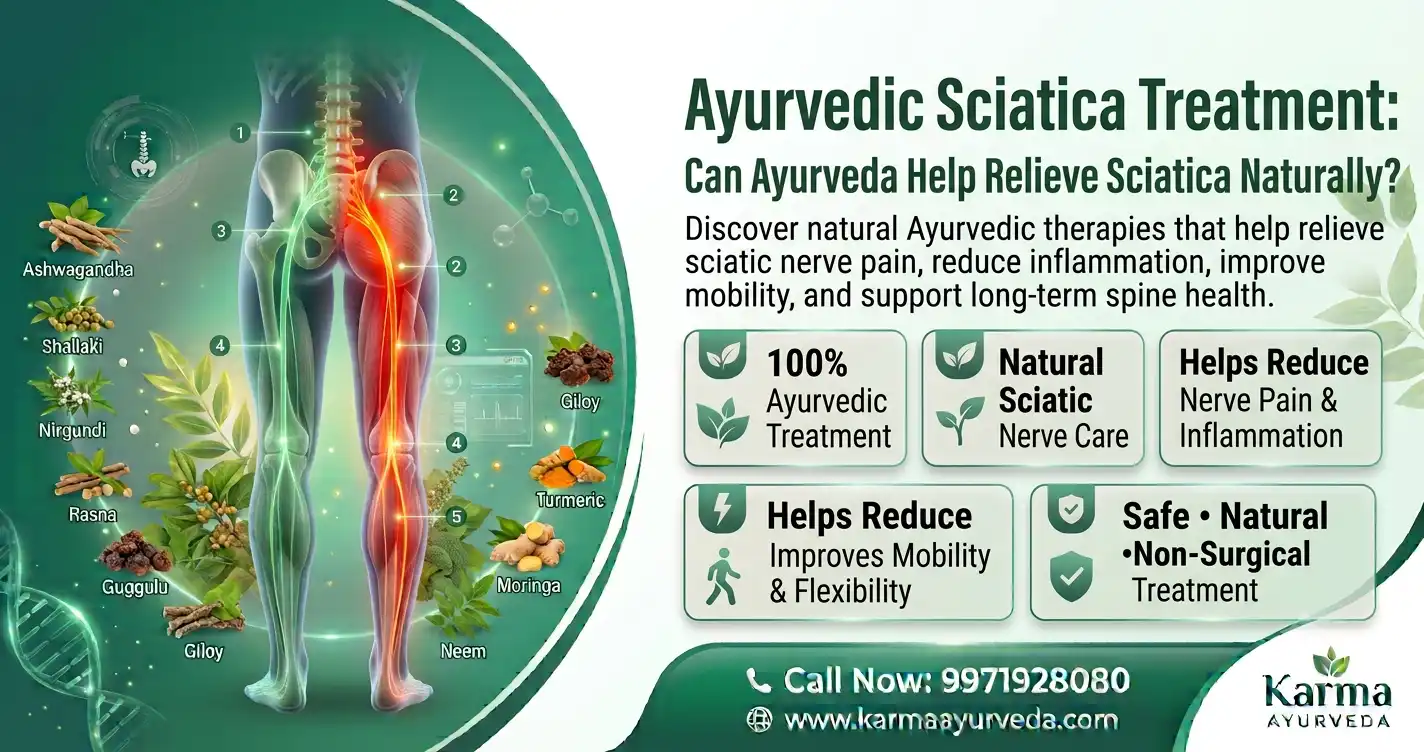
Ayurvedic Sciatica Treatment: Can Ayurveda Help Relieve Sciatica Naturally?

Ayurvedic Sciatica Treatment: Can Ayurveda Help Relieve Sciatica Naturally?

Yes, Ayurveda can help relieve sciatica naturally by reducing nerve inflammation, pacifying aggravated Vata dosha, and restoring spinal mobility without invasive procedures. While it requires patience and lifestyle tweaks, ancient holistic remedies offer genuine, sustainable comfort for that screaming lower back.

So, can ancient wisdom actually tackle a modern nerve nightmare? Let’s break down how an Ayurvedic treatment for Sciatica works, what therapies are involved, and how you can get your nerve; and your life; back on track.

Ayurvedic Sciatica Treatment

In Ayurveda, health is all about maintaining a harmonious equilibrium among the three main bio-energies or doshas: Vata (air and space/movement), Pitta (fire/metabolism), and Kapha (water and earth/structure).

Sciatica is classified primarily as a classical Vata Vyadhi (a disorder caused by an imbalance in Vata). When Vata goes haywire due to cold weather, poor posture, heavy lifting, or chronic stress, it becomes dry, cold, and erratic. It gets trapped in the lower spine (Kati region), drying up joint lubrication, compressing nerve roots, and causing stiffness, burning sensations, and intense radiating pain. Sometimes, Kapha joins the party, adding heaviness, numbness, and swelling to the mix.

Unlike quick-fix pain relievers that simply turn down the volume knob on your pain signals without fixing the underlying speaker wire, Sciatica Ayurvedic treatment focuses on soothing the irritated nerve, nourishing degenerated spinal tissues, and expelling accumulated toxins (Ama).

Here is a breakdown of the core pillars that make up a comprehensive Ayurvedic care plan:

1. External Therapies (Panchakarma & De-stressors)

  • Kati Basti: Picture a tiny warm pool built directly on your lower back using a ring of black gram dough. Warm, medicated herbal oils (like Mahanarayana Taila or Sahacharadi Taila) are continuously poured and held there for 30–40 minutes. It deeply penetrates tissue, lubes up stiff vertebrae, and calms aggravated Vata.
  • Abhyanga & Swedana: A gentle, warm-oil full-body massage followed by herbal steam therapy. This dilates blood vessels, flushes out stiffness, and relaxes locked muscle spasms around the spine.
  • Patra Pinda Sweda: Medicated herbal leaves (like Nirgundi and Eranda) are tied into cotton boluses, dipped in warm oils, and rhythmically patted over your back and legs. It works wonders for relieving deep-seated stiffness and tingling.
  • Basti Chikitsa (Therapeutic Enemas): Known as the ultimate remedy for Vata disorders. Medicated oil or herbal decoction enemas nourish the colon; the primary seat of Vata; easing inflammation right from the root.

2. Internal Herbal Formulations

Ayurvedic physicians prescribe specialized botanical compounds designed to reduce inflammation, improve local nerve circulation, and rebuild spinal resilience. Searching for the Best Ayurvedic medicines for Sciatica usually leads to time-tested classic formulations like Trayodashanga Guggulu, Rasnadi Kwath, and Sameerapannaga Ras.

3. Dietary & Lifestyle Tweaks

Ayurveda places massive emphasis on what goes into your plate. Eating cold, stale, dry, or gas-producing foods (like raw salads, excessive chickpeas, or ice-cold drinks) acts like throwing gasoline on a Vata fire. Replacing them with warm, freshly cooked, well-spiced meals (think ginger, garlic, turmeric, and ghee) helps keep your digestion firing and your nervous system grounded.

🌿 Talk to Our Ayurvedic Expert Now – Get A Expert Consultation.
Delaying Treatment Can Worsen Your Condition.
👉 Call Now And Change Your Life

Ayurvedic Hospital for Sciatica

When sciatica progresses from a mild nagging ache to an excruciating ordeal that leaves you trapped in bed, sipping herbal tea at home might not quite cut it. That is where specialized clinical care comes into play.

Checking into an accredited facility like Karma Ayurveda Hospital provides patients access to structured, physician-supervised care tailored to their specific constitution (Prakriti) and disease stage (Samprapti). Choosing a dedicated center for Karma Ayurveda for Sciatica treatment offers several key advantages:

  • Panchakarma Expertise: High-impact therapies like Niruha Basti (medicated decoction enemas) or Kati Basti require precise oil temperatures, authentic herbal extracts, and trained Panchakarma therapists.
  • Personalized Diagnostic Approach: Ayurvedic doctors do not treat just the MRI report; they evaluate your pulse (Nadi Pariksha), digestive fire (Agni), lifestyle habits, and exact dosha imbalances.
  • Safe Integration: Under medical supervision, botanical medicines are carefully monitored for dosage and purity, ensuring you receive effective pain relief without compromising kidney or liver health.
  • Holistic Lifestyle Rehabilitation: Beyond therapies, clinical settings guide you through gentle posture corrections, targeted stretches (Yogasanas like Bhujangasana and Shalabhasana), and stress management techniques.

To see how Ayurvedic management stacks up against typical conventional quick-fixes, here is a quick side-by-side look:

  • Primary Focus — Conventional Quick-Fixes: Immediate symptom masking (numbing pain signals) | Ayurvedic Care: Root-cause balancing (calming Vata, nourishing nerve tissue)
  • Main Tools — Conventional Quick-Fixes: NSAIDs, muscle relaxants, steroid shots | Ayurvedic Care: Warm medicated oils, herbal decoctions, Panchakarma
  • Side Effect Profile — Conventional Quick-Fixes: Potential stomach acidity, drowsiness, dependency risk | Ayurvedic Care: Generally gentle on the system when guided by a expert practitioner
  • Long-term Goal — Conventional Quick-Fixes: Temporary relief until the next flare-up | Ayurvedic Care: Restoring nerve mobility, tissue resilience, and prevention
  • Humor Check — Conventional Quick-Fixes: "Take this pill and try not to sneeze!" | Ayurvedic Care: "Enjoy a warm oil bath for your lower back while we fix your Vata."

Can Ayurveda Cure Sciatica?

Let’s address the elephant in the room with absolute honesty: Ayurveda is not a magic wand, and no reputable doctor should promise an instantaneous "100% permanent cure" for every single spinal condition.

Whether sciatica can be fully resolved depends heavily on what is causing the nerve compression in the first place:

  • Mild to Moderate Sciatica (Disc bulge, muscle spasm, piriformis syndrome): Ayurveda shines brilliantly here. Clinical studies show that combining internal herbal medications (Shamana) with detoxifying Panchakarma treatments (Shodhana) can lead to significant reductions in radiating pain, stiffness, and leg weakness.
  • Severe Structural Issues (Complete disc rupture, severe canal stenosis, cauda equina syndrome): If there is severe loss of bowel/bladder control or progressive foot drop, emergency surgical intervention in modern medicine may be medically necessary.

What Science Says: Validating Ancient Wisdom

You do not have to rely solely on ancient texts to see that this works; modern scientific research is catching up to Ayurvedic protocols.

  • The Jamnagar Clinical Study on Gridhrasi: A landmark clinical trial titled "A clinical study of Nirgundi Ghana Vati and Matra Basti in the management of Gridhrasi with special reference to sciatica" (published in PMC / IPGTRA Jamnagar) evaluated 102 patients. The study demonstrated that combining oral administration of Nirgundi Ghana Vati with Matra Basti (medicated oil enema) resulted in over 60–71% improvement in chief complaints like radiating pain (Ruk), pricking sensations (Toda), and back stiffness (Stambha), alongside significant improvements in Straight Leg Raising (SLR) test angles.
  • Retrospective Hospital Study: Research conducted at KAHER's KLE Ayurveda Hospital analyzing chronic sciatica cases treated with combined oral remedies and external Kati Basti reported substantial improvement in pain scores, mobility, and prevention of recurrent flare-ups.

So, while Ayurveda may not "magically erase" a calcified structural bone spur overnight, it can significantly ease nerve inflammation, relieve soft tissue tension, and help you return to a painless, active lifestyle.

Ayurvedic Herbs for Sciatica

Nature’s pharmacy is packed with powerful anti-inflammatory, analgesic, and nerve-toning botanicals. Here are some of the most celebrated herbs used in managing sciatica:

  • Nirgundi (Vitex negundo): Widely recognized as one of the most potent anti-Vata herbs. It possesses natural analgesic and anti-inflammatory properties that help reduce swelling and soothe irritated nerve endings.
  • Rasna (Pluchea lanceolata): A staple in Ayurvedic rheumatology. It specifically targets deep musculoskeletal pain, pacifies Vata, and helps clear Ama (toxic metabolic waste) from joints and connective tissues.
  • Shallaki (Boswellia serrata): Famous for its boswellic acids, which inhibit inflammatory enzymes in the body. It helps improve blood supply to the joints and reduces spinal stiffness.
  • Guggulu (Commiphora mukul): A potent resin used as the base for many classic formulations (like Trayodashanga Guggulu). It acts as a powerful carrier herb, penetrating deep tissues to relieve pain and support bone and joint strength.
  • Ashwagandha (Withania somnifera): Known as an adaptogen, Ashwagandha acts as a superb nervine tonic. It helps rejuvenate weak nerves, reduces muscle spasms, and lowers stress-induced muscle tightness.
  • Eranda (Ricinus communis / Castor): Castor root and oil are famous for their Vata-pacifying and mild laxative properties. In Ayurveda, keeping the bowels clear is crucial because constipation worsens abdominal pressure and exacerbates Vata in the lower back.

Conclusion

Sciatica can make simple daily tasks; like tying your shoes, driving to work, or simply sitting on the couch; feel like an uphill battle. But you do not have to settle for endless ice packs or live in fear of the next sudden nerve spasm.

Ayurveda offers a deeply comforting, time-tested approach that looks beyond temporary pain suppression. By soothing aggravated Vata dosha, nourishing compressed nerve pathways, and revitalizing your spine through warm oil therapies, herbal remedies, and balanced living, holistic healing is well within reach. Always remember to consult a qualified physician to map out a safe, personalized recovery plan tailored to your body's unique needs.

Key Takeaways

  • Root Cause Focus: Ayurveda views sciatica as Gridhrasi, an aggravated Vata disorder causing nerve dryness, stiffness, and severe radiating leg pain.
  • Holistic Healing: Effective relief relies on a combination of warm external therapies (Kati Basti), Panchakarma, internal herbal medicines, and a Vata-pacifying diet.
  • Scientific Backing: Clinical trials on remedies like Nirgundi Ghana Vati and Matra Basti demonstrate significant reductions in pain, stiffness, and mobility restrictions.
  • Key Botanicals: Herbs like Nirgundi, Rasna, Shallaki, Guggulu, and Ashwagandha play a crucial role in lowering nerve inflammation and strengthening connective tissue.
  • Professional Guidance: Seeking care at a dedicated hospital ensures proper diagnosis, authentic treatments, and safe recovery without side effects.
📝 Share Your Health Problem With Us Now - Fill Out the Form Below and Take the First Step Toward Healing.
Enquiry Now

Frequently Asked Questions (FAQs)

What is the main cause of sciatica according to Ayurveda?

Sciatica is primarily caused by an imbalance of the Vata dosha, which creates dryness and inflammation around the lower back and sciatic nerve.

Is Kati Basti effective for sciatica pain relief?

Yes, holding warm medicated oil on the lower back during Kati Basti deeply lubricates stiff vertebrae, calms Vata, and relaxes muscle spasms.

Can dietary changes really help ease sciatic nerve pain?

Eating warm, freshly cooked, Vata-pacifying foods helps reduce intestinal gas and systemic inflammation that directly aggravate lower back nerve pressure.

How long does Ayurvedic treatment take to show results for sciatica?

Most patients begin experiencing noticeable relief within 2 to 4 weeks of consistent herbal medication, therapy, and lifestyle adjustments.

Are Ayurvedic herbs safe to take alongside regular lifestyle routine?

When prescribed by a qualified physician, authentic Ayurvedic herbal formulations are safe, natural, and free from harsh systemic side effects.

Disclaimer

This article is for informational and educational purposes only and should not replace professional medical advice, diagnosis, or treatment. Always consult a qualified physician or registered Ayurvedic doctor before starting any new treatment, herbal regimen, or therapy for sciatica or spinal health conditions.
Web Stories

Get A Call

Drop Your Number

Location:

Second Floor, 77, Block C, Tarun Enclave, Pitampura, New Delhi, Delhi, 110034