
Unlocking Wellness Naturally
100% Ayurvedic Treatment

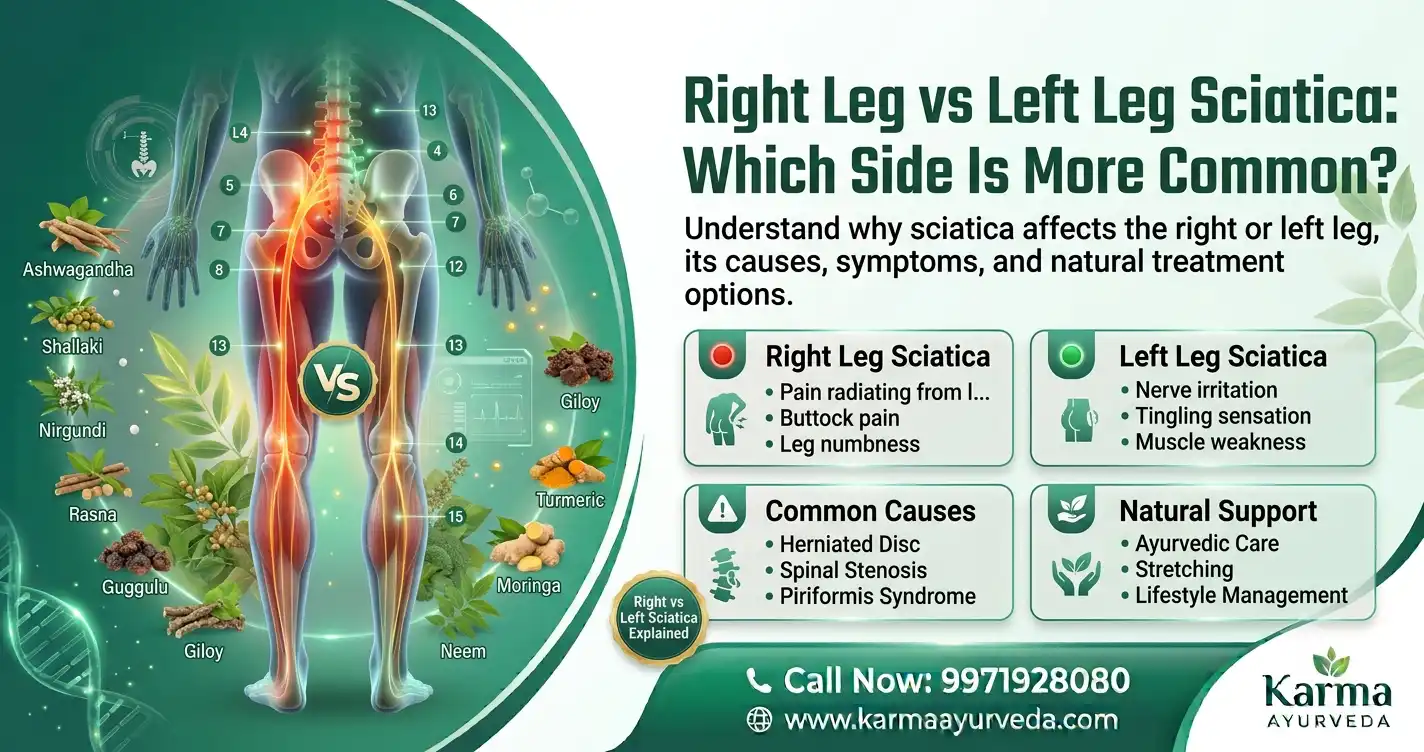
Honestly? Neither. Sciatica doesn't play favorites between your right leg and your left leg; it just picks whichever side your spine decided to misbehave on. That's the short answer. Now let's talk about why your leg is currently auditioning for a role in "Lightning Bolt: The Musical."
If you've ever sat down after a long day and felt that unmistakable zing shoot from your lower back, through your buttock, and all the way down to your foot like your nerve just got a text it didn't want, you already know what sciatica feels like. And if you've been Googling "why is my right leg sciatica worse than my left" or vice versa at 2 AM, you're not alone. It's one of the most searched sciatica questions out there, right after "can I still go to the gym" and "is this normal or am I dying."
Let's clear the air, side by side (pun very much intended).
There isn't one. Sciatica is essentially a symptom, not a disease of its own; it shows up when the sciatic nerve, the longest and thickest nerve in your body, gets pinched, irritated, or compressed somewhere along its route from your lower spine down to your foot. Since you have one sciatic nerve on each side, either one is fair game.
Some clinical write-ups on sciatic nerve pain note that while people commonly experience it on just one side, there genuinely isn't a documented bias toward right or left; it comes down to where the actual problem is happening in your spine, not some universal rule about which leg "usually" gets picked on.
That said, research on lumbar disc herniation (the most common backstage cause of sciatica) has specifically looked into this left-vs-right question, and the conclusion is refreshingly boring: no consistent left-right difference has been established, even though researchers have tried to pin one down using posture, spinal rotation, and aging patterns as possible explanations.
So if your right leg is currently the problem child, it's not because right legs are somehow more dramatic. It's about anatomy, habits, and honestly, sometimes just bad luck.
Since there's no universal "sciatica prefers lefties" or "sciatica prefers righties" rule, here's what actually tips the scale toward one side:
None of these are exotic. They're mostly just "life," which is exactly why sciatica sneaks up on people who swear they "didn't do anything" to deserve it.
Your sciatic nerve starts at the lower spine (around the L4 to S3 nerve roots), runs through your buttock, and travels down the back of your leg to your foot. Studies on symptomatic disc herniation show that the vast majority; around 95% in adults aged 25 to 55; happen at the L4-L5 and L5-S1 levels, which is exactly the neighborhood where the sciatic nerve roots live. That's why lower back trouble so reliably turns into leg trouble; the nerve is basically renting the apartment right above the disc.
Sciatica itself isn't rare either; it's been estimated to affect roughly 9.8 per 1,000 people, showing up somewhat more often in men than women. So, if you're dealing with it, you're in a pretty large, pretty grumpy club.
See? Both legs are equally capable of ruining your Monday.
Every now and then, sciatica shows up because of something other than a garden-variety herniated disc; things like spinal stenosis, piriformis syndrome (where a muscle in your buttock decides to squeeze the nerve like a stress ball), pregnancy-related pressure, or in rare cases, something vascular happening near the nerve's pathway. A case report published in the journal Medicine even documented left-side sciatica caused by an artery aneurysm pressing on the nerve plexus in an elderly patient; a good reminder that persistent, progressively worsening sciatica on either side deserves a proper diagnosis rather than a guess.
If your pain hits both legs at once, or comes with numbness in sensitive areas or loss of bladder/bowel control, that's not a "let's wait it out" situation; that needs urgent medical attention, full stop.
Modern medicine explains sciatica through discs, nerves, and mechanics. Ayurveda explains it through the lens of an aggravated Vata dosha, which governs movement and the nervous system in the body. When Vata gets disturbed; through poor digestion, irregular routines, cold exposure, or long-term postural stress; it tends to settle in the lower back and hips, aggravating the nerve pathway on whichever side is already under strain.
This is exactly why Ayurvedic treatment for Sciatica doesn't chase the "which leg" question at all. Instead, it focuses on calming Vata, improving circulation, reducing inflammation naturally, and strengthening the surrounding muscles so the nerve isn't getting squeezed in the first place; regardless of side.
At Karma Ayurveda Hospital, the approach to Sciatica Ayurvedic treatment typically involves a mix of internal herbal formulations, external oil therapies (like Abhyanga and Kati Basti), and personalized diet and lifestyle guidance rather than a one-size-fits-all painkiller approach. Karma Ayurveda for Sciatica treatment is designed around identifying the root imbalance rather than simply numbing the symptom, which is often why people look for it after conventional short-term fixes stop working.
If you're exploring natural options, it's worth asking your practitioner about the best Ayurvedic medicines for Sciatica suited to your specific body type (Prakriti) rather than picking something off a shelf, since Ayurveda leans heavily on individualized treatment rather than blanket solutions.
No; there's no solid evidence either side is more common; it genuinely depends on which side of your spine is under pressure.
Yes, this can happen if the underlying disc or muscle issue shifts or if a new area gets aggravated over time.
Definitely; consistently sleeping or sitting favoring one side can add pressure there and make that leg the "unlucky" one.
Many people find lasting relief through Ayurveda because it targets the root imbalance and muscle tightness instead of just masking the pain temporarily.
If the pain is severe, spreads to both legs, or comes with numbness or bladder/bowel issues, skip the home remedies and get checked immediately.
Disclaimer: This blog is for general informational purposes only and isn't a substitute for professional medical advice, diagnosis, or treatment. Sciatica causes and severity vary from person to person, so please consult a qualified doctor or Ayurvedic practitioner before starting any treatment plan.
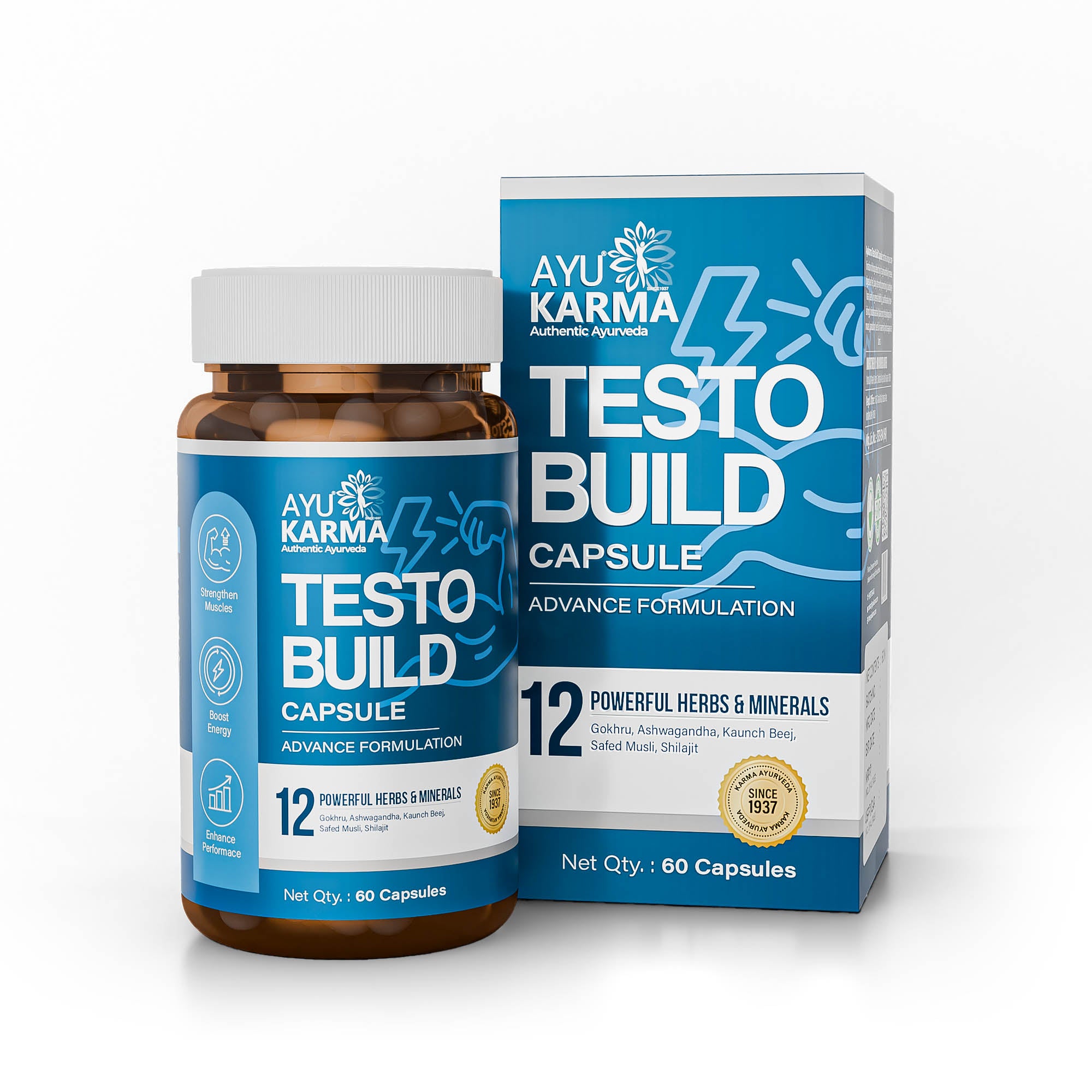
AyuKarma Testo Build Capsules combine 12 Ayurvedic herbs and minerals to support strength, energy, stamina, physical performance, nourishment and overall daily vitality.
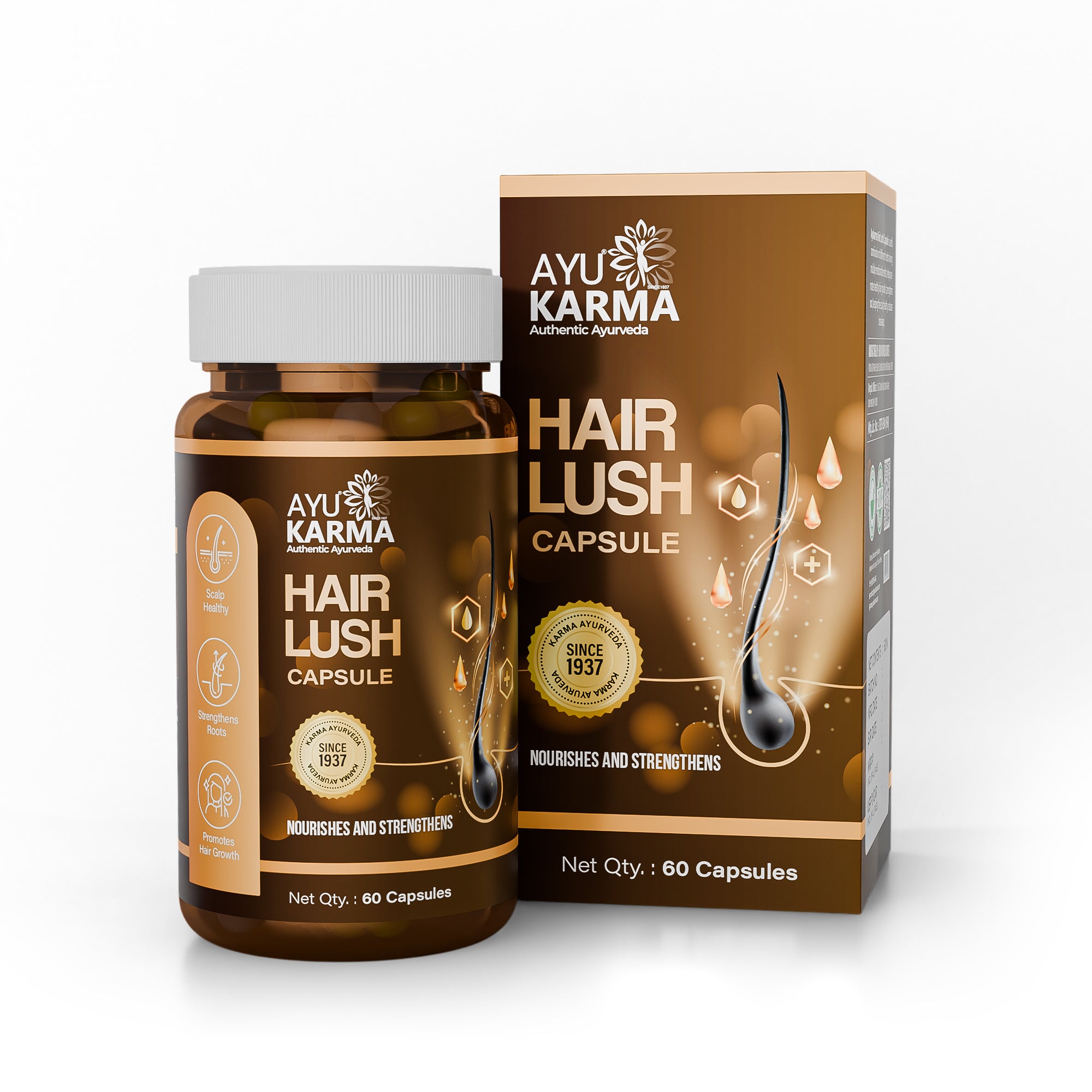
AyuKarma Hair Lush Capsules combine Ayurvedic herbs to support hair growth, reduce hair fall, strengthen roots, nourish the scalp and promote healthier-looking hair.

Karma Garcom Capsules contain Garcinia indica to support healthy metabolism, digestion, weight management, digestive comfort and daily wellness alongside a balanced lifestyle.
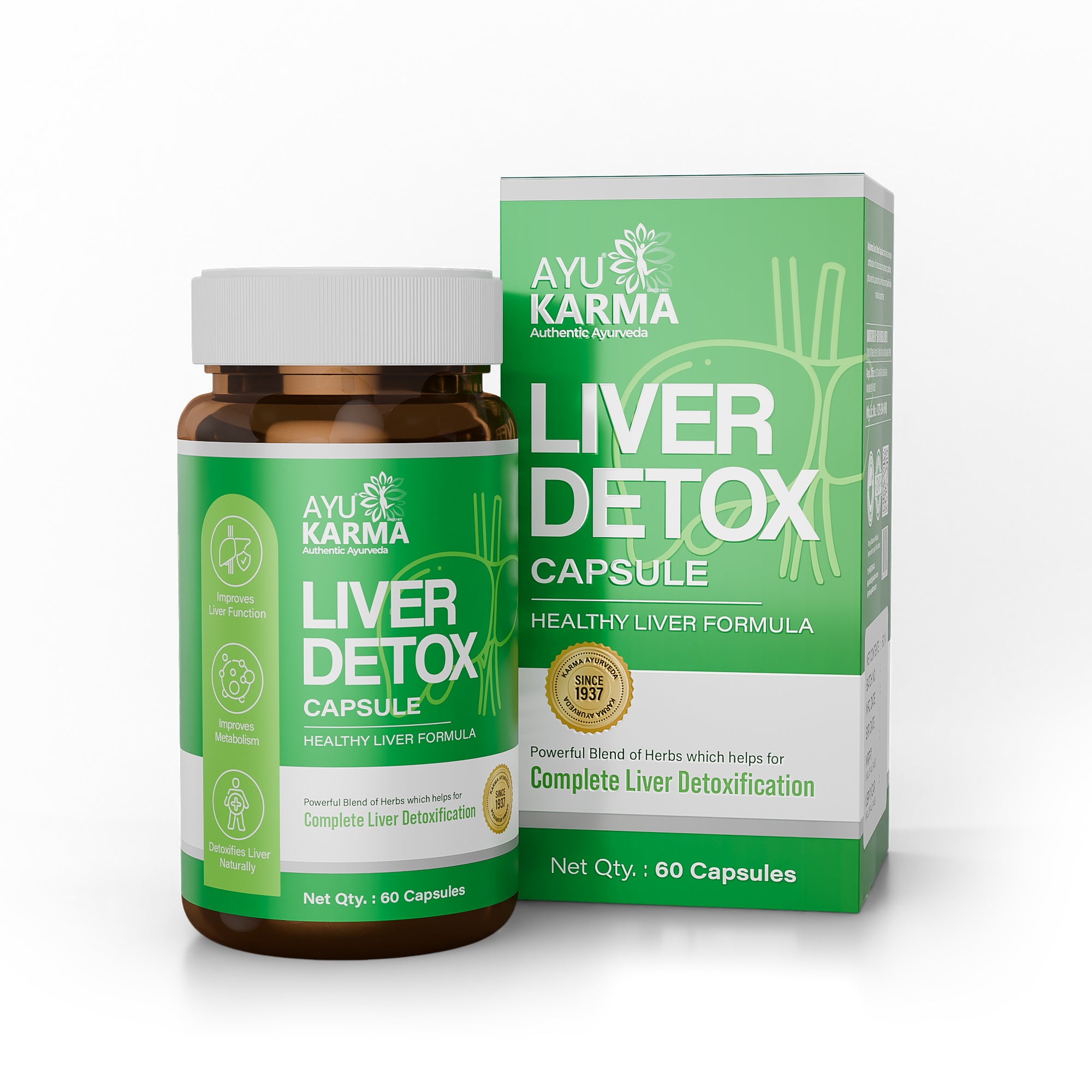
Doctor-recommended liver supplement that helps detoxify the liver, support healthy cholesterol, improve digestion & promote liver health. Developed by Dr. Puneet Dhawan with Karma Ayurveda philosophy.
Second Floor, 77, Block C, Tarun Enclave, Pitampura, New Delhi, Delhi, 110034

Certificate no- AH-2023-0186
JAN 05, 2026 - JAN 04, 2029

US FDA Reg. No.: 14568299376
