Unlocking Wellness Naturally
100% Ayurvedic Treatment

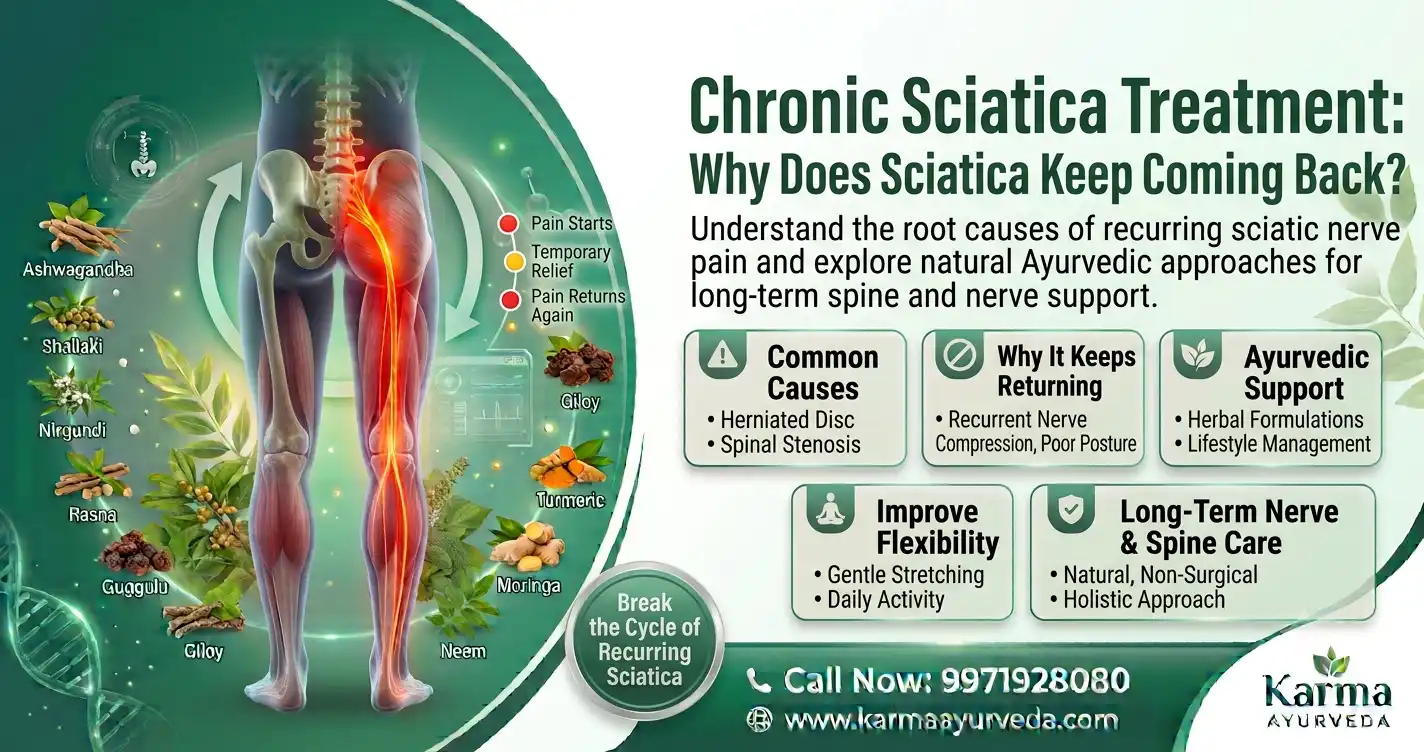
Short answer: sciatica keeps coming back because most people treat the pain, not the reason the nerve got angry in the first place. It's less like a cold that just "runs its course" and more like that one relative who keeps showing up uninvited; unless you fix why they're coming, they'll be back next Diwali.
In this blog, we're going to talk about chronic sciatica treatment, why long-term sciatica becomes a recurring guest instead of a one-time visitor, what real sciatica recovery actually looks like, and whether there's such a thing as a permanent treatment. We'll also touch on the symptoms that people often ignore until the pain is impossible to ignore (classic human behaviour).
Let's do a quick refresher without turning this into a biology lecture. The sciatic nerve is the longest nerve in your body; it starts in your lower back and runs all the way down each leg. When something presses on it (a herniated disc, tight muscles, spinal narrowing, or general "my spine is unhappy with my life choices"), you get that shooting, burning, tingling pain that can travel from your lower back down to your foot.
Common symptoms people report include:
Sound familiar? Yeah, thought so.
Here's the thing nobody tells you clearly enough: sciatica is usually a symptom, not the actual disease. The real culprit is often a disc problem, poor posture, muscle imbalance, or spinal misalignment. Painkillers and quick fixes calm the nerve down temporarily, but if the underlying pressure or imbalance is still there, the nerve gets irritated again the moment you go back to your usual habits; sitting for 9 hours, skipping stretches, or lifting your gym bag like you're auditioning for a strongman competition.
A study published in the European Spine Journal looked at long-term outcomes of sciatica patients and found that a significant chunk experienced recurring symptoms within a year, especially when treatment focused only on short-term pain relief rather than addressing the structural cause. Basically: silence the alarm without fixing the fire, and the alarm will go off again.
This is exactly why chronic sciatica treatment needs to look at the bigger picture; spine health, muscle strength, posture, inflammation, and lifestyle; instead of just chasing the pain with pills every time it shows up.
Most conventional approaches lean heavily on:
These aren't "wrong," but they're often reactive rather than corrective. It's like mopping the floor every time your tap leaks instead of just fixing the tap. Eventually, you're just really good at mopping.
This is where a lot of people start exploring Ayurvedic treatment for sciatica as a way to work on the root cause rather than repeatedly managing flare-ups. Ayurveda's traditional approach to sciatica (referred to as "Gridhrasi" in classical texts) focuses on reducing inflammation, improving nerve function, correcting Vata imbalance (which governs nerve and movement functions in the body), and strengthening the spine through herbal formulations, therapies, and lifestyle correction.
Real sciatica recovery isn't a two-day miracle. Anyone promising that is probably also selling a bridge in Mumbai. Genuine recovery usually involves:
Many patients looking for a more root-cause-focused, non-surgical route consult places like Karma Ayurveda Hospital, which is known for combining traditional Ayurvedic therapies with personalised diet and lifestyle guidance for nerve and spine-related issues. The idea isn't to replace medical care but to support the body's natural healing process alongside it.
Research in the Journal of Ayurveda and Integrative Medicine has discussed how certain classical Ayurvedic herbs (such as Rasna, Guggulu, and Nirgundi) show anti-inflammatory and analgesic properties that may support nerve pain management when used appropriately and under professional guidance; which is why the interest in Best Ayurvedic medicines for sciatica has grown steadily among people tired of the pain-pill-repeat cycle.
This is the million-rupee question. Here's the honest answer: there's no universal magic switch, because the "permanent" part depends on fixing the actual cause; disc health, posture, muscle strength, weight, and daily habits. But with the right combination of treatment, consistent physiotherapy or yoga, corrected lifestyle, and (for many people) Ayurvedic support focused on nerve health and inflammation control, long-term relief is absolutely achievable for a large number of patients.
Think of it less like taking one pill that erases the problem forever, and more like finally fixing that wobbly table leg instead of just propping it up with a folded napkin every single day.
Approach
Sciatica keeps coming back because most treatments chase the pain instead of the cause. Real, lasting relief comes from a combination of correcting posture, strengthening the spine, managing inflammation, and staying consistent with treatment; whether that's physiotherapy, medical care, or a well-guided Sciatica Ayurvedic treatment approach that focuses on nerve health from the root. There's no single "forever fix" pill, but there absolutely is a path to long-term, sustainable recovery if you stop treating the symptom and start treating the source.
Because most treatments calm the pain temporarily without fixing the actual cause behind the nerve pressure.
Many people find it helpful for reducing inflammation and supporting nerve health when followed consistently under proper guidance.
Shooting leg pain, tingling, numbness, and a dull ache that worsens with prolonged sitting are usually the first signs.
There's no single magic cure, but long-term relief is very achievable through consistent treatment, posture correction, and lifestyle changes.
It varies person to person, but noticeable improvement typically takes a few weeks to a few months with consistent care.
Disclaimer: This blog is for general informational purposes only and isn't a substitute for professional medical advice, diagnosis, or treatment. Sciatica causes and severity vary from person to person, so please consult a qualified doctor or Ayurvedic practitioner before starting any treatment.
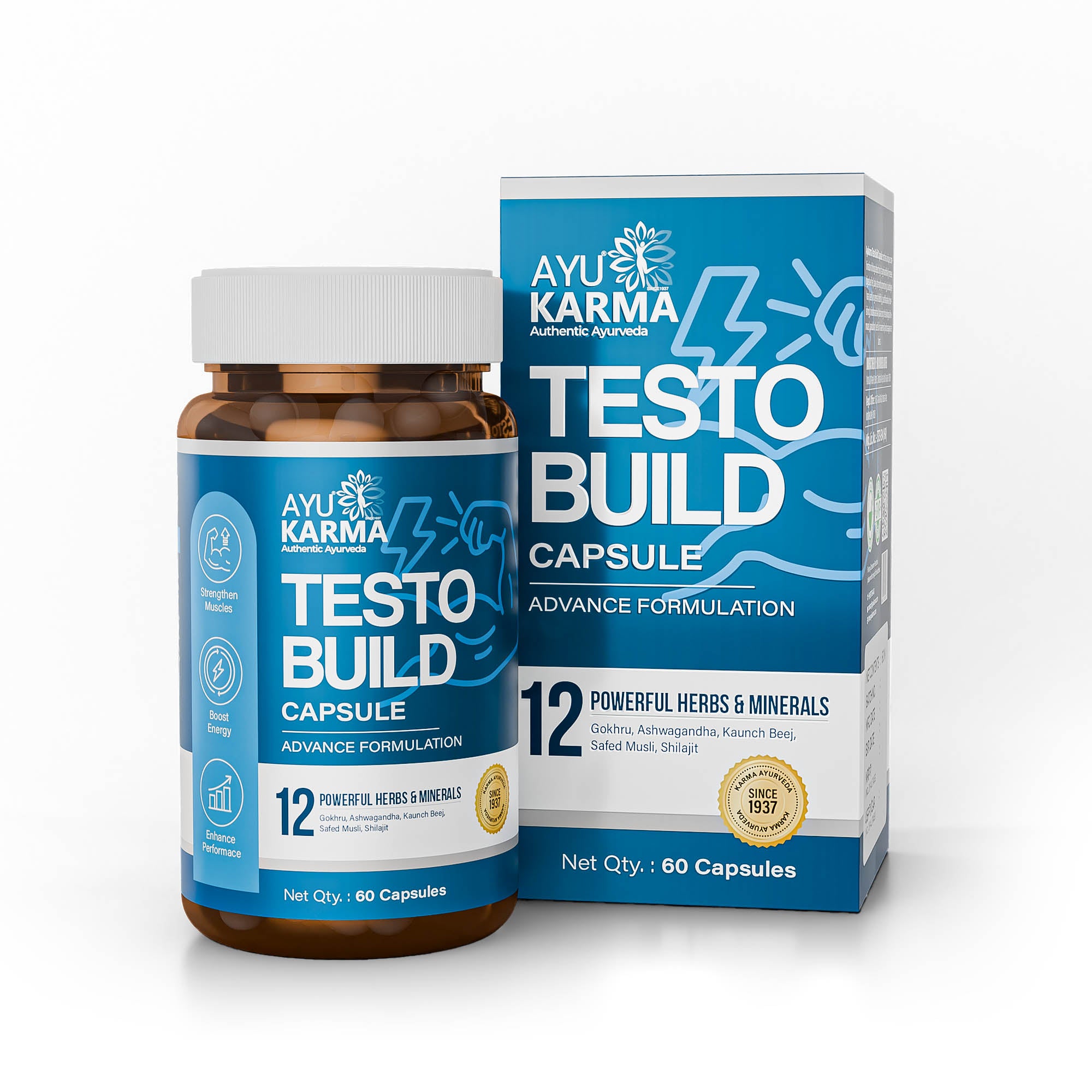
AyuKarma Testo Build Capsules combine 12 Ayurvedic herbs and minerals to support strength, energy, stamina, physical performance, nourishment and overall daily vitality.
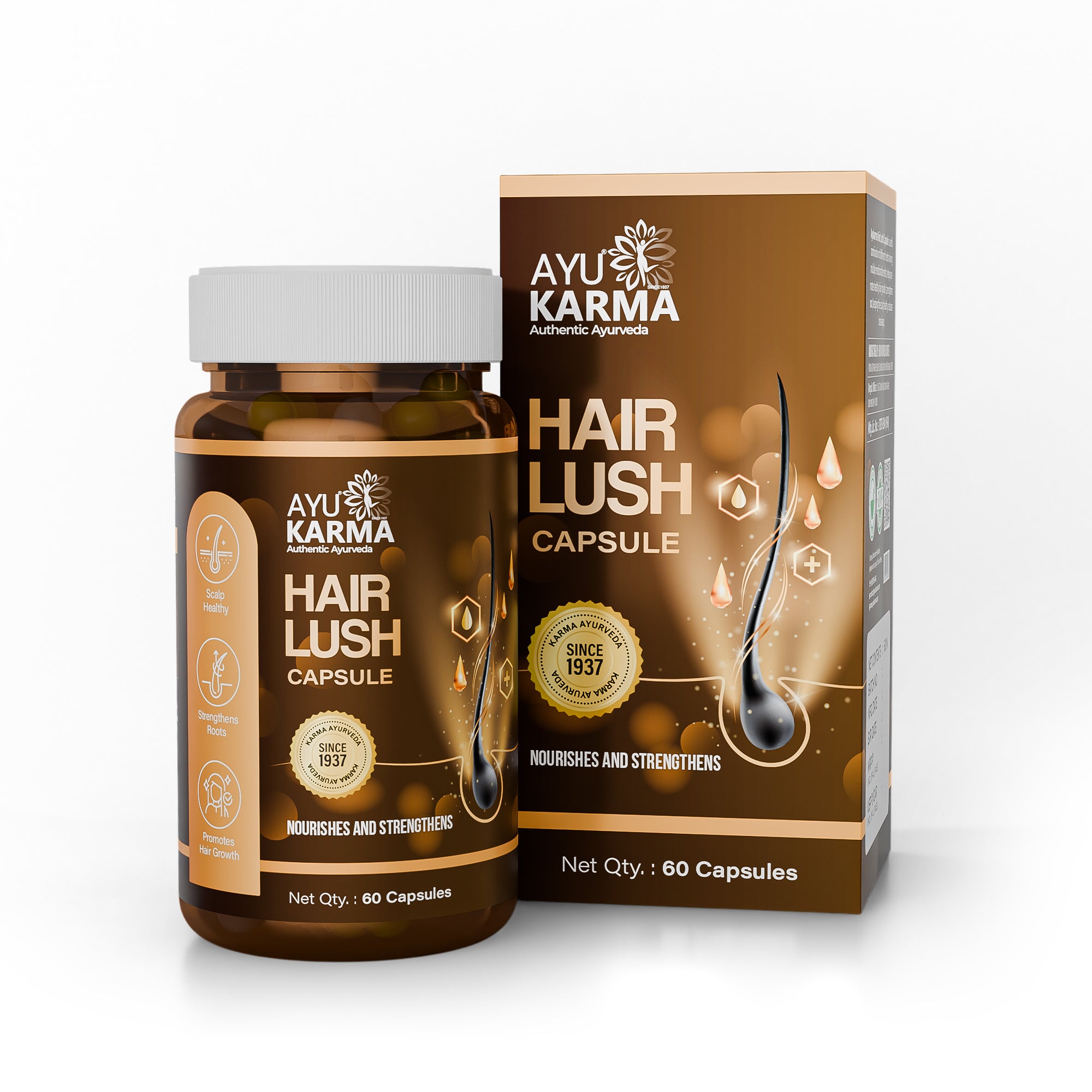
AyuKarma Hair Lush Capsules combine Ayurvedic herbs to support hair growth, reduce hair fall, strengthen roots, nourish the scalp and promote healthier-looking hair.
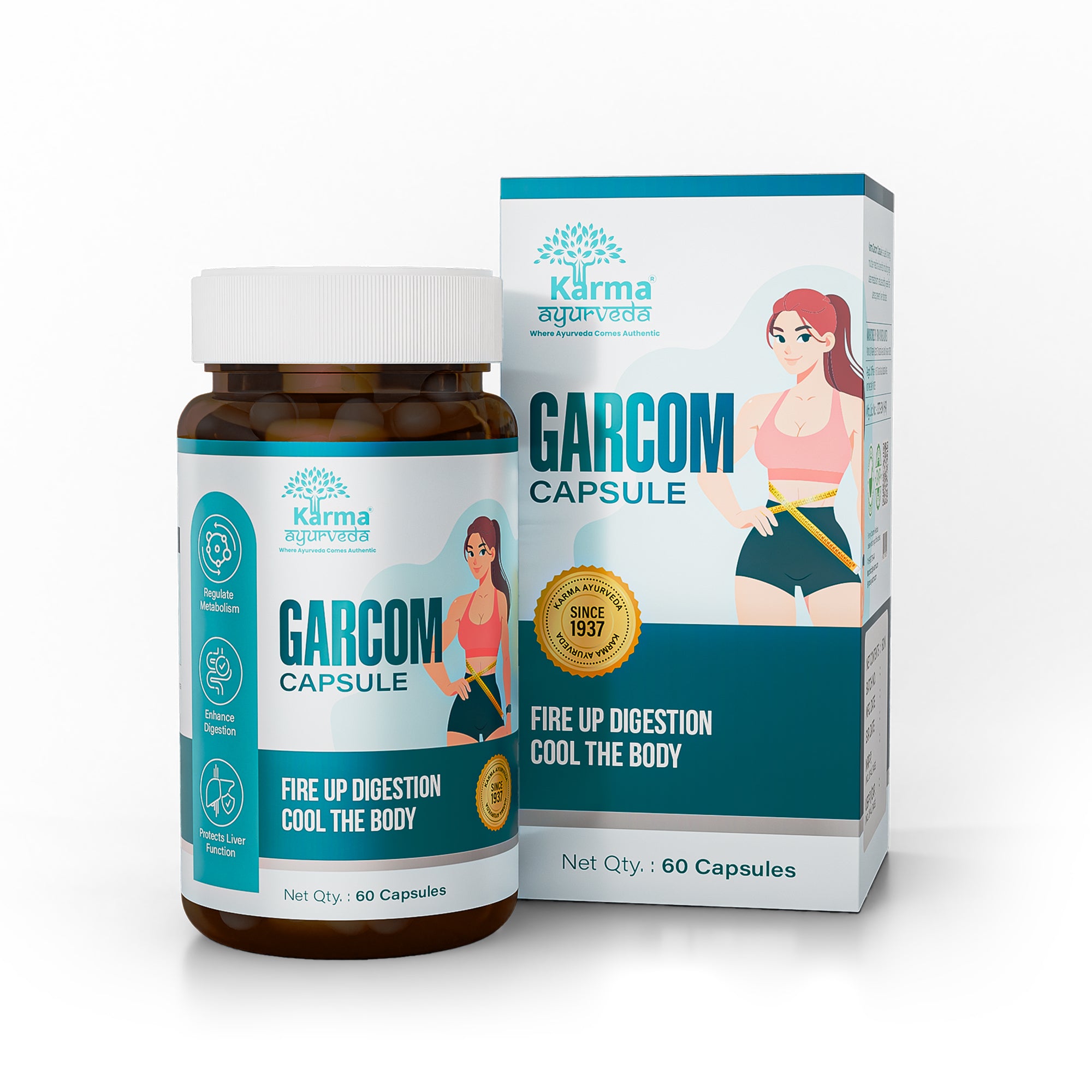
Karma Garcom Capsules contain Garcinia indica to support healthy metabolism, digestion, weight management, digestive comfort and daily wellness alongside a balanced lifestyle.
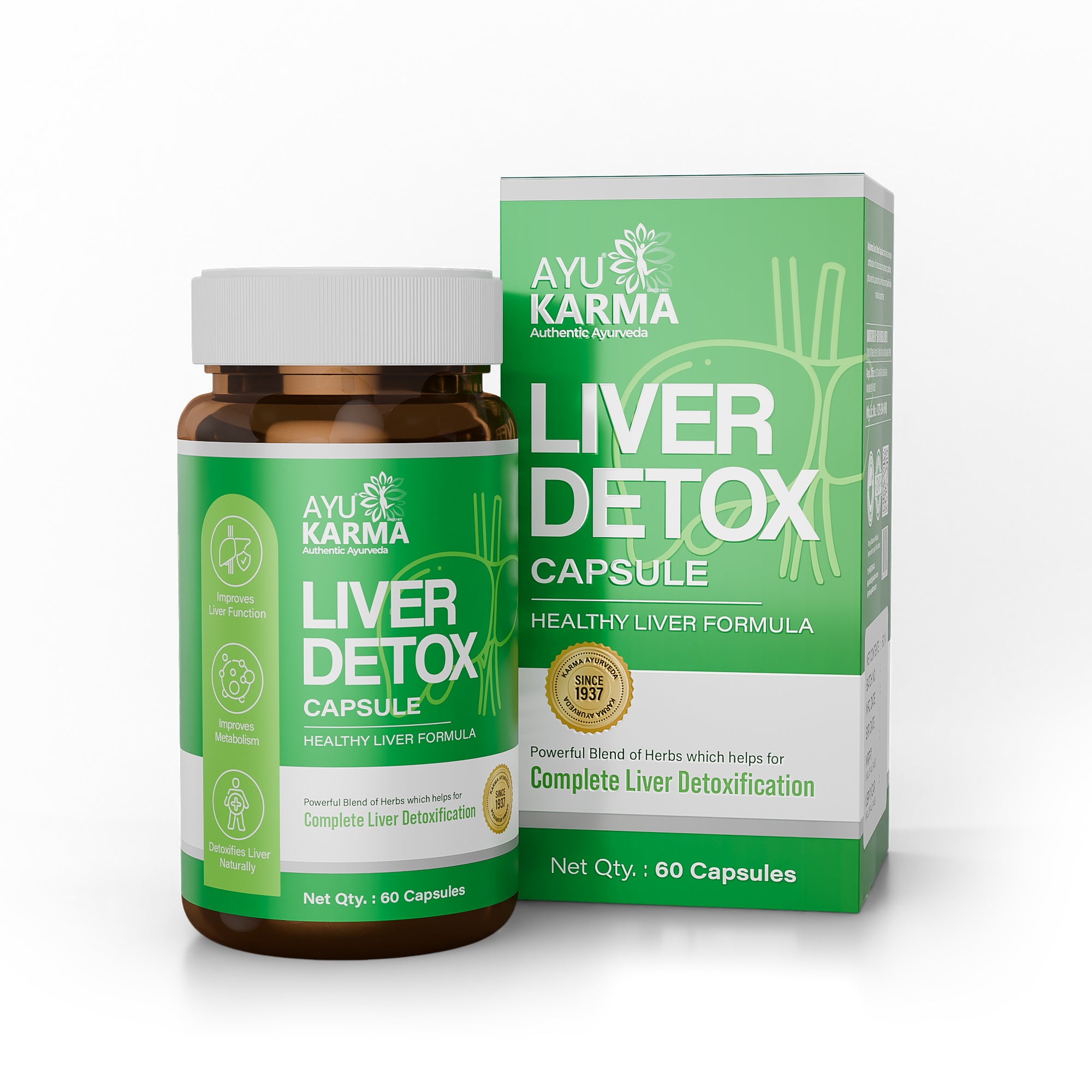
Doctor-recommended liver supplement that helps detoxify the liver, support healthy cholesterol, improve digestion & promote liver health. Developed by Dr. Puneet Dhawan with Karma Ayurveda philosophy.
Second Floor, 77, Block C, Tarun Enclave, Pitampura, New Delhi, Delhi, 110034

Certificate no- AH-2023-0186
JAN 05, 2026 - JAN 04, 2029

US FDA Reg. No.: 14568299376