Unlocking Wellness Naturally
100% Ayurvedic Treatment

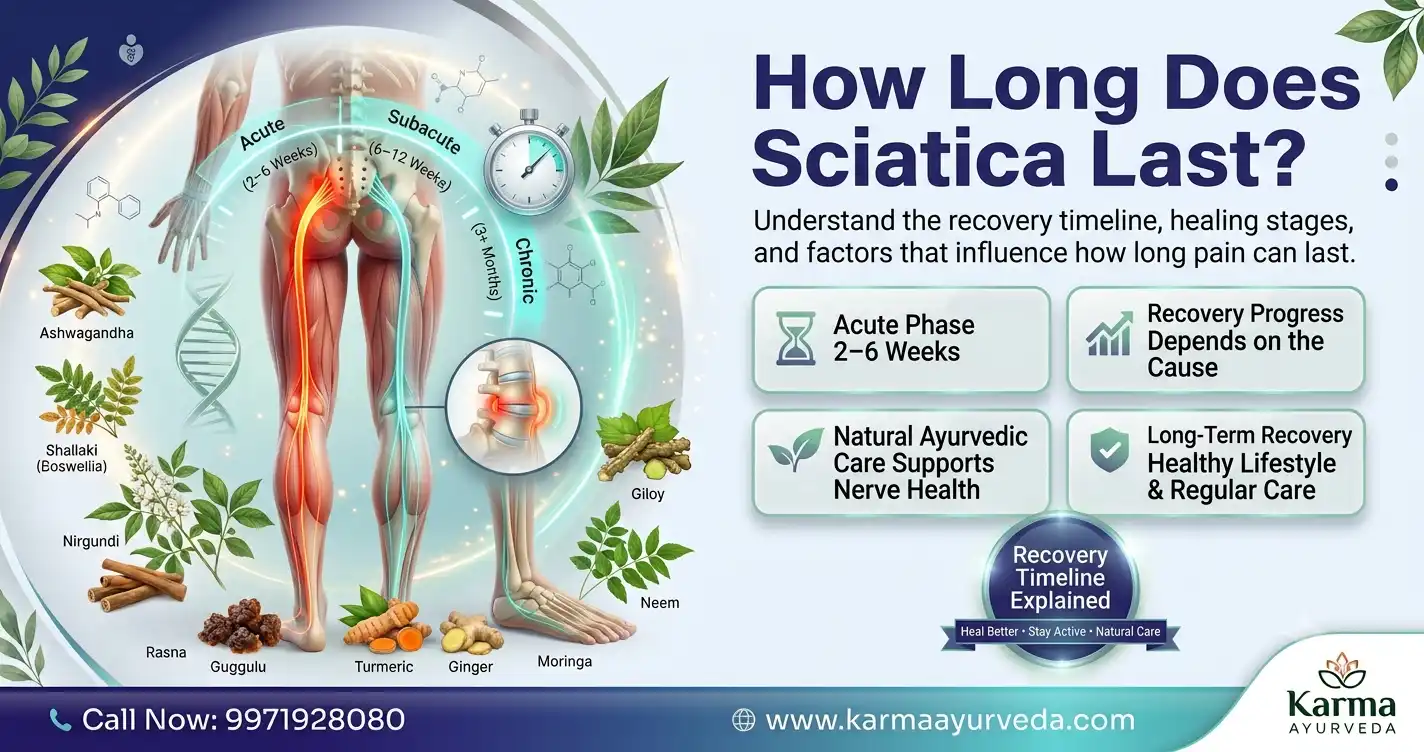
Most sciatica flare-ups settle down in 4 to 6 weeks with proper care, though some stubborn cases can hang around for months if the root cause isn't addressed. That's the short answer. Now let's talk about the long, annoying, "why-does-my-leg-hate-me" answer.
So, let's break down what's actually happening, why it lasts as long as it does, and how Ayurvedic treatment for sciatica can genuinely speed up your recovery instead of just numbing the pain and hoping for the best.
Your sciatic nerve is the longest nerve in your body; it runs from your lower back, through your hip, and all the way down each leg. When something (usually a herniated disc, a tight piriformis muscle, or spinal narrowing) presses on this nerve, you get sciatica. It's less "one specific disease" and more "a symptom party thrown by an angry nerve."
Common signs include:
Here's the honest, no-sugarcoating timeline:
A widely cited study published in the European Spine Journal found that around 80-90% of sciatica cases improve within 6 to 12 weeks without surgery, especially when patients combine rest with targeted movement and anti-inflammatory approaches. That's genuinely good news; but "improve" doesn't always mean "fully fixed," which is exactly why so many people end up dealing with recurring flare-ups.
This is where a lot of people quietly Google "why does my sciatica keep coming back even after painkillers"; and the honest answer is that painkillers manage the fire alarm, not the fire.
A few reasons your sciatica might be acting like an unwelcome houseguest who just won't leave:
Now here's where it gets interesting. Western medicine often treats sciatica symptom-by-symptom; painkiller for pain, muscle relaxant for spasm, and if nothing works, surgery gets suggested. Sciatica Ayurvedic treatment, on the other hand, looks at the root cause rather than just muting the alarm bell.
In Ayurveda, sciatica is closely linked to Gridhrasi; a term literally describing the vulture-like gait people develop when limping from nerve pain (yes, ancient Indian physicians were savage enough to name a disease after how funny you walk with it).
Treatment typically focuses on:
A study published in the Journal of Ayurveda and Integrative Medicine observed that Panchakarma-based treatment combined with herbal formulations showed significant improvement in pain intensity and mobility in sciatica patients over a treatment period of a few weeks; supporting what Ayurvedic practitioners have been saying for, well, thousands of years.
This is exactly the kind of root-cause approach followed by centers like Karma Ayurveda for sciatica treatment, where the focus stays on nerve healing and long-term relief rather than just symptom suppression.
If Ayurvedic herbs had a locker room, these would be the star players:
These aren't magic overnight herbs (nothing in real medicine works like a Bollywood montage), but with consistent use under proper guidance, they genuinely support long-term nerve healing.
While professional treatment handles the root cause, here's some sciatica home treatment that can help you survive the daily grind:
Approach
Painkillers
What It Does
Blocks pain signals temporarily
The Honest Vibe Check
Great for today, forgets about tomorrow
Painkillers
Surgery
Physically removes the pressure on the nerve
Effective, but a big commitment; like adopting a dog
Physiotherapy
Strengthens muscles, improves posture
Solid, but needs consistency (like gym memberships nobody uses)
Ayurvedic treatment for sciatica
Targets root cause, balances body systems, uses herbs + therapies
Slower, but aims for long-term peace, not just a truce
Most sciatica resolves on its own, but see a doctor immediately if you notice:
These are rare, but they're the "don't Google it, just go to the ER" red flags.
Most people feel noticeably better within 4 to 6 weeks if they stay consistent with treatment and movement.
Ayurvedic treatment focuses on the root cause, so many people experience long-term relief rather than just temporary comfort.
Gentle walking is genuinely good for sciatica since it keeps blood flowing and prevents stiffness from settling in.
Alternating hot and cold therapy along with gentle stretching tends to bring the quickest relief at home.
Nirgundi and Rasna are two of the most commonly recommended herbs for calming nerve-related pain naturally.
This blog is for general informational purposes only and isn't a substitute for professional medical advice, diagnosis, or treatment. Sciatica symptoms vary from person to person, so please consult a qualified doctor or Ayurvedic practitioner before starting any new treatment, herb, or home remedy.
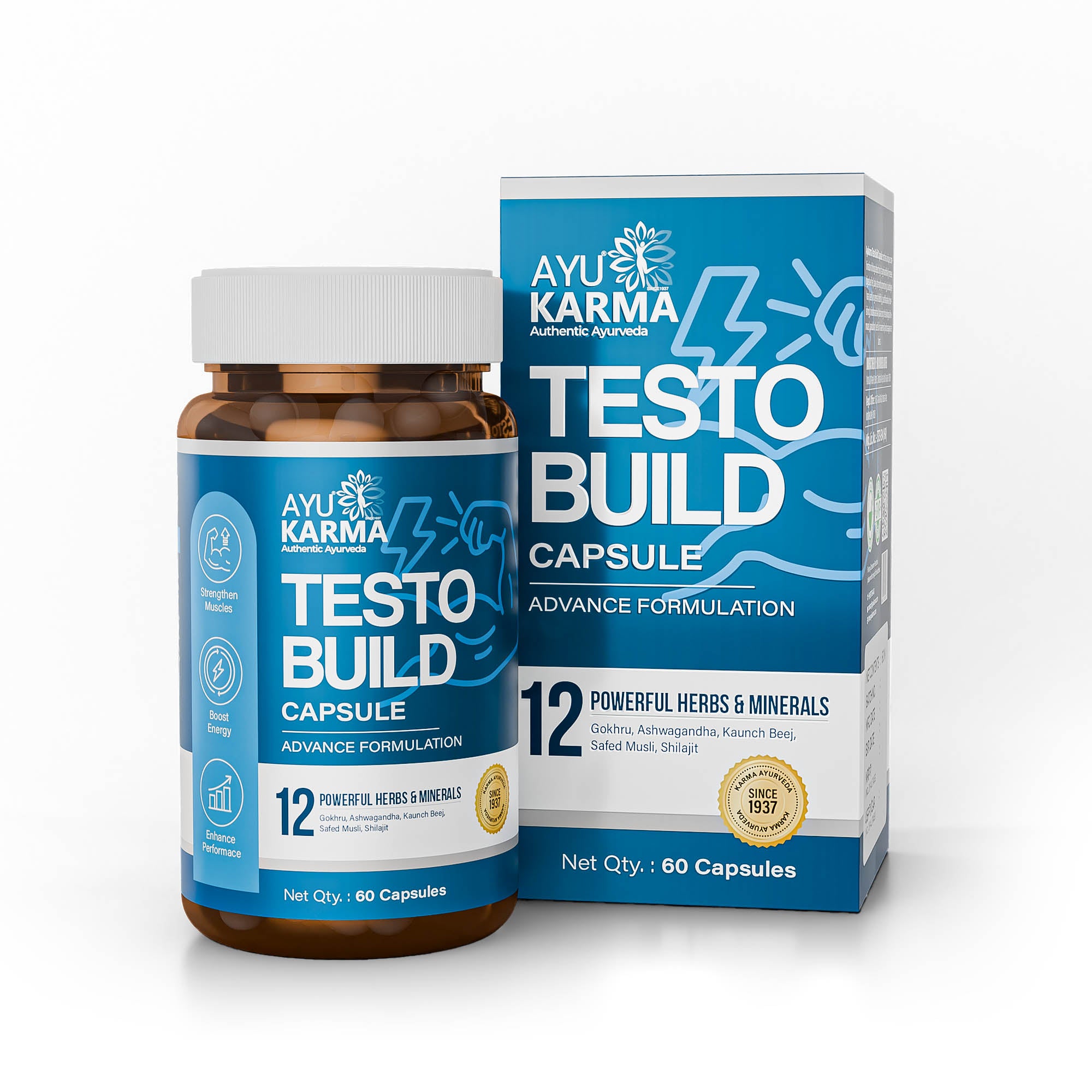
AyuKarma Testo Build Capsules combine 12 Ayurvedic herbs and minerals to support strength, energy, stamina, physical performance, nourishment and overall daily vitality.
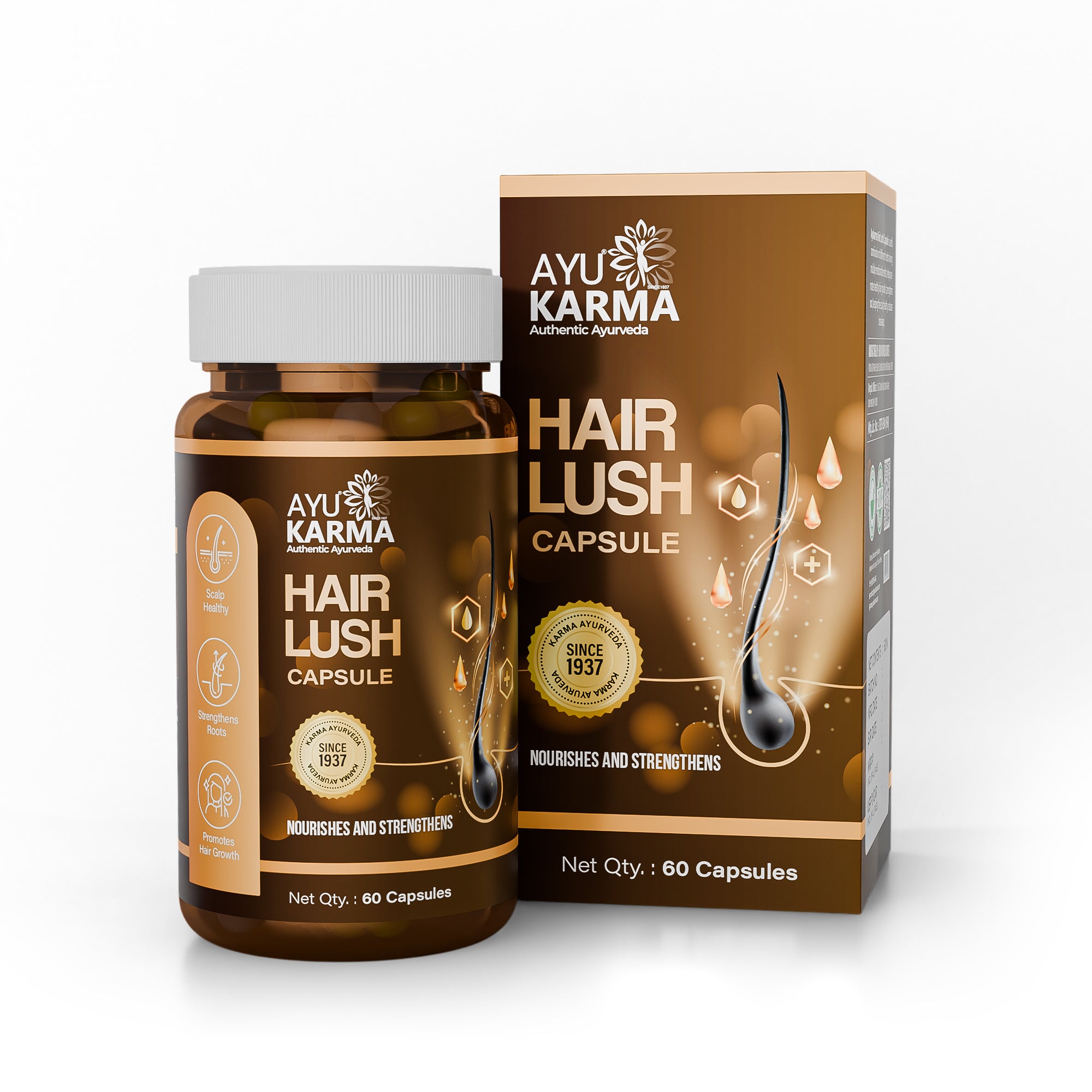
AyuKarma Hair Lush Capsules combine Ayurvedic herbs to support hair growth, reduce hair fall, strengthen roots, nourish the scalp and promote healthier-looking hair.
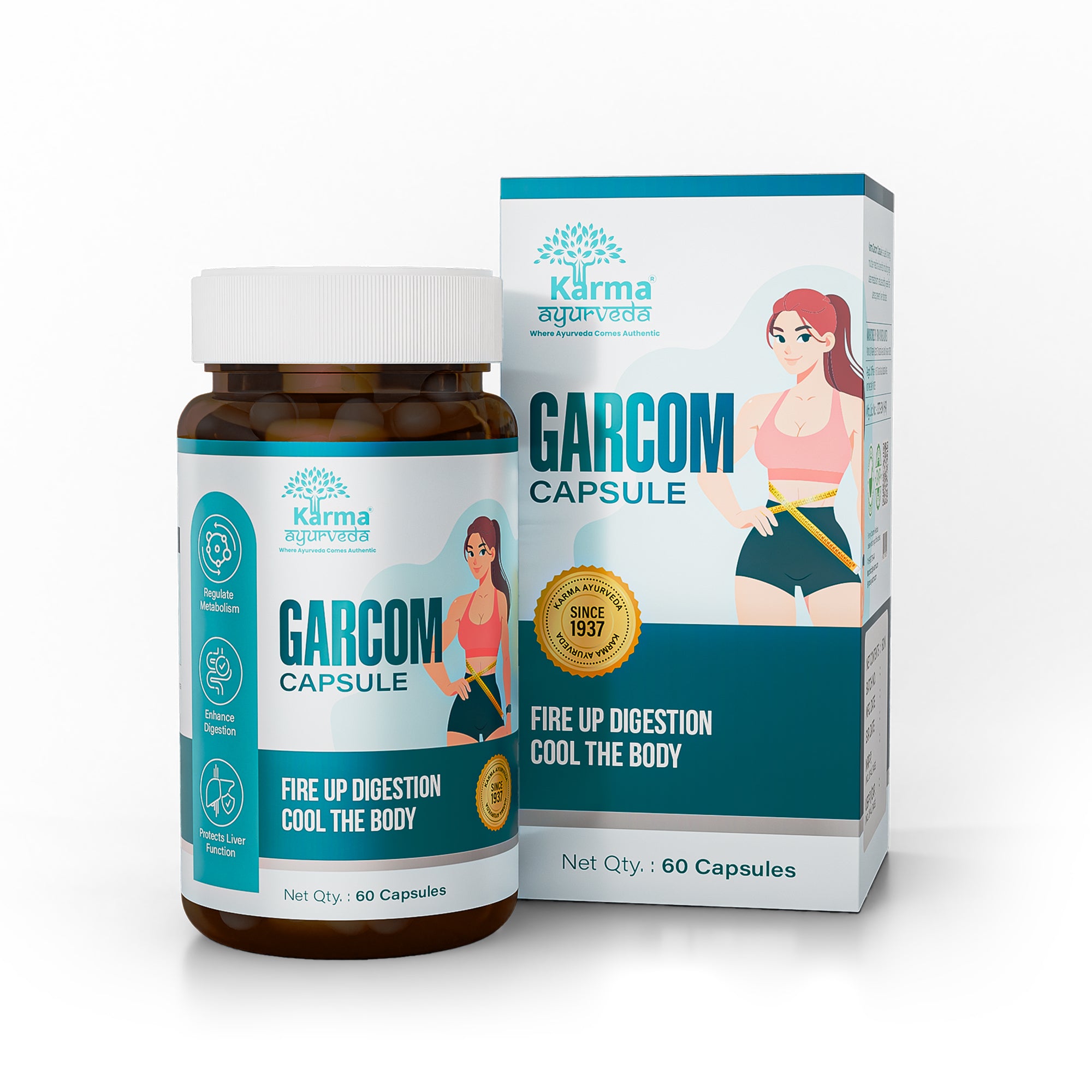
Karma Garcom Capsules contain Garcinia indica to support healthy metabolism, digestion, weight management, digestive comfort and daily wellness alongside a balanced lifestyle.
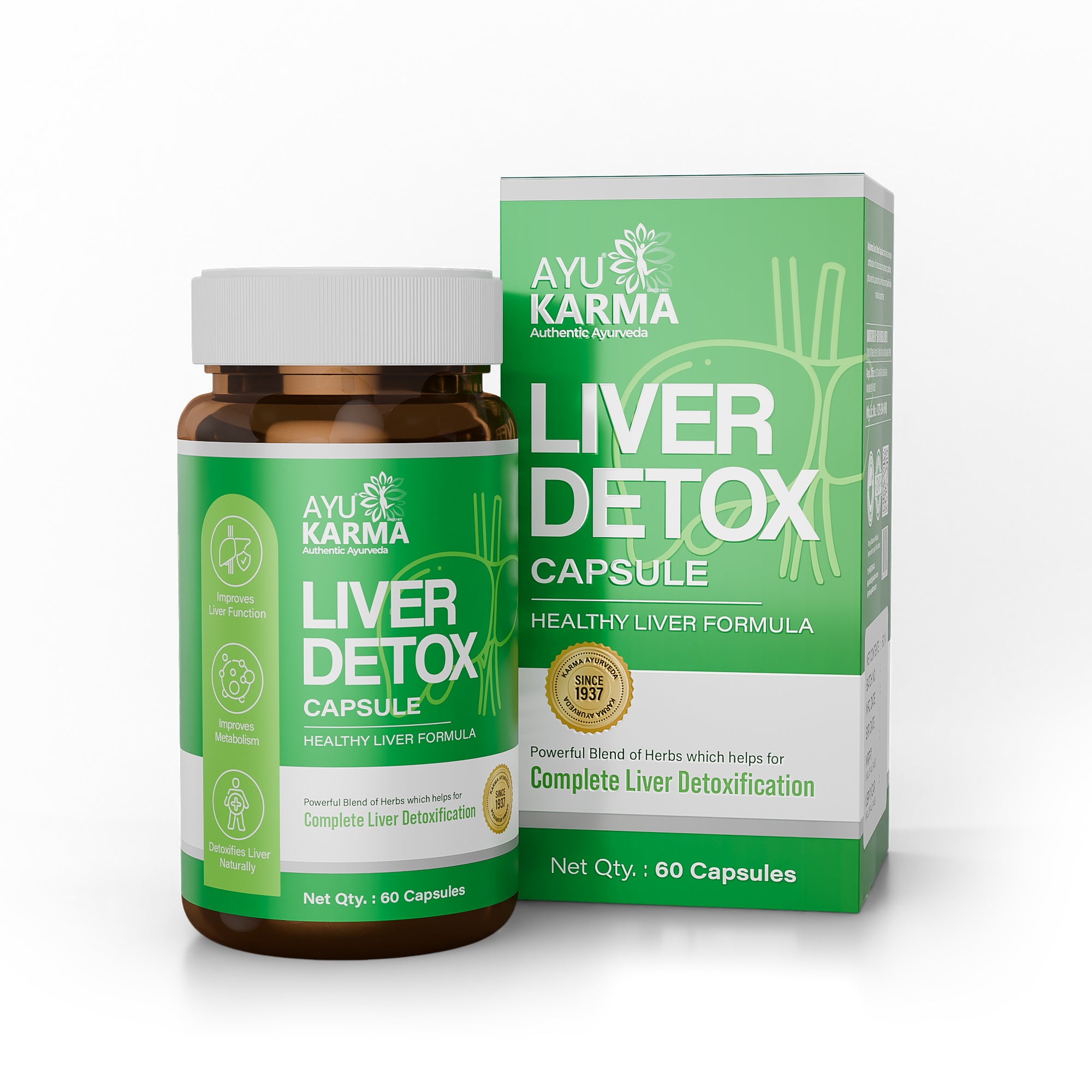
Doctor-recommended liver supplement that helps detoxify the liver, support healthy cholesterol, improve digestion & promote liver health. Developed by Dr. Puneet Dhawan with Karma Ayurveda philosophy.
Second Floor, 77, Block C, Tarun Enclave, Pitampura, New Delhi, Delhi, 110034

Certificate no- AH-2023-0186
JAN 05, 2026 - JAN 04, 2029

US FDA Reg. No.: 14568299376