Unlocking Wellness Naturally
100% Ayurvedic Treatment

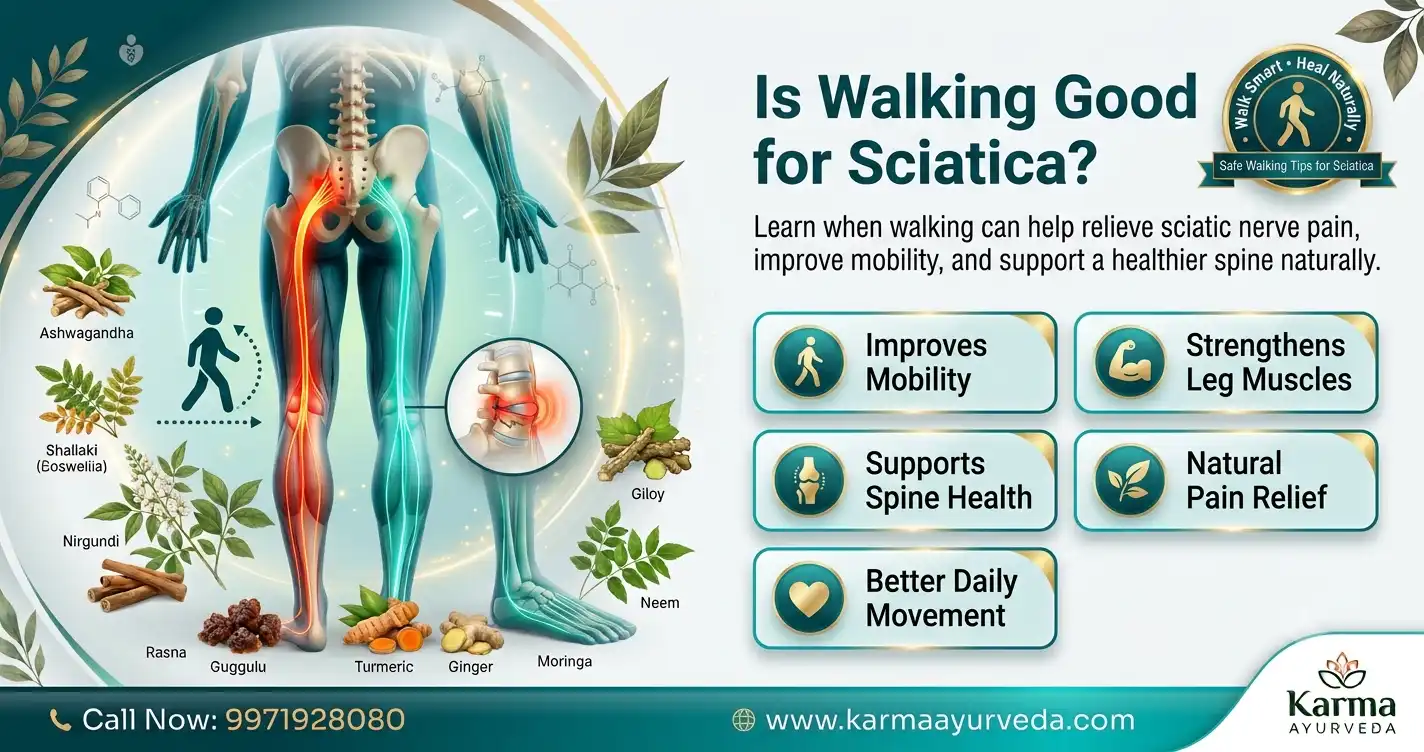
Yes, walking is generally good for sciatica; as long as you do it right. Short version: your body is not made of glass, and gentle, regular walking usually helps more than it hurts.
Now let's get into the "why," because I know you didn't click on this just for a one-liner (though hey, if that's all you needed, go forth and walk, my friend).
If you've ever had that hot, electric zing shoot from your lower back down to your toes, you already know sciatica doesn't play fair. It shows up uninvited, overstays its welcome, and makes even sitting through a movie feel like an Olympic event. Naturally, when someone tells you “Just go for a walk," your first reaction might be somewhere between "are you kidding me" and "please leave."
But here's the thing; doctors, physiotherapists, and a whole bunch of researchers actually agree that movement, not motionlessness, tends to be the better long-term strategy for sciatica. Let's unpack why, how to do it safely, and where Ayurvedic treatment for Sciatica fits into this whole picture too.
Sciatica isn't really a disease on its own; think of it more like an angry messenger. It happens when the sciatic nerve, the longest nerve in your body (it runs from your lower back all the way down to your feet), gets pinched, irritated, or compressed. This usually happens because of:
The result? Pain, tingling, numbness, or that lovely burning sensation traveling down one leg. Some days it's a dull ache. Other days it feels like your leg is auditioning for a horror movie.
Here's where it gets interesting. A well-known Cochrane review compared advice to "stay active" against advice to "rest in bed" for people with low back pain and sciatica. For general low back pain, staying active led to small but real improvements in pain and function. For sciatica specifically, the difference between staying active and resting wasn't huge; but here's the twist: bed rest didn't come out ahead either. And prolonged inactivity brings its own baggage; stiff joints, weaker muscles, and a much slower road back to normal.
Basically, lying around doesn't "heal" sciatica faster. It just delays the inevitable while your muscles quietly stage a mutiny.
Other research backs up walking as a legitimate, low-cost tool for back and nerve-related pain:
So no, walking isn't a magic cure. But it's consistently shown up as one of the simplest, safest, cheapest ways to keep your back from getting worse while your body does its healing thing.
This is the part people skip and then wonder why their walk turned into a limp-fest. A few ground rules:
Walking
Does It Help Sciatica?
Generally yes, keeps things mobile and reduces stiffness.
The Catch
Needs to be gentle and consistent, not a weekend warrior sprint.
Bed rest
Does It Help Sciatica?
Not really, doesn't speed up recovery.
The Catch
Leads to weaker muscles and a stiffer back over time.
Sitting all day
Does It Help Sciatica?
Actively makes it worse.
The Catch
Increases pressure on lower spinal discs.
High-intensity exercise
Does It Help Sciatica?
Risky in the acute phase.
The Catch
Can aggravate the nerve if done too soon.
Ayurvedic therapies + gentle movement
Does It Help Sciatica?
Often helpful as a complementary approach.
The Catch
Best done under proper guidance, not guesswork.
See? Walking isn't flashy, but it quietly does its job; like the reliable friend who shows up on time instead of the one who promises the world and cancels last minute.
Now, walking helps manage symptoms and prevent things from getting worse, but a lot of people dealing with recurring sciatica also look for a more root-level, whole-body approach; and that's where Sciatica Ayurvedic treatment often comes into the conversation.
Ayurveda looks at sciatica (referred to as "Gridhrasi" in classical texts) as an imbalance, often linked to the Vata dosha, which governs movement and the nervous system. Traditional approaches usually combine:
This is exactly the kind of structured, root-cause approach that places like Karma Ayurveda Hospital are known for; combining traditional Ayurvedic principles with a proper diagnostic process, rather than just handing out a bottle of oil and calling it a day. If you're exploring Karma Ayurveda for Sciatica treatment, the general approach tends to focus on identifying the underlying imbalance first, and then building a treatment plan around it, alongside sensible lifestyle habits like; you guessed it; walking.
When people ask about the best Ayurvedic medicines for Sciatica, the honest answer is: it varies from person to person, which is exactly why these things are usually recommended after a proper consultation rather than picked off a shelf based on a random blog (not even this one, sorry).
Yes, gentle and consistent walking usually helps ease stiffness and supports recovery rather than making sciatica worse.
Start with short 10–15-minute walks a few times a day rather than one long walk, and increase gradually as comfort allows.
Ayurvedic treatment can help manage and reduce symptoms significantly for many people, though results vary and depend on the individual case.
Mild discomfort is usually fine, but sharp or shooting pain means it's time to stop and rest.
No, research shows prolonged bed rest doesn't speed up healing and can actually leave muscles weaker and stiffer.
This blog is for general informational purposes only and isn't a substitute for professional medical advice, diagnosis, or treatment. Sciatica can have different underlying causes, so please consult a qualified doctor or Ayurvedic practitioner before starting any new exercise or treatment routine.
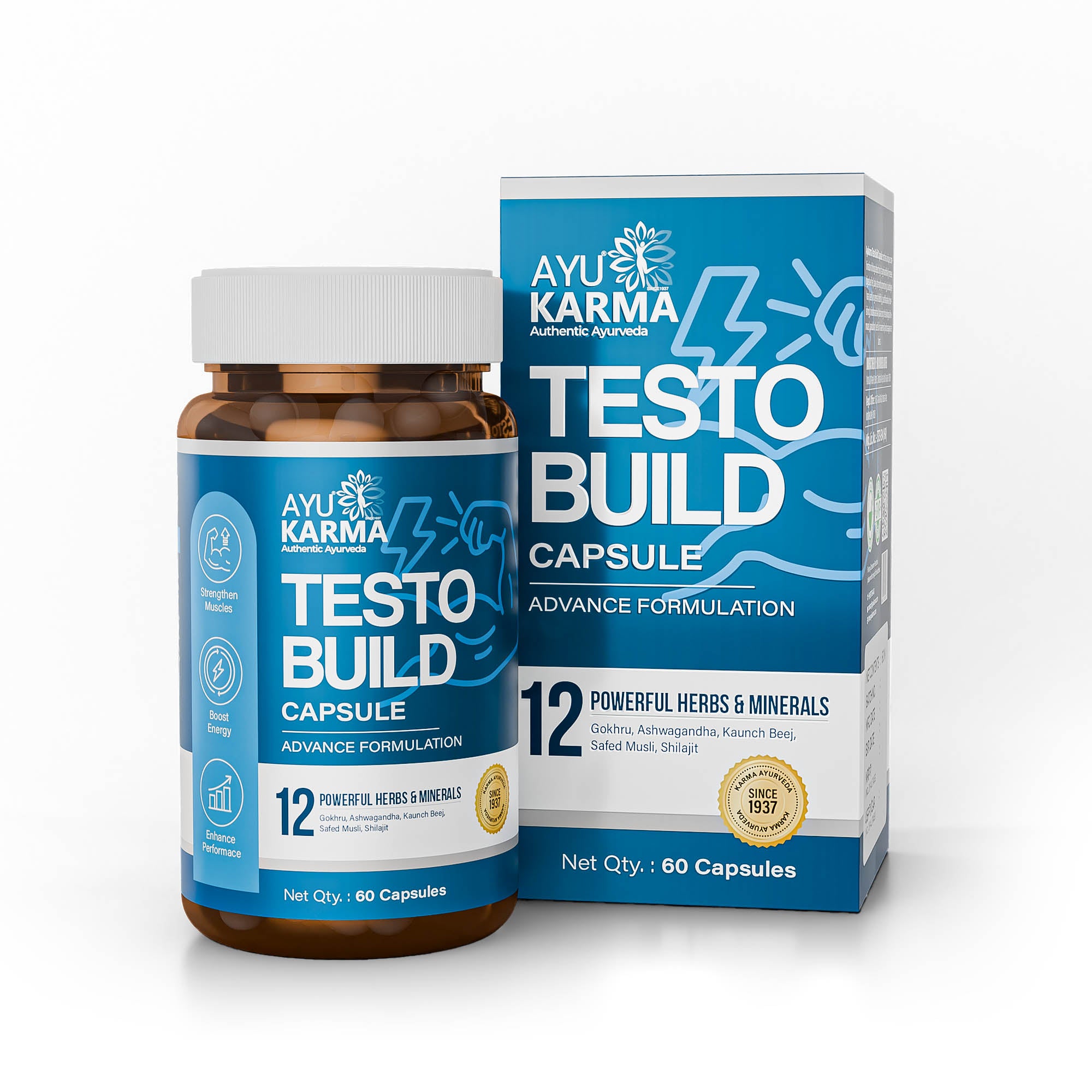
AyuKarma Testo Build Capsules combine 12 Ayurvedic herbs and minerals to support strength, energy, stamina, physical performance, nourishment and overall daily vitality.
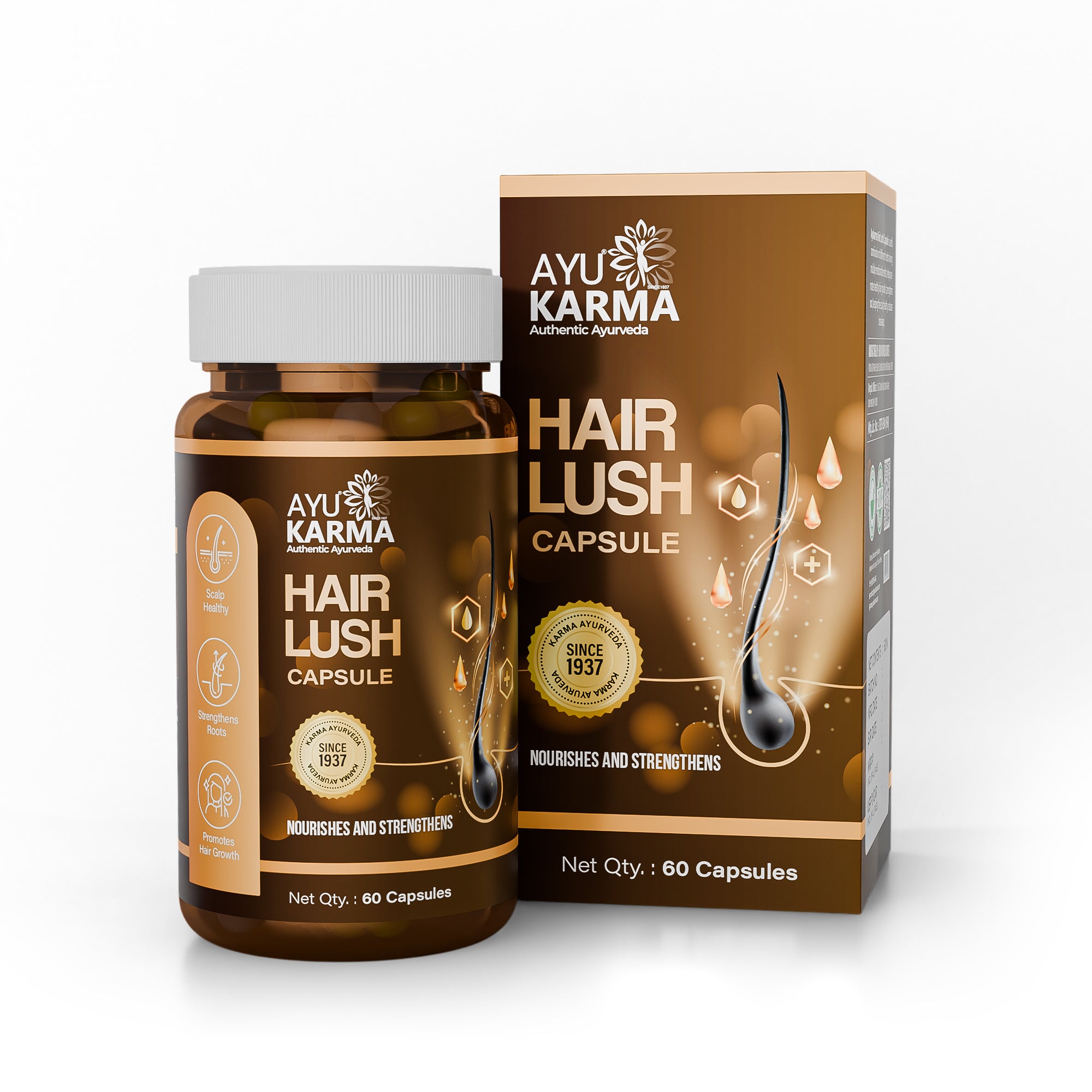
AyuKarma Hair Lush Capsules combine Ayurvedic herbs to support hair growth, reduce hair fall, strengthen roots, nourish the scalp and promote healthier-looking hair.

Karma Garcom Capsules contain Garcinia indica to support healthy metabolism, digestion, weight management, digestive comfort and daily wellness alongside a balanced lifestyle.
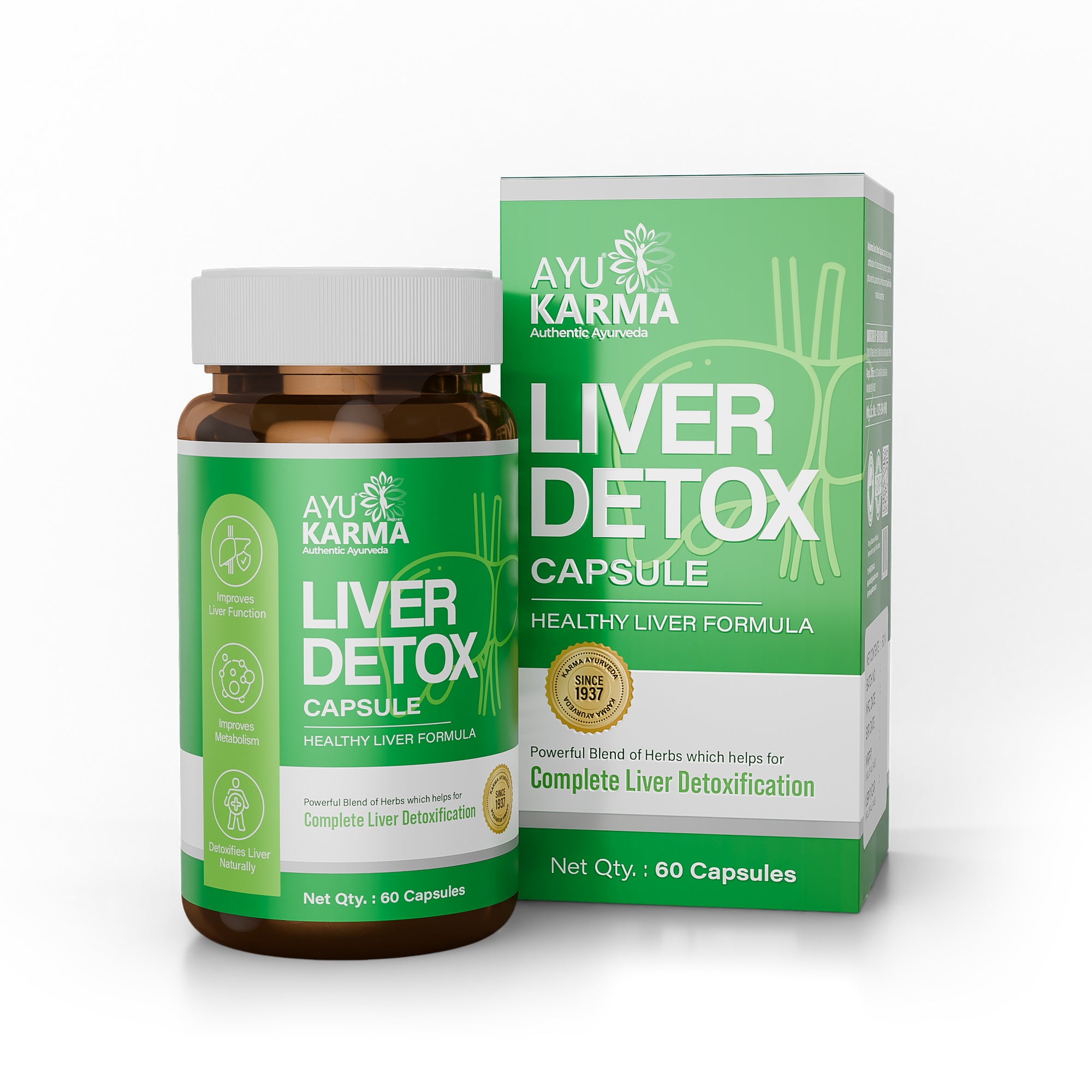
Doctor-recommended liver supplement that helps detoxify the liver, support healthy cholesterol, improve digestion & promote liver health. Developed by Dr. Puneet Dhawan with Karma Ayurveda philosophy.
Second Floor, 77, Block C, Tarun Enclave, Pitampura, New Delhi, Delhi, 110034

Certificate no- AH-2023-0186
JAN 05, 2026 - JAN 04, 2029

US FDA Reg. No.: 14568299376