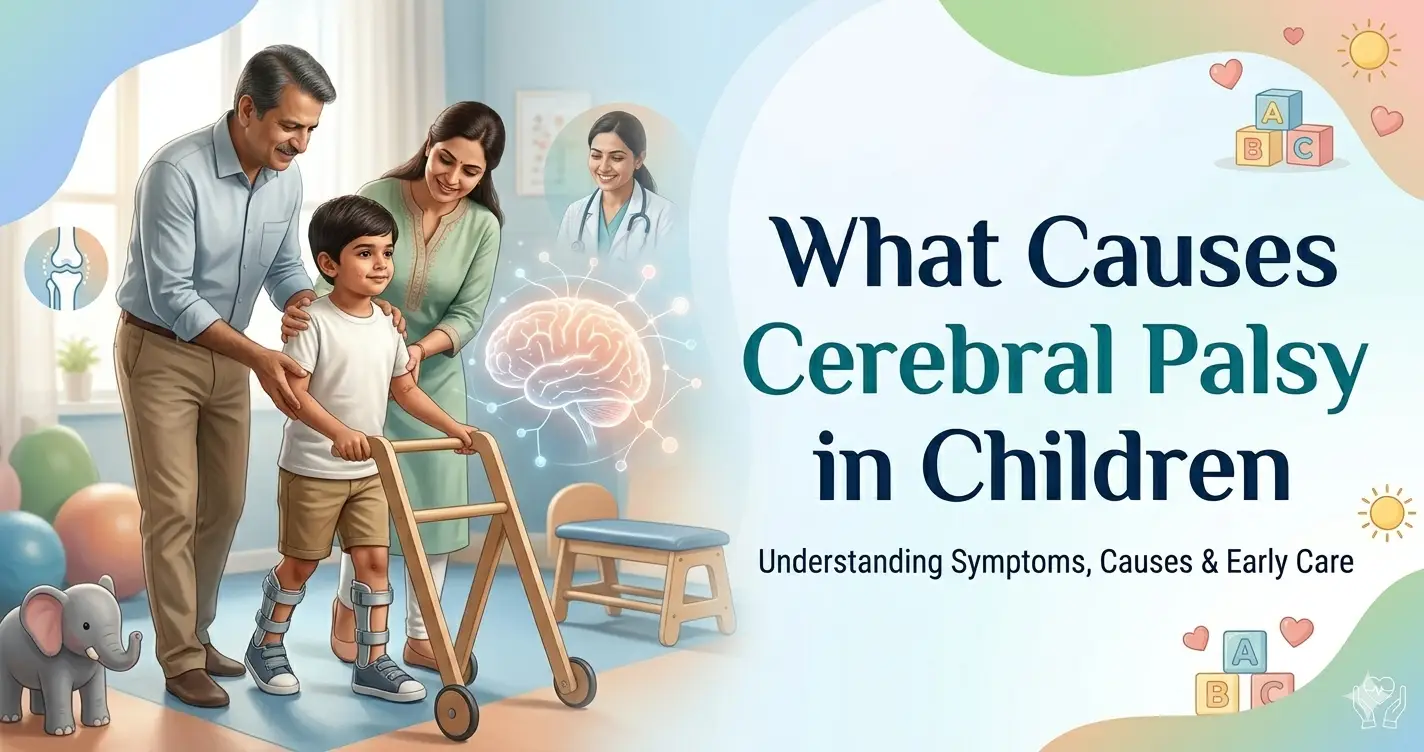
What Causes Cerebral Palsy in Children
If you’ve ever heard the term cerebral palsy and thought, “That sounds serious, complicated, and probably involves a lot of words I can’t pronounce,” you’re not alone. The good news? We can talk about what causes cerebral palsy in children in a way that actually makes sense; no medical dictionary required.
So grab a cup of tea, get comfortable, and let’s break down the causes of cerebral palsy like two humans having a friendly chat.
First Things First: What Is Cerebral Palsy?
Cerebral palsy, often called CP in children (because nobody wants to say the full name every time), is a condition that affects how a child moves, balances, and controls their muscles. It happens when the brain doesn’t develop the usual way or experiences brain injury early in life.
Important thing to know right away: cerebral palsy is not contagious, not progressive, and definitely not caused by bad parenting. Babies don’t develop CP because someone forgot to read a parenting book.
The Brain Is the Boss (And Sometimes Things Go Wrong)
The brain is like the control center for everything; movement, posture, muscle tone. If something interferes with the brain while it’s still developing, those messages don’t travel as smoothly as they should.
Cerebral palsy causes are linked to damage to the developing brain, usually before birth, during birth, or after birth. Let’s look at each stage without making it scary.
Causes of Cerebral Palsy Before Birth: When Baby Is Still Cooking
Believe it or not, most causes of cerebral palsy in children begin before birth. No drama, no obvious signs; just quiet behind-the-scenes issues.
One common cause is lack of oxygen to the brain before birth. The brain needs oxygen like phones need chargers. If it doesn’t get enough, things can glitch.
Infections during pregnancy can also be a cause of cerebral palsy, as certain infections may affect fetal brain development, especially if left untreated.
Sometimes, the brain simply doesn’t develop as expected. This may be due to genetic changes, abnormal brain formation, or unknown reasons; which is a polite way of saying, “Science is still figuring this out.”
And no, this doesn’t mean the pregnancy was handled “wrong.” Many parents do everything right and cerebral palsy still occurs.
Causes of Cerebral Palsy During Birth: The Big Day With Big Emotions
Birth is intense. There’s excitement, stress, and a lot of shouting encouragement at someone who is already trying their best.
In rare cases, birth complications can be a cause of cerebral palsy in babies. This may happen if the baby’s brain doesn’t get enough oxygen during labor or delivery. Long or difficult births can increase this risk.
Premature birth is another major factor. Babies born very early have brains that are still developing, making them more vulnerable to brain injury during birth. Think of it like taking a cake out of the oven too early; it’s not ruined, just more delicate.
Low birth weight also increases the risk of CP in children, mainly because smaller babies are often premature.
Causes of Cerebral Palsy After Birth: The Early Days Matter Too
The brain continues to grow rapidly in the first few years of life. During this time, certain events can cause brain damage after birth and lead to cerebral palsy in children.
Serious infections like meningitis can affect the brain. Head injuries from accidents or falls may also be a cause. Severe untreated jaundice can damage the brain as well. These postnatal causes of cerebral palsy are less common, but they highlight how important early medical care is.
What Cerebral Palsy Is Not Caused By
Let’s clear up some myths, because they love to hang around uninvited.
- Cerebral palsy is not caused by vaccines. This has been studied many times, and the answer is still no.
- It’s not caused by a child being “lazy” or “not trying hard enough.” CP affects brain signals, not effort.
- And again, cerebral palsy is not caused by poor parenting. If guilt were a cause, every parent would be in trouble.
Why the Exact Cause of Cerebral Palsy Isn’t Always Known
Sometimes, doctors can’t point to one clear answer when asked what causes cerebral palsy. The brain is complex, and injuries can be subtle. Often, it’s a combination of factors rather than one single event. This uncertainty can be frustrating, but it’s common. What matters more than the exact cause of CP is early diagnosis, therapy, and support.
The Takeaway: Knowledge Brings Comfort
Cerebral palsy in children can sound overwhelming, but understanding its causes helps take away some of the fear. It’s about brain development, timing, and factors mostly outside anyone’s control.
Children with cerebral palsy can learn, grow, laugh, and live meaningful lives. With the right support, they often surprise everyone; including doctors. If there’s one thing to remember, it’s this: cerebral palsy is a condition, not a definition. And behind every diagnosis is a child who is so much more than a medical term.
Disclaimer: This article is just for educational purposes; please consult an expert like Dr. Puneet Dhawan if your child has severe CP symptoms.
FAQs
Q1. What is the most common cause of cerebral palsy in children?
Most cases are caused by brain injury or abnormal brain development before birth.
Q2. Can cerebral palsy be caused during delivery?
Yes, but rarely. Lack of oxygen during birth can sometimes lead to cerebral palsy.
Q3. Is cerebral palsy preventable?
Not always, but good prenatal care and early treatment can reduce certain risks.